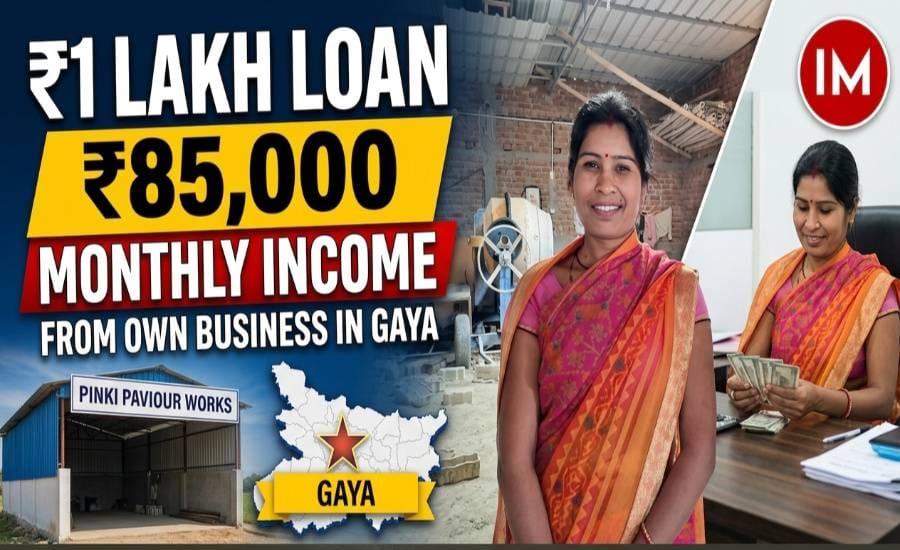
Patna: A ₹1 lakh loan through a JEEViKA self-help group helped Pinki Kumari of Gaya move beyond traditional farming and build a paver block manufacturing business. Today, her enterprise earns around ₹70,000–₹85,000 in net monthly income and provides employment to others in the area.
A Loan That Opened the Door to Entrepreneurship
Pinki lives in Govdiha village of Naili Panchayat in Nimchak Bathani block of Gaya district. She joined the Sangam JEEViKA Women’s Self-Help Group in 2013.
Before that, Pinki and her husband, Pintu Kumar, depended mainly on agriculture for their livelihood. The opportunity to access formal credit through the self-help group gave her a chance to explore a new source of income.
Pinki used the initial ₹1 lakh JEEViKA loan to establish a paver block manufacturing unit. As demand grew, she gradually expanded production and strengthened the business.
Read Also: Bihar Appoints 359 Rural Development Officers to Strengthen Grassroots Administration
Paver Blocks Find Customers Beyond the Village
The paver blocks manufactured at Pinki’s unit are now purchased by customers from surrounding areas. They are used for roads, outdoor spaces, parks and different flooring requirements.
The growing demand has helped her turn what started as a small enterprise into a regular source of income.
Pinki continued taking additional loans through JEEViKA whenever required to expand the business. The increasing income and successful growth of the enterprise have also improved her access to bank credit.
Monthly Income Touches ₹85,000
Pinki currently earns around ₹70,000 to ₹85,000 in net income every month from the paver block business.
The enterprise has also helped her improve her family’s living conditions. With income from the business, she purchased a tractor and constructed her own house.
Her husband, Pintu Kumar, also supports her in running the enterprise.
From Beneficiary to Job Creator
For Pinki, the impact of the JEEViKA initiative goes beyond personal income. Her growing business has created work opportunities for people from the surrounding area.
She credits the self-help group and the availability of loans for helping her take the first step towards entrepreneurship. According to her, access to finance made it possible to invest in equipment and establish the manufacturing unit.
Her experience shows how rural credit can help women shift from traditional livelihoods to small-scale enterprises when financial support is combined with determination and business opportunities.
JEEViKA Support Strengthens Rural Enterprise
Pinki’s journey also highlights the role of women’s self-help groups in improving access to finance in rural Bihar. Instead of remaining dependent only on agriculture, she was able to invest borrowed capital in a productive enterprise and gradually expand it.
The paver block unit now supports her family while also contributing to local employment and economic activity.
Pinki’s story reflects a broader development opportunity for rural women: small, accessible loans can become a starting point for sustainable businesses when beneficiaries use the funds for productive investment and continue to expand their enterprises.
Read Also: From ₹40,000 Loan to ₹20 Lakh Turnover: How JEEViKA Helped Aamna Khatoon Build a Lac Bangle Business