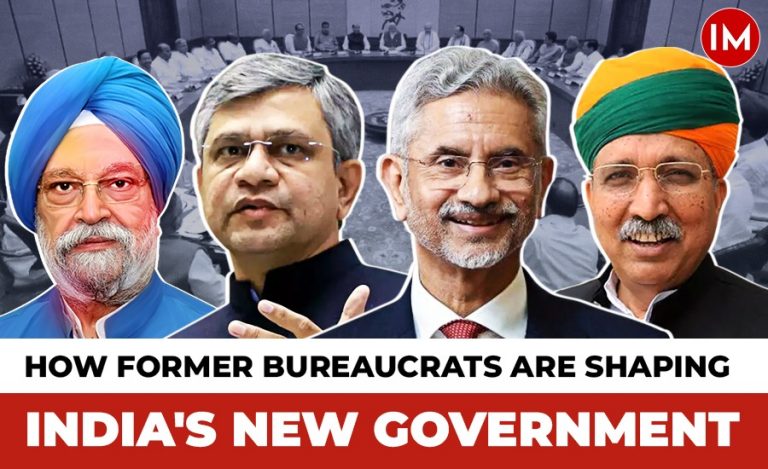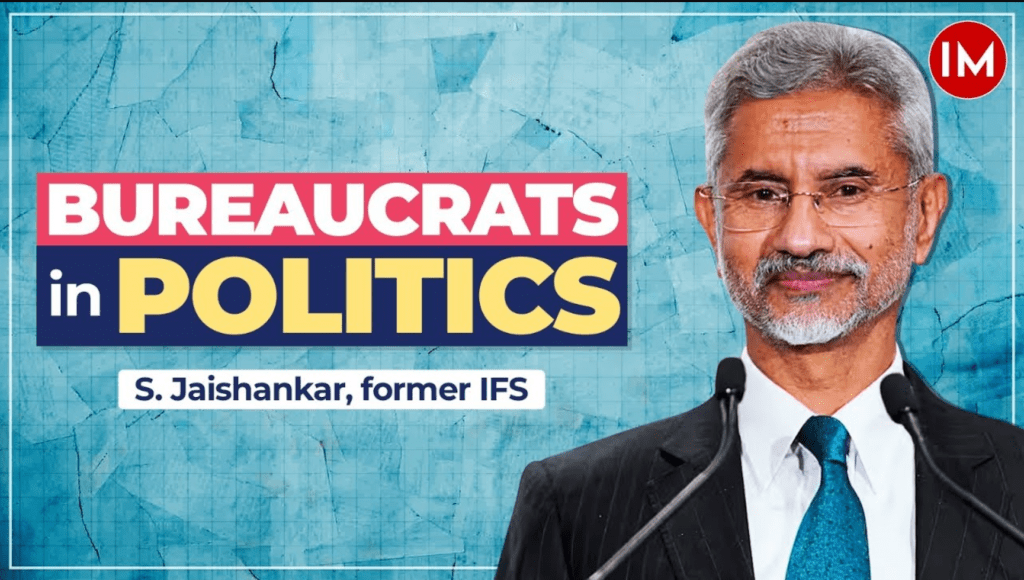
During the past five years, he might have blown hot or cold as per the demand of the situation, but he has stood like a rock in the face of global pressures to safeguard India’s economic and diplomatic interests. He, along with Union Minister for Urban Development and Petroleum Hardeep Singh Puri and BJP candidate from Amritsar Mr. Taranjit Singh Sandhu, form the triumvirate of Foreign Service officers helming the ruling BJP’s top ranks. He is India’s External Affairs Minister, S Jaishankar.
Watch the video here-
A Closer Look at India’s Foreign Policy
S Jaishankar retired as Foreign Secretary after a three-year stint in January 2018, steering the country’s foreign policy. He was inducted as India’s External Affairs Minister on May 30, 2019, though he was neither a member of any political party nor was he a member of Parliament. He joined the BJP on July 5, 2019, and the same day he was elected to the Rajya Sabha.
From heated exchanges at the United Nations to delicate balances with neighboring nations, India’s External Affairs Minister, Subrahmanyam Jaishankar, has been at the forefront of it all.
Recently, a UN spokesperson raised eyebrows, expressing apprehensions of India’s ongoing elections being unfair. It drew a swift response from Mr Jaishankar.
This is ideally a political statement, not a diplomatic one. Clearly, Mr. Jaishankar can change his skin more easily than changing clothes.
His unwavering commitment to the nation’s interests, combined with his diplomatic finesse and strategic prowess, has earned him a place among the most influential and respected figures in contemporary global statecraft.
Background
Born in 1955 in Mumbai, Jaishankar’s path was paved with an insatiable thirst for knowledge and an unwavering commitment to public service. After a stellar academic journey at St. Stephen’s College and Jawaharlal Nehru University, he joined the Indian Foreign Service in 1977, embarking on a career that would redefine India’s global engagement.
Jaishankar’s meteoric rise was marked by a keen understanding of geopolitical dynamics and a deft touch when navigating complex challenges. His early postings in Moscow and Washington, D.C., showcased his ability to resolve intricate disputes, notably the nuclear fuel supply issue with the U.S. over the Tarapur Power Stations.
Subsequent stints in Sri Lanka as a political adviser during the tumultuous Indian Peacekeeping Force operations and in Tokyo amid strained Indo-Japan ties further honed his crisis management skills.
It was Jaishankar’s pivotal role in negotiating the landmark U.S.-India civil nuclear agreement as Joint Secretary (Americas) from 2004-2007 that truly cemented his reputation as a diplomatic heavyweight. He deftly stewarded improving defense cooperation and contributed to the launch of key bilateral dialogues.
Jaishankar’s tenure as Ambassador to China from 2009 to 2013 was a masterclass in crisis diplomacy. He navigated escalating tensions with deft precision, negotiating an end to Beijing’s controversial stapled visa policy for Kashmir residents and securing China’s withdrawal from the Depsang Plains in Ladakh before Premier Li Keqiang’s 2013 visit. While advocating deeper economic ties, Jaishankar resolutely upheld Indian sovereignty during border standoffs and visa disputes, underscoring his skills as a consummate crisis diplomat.
His ambassadorial stint in the United States from 2013-2015 further solidified the strategic partnership between the two nations, strengthening shared interests across defense, trade, and investment.
However, it was Jaishankar’s appointment as India’s Foreign Secretary in 2015 that truly showcased his mastery of statecraft. His deft handling of India’s relations with neighboring countries, particularly in the aftermath of the 2016 Uri attack, reinforced the nation’s commitment to regional stability and security.
Jaishankar’s diplomatic balancing stance between the US and Russia has ensured the unabated import of crude oil from Russia to India despite US sanctions on such imports. India has boosted its economy by 6.65 billion by exporting products processed from this cheap crude to the G-7 nations that have imposed sanctions on Russia.
Even though his praise of Russia as an “exceptionally steady” partner despite its invasion of Ukraine and his decision to exclude Ukraine from the 2023 G20 summit in New Delhi has drawn flak, his policy of decolonizing from Western hegemony as part of his foreign policy has helped the nation grow, highlighting the tightrope he must walk as India’s top diplomat. For his work on foreign policy, the government conferred him with the prestigious Padma Shri in 2019.
Relationship With Pakistan
Steering towards the tumultuous relationship with Pakistan, Jaishankar minced no words. He emphasized India’s stance on cross-border terrorism, leaving no room for ambiguity.
With Pakistan, the road to normalcy seems fraught with obstacles. But Jaishankar’s resolve remains unwavering, as he champions a stance that puts India’s security above all else. Jaishankar’s approach towards Pakistan underscores India’s zero-tolerance policy towards terrorism. By prioritizing security concerns, he’s sending a clear message that India will not compromise on its national interests.
But what about the dragon in the room? China’s towering presence looms large on India’s diplomatic horizon. Jaishankar’s comments on India-China relations sparked debates far and wide.
Acknowledging China’s economic might, Jaishankar underscored the need for pragmatic diplomacy. But the moot question is whether economic pragmatism could compromise India’s sovereignty.
In his acclaimed book ‘Why Bharat Matters,’ Jaishankar lays out a roadmap for India’s global role. But his recent actions speak louder than words.
From the corridors of power to the world stage, Jaishankar’s doctrine emphasizes strength through strategic restraint. But as the world watches, questions linger: Can India balance power with principle?
Jaishankar’s doctrine emphasizes India’s role as a responsible global player. By prioritizing strategic restraint, he’s positioning India as a key player in shaping the future of international relations.