A city is not truly developed simply because it has wider roads, taller buildings or modern infrastructure. Its real progress lies in whether an ordinary family can afford a home, whether children in remote villages can access education, and whether development creates opportunities for everyone.
In Chhattisgarh, this understanding of development is driving an ambitious institutional transformation. An organisation once primarily associated with affordable housing is gradually emerging as a broader urban development agency, combining technology, infrastructure, financial sustainability and social inclusion.
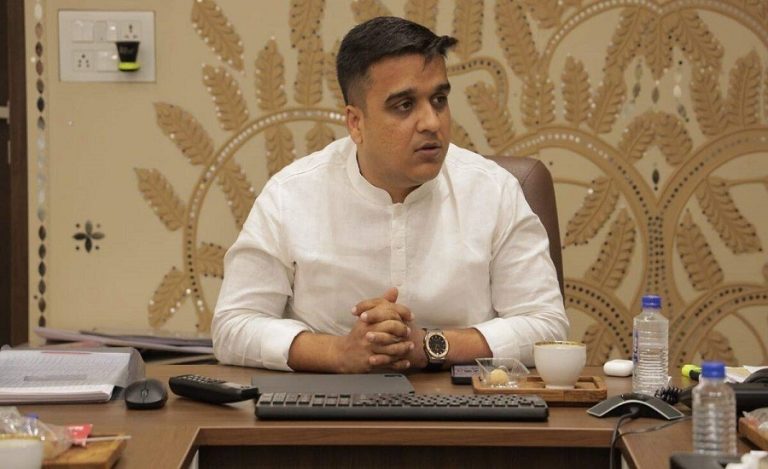
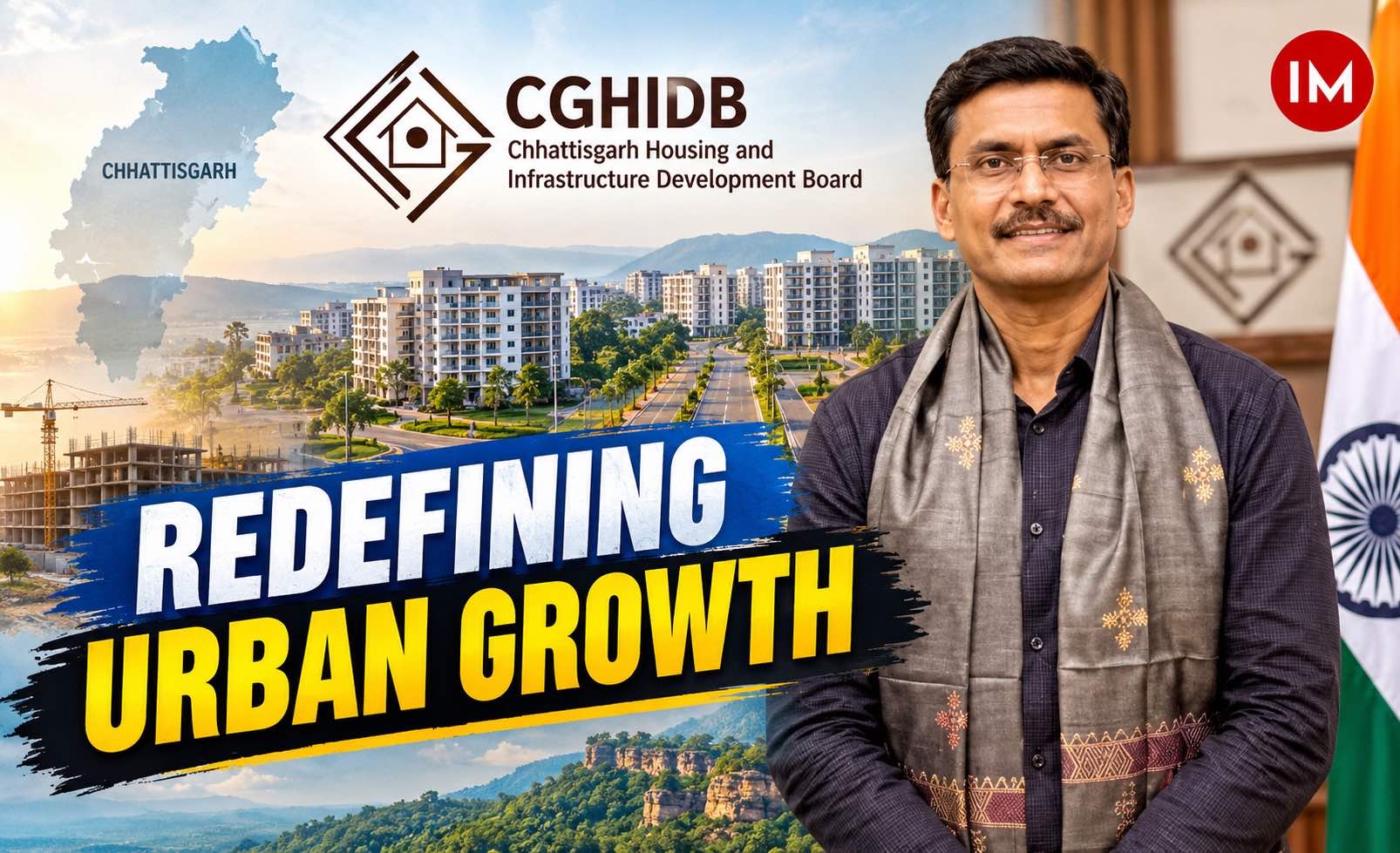
At the centre of this transformation is 2009-batch Chhattisgarh cadre IAS officer Mr Awanish Kumar Sharan, whose initiatives are reshaping the Chhattisgarh Housing and Infrastructure Development Board (CGHIDB).
From introducing fully online property booking to launching housing projects worth over ₹2,000 crore, redeveloping urban land and extending infrastructure to remote tribal communities, the initiatives reflect an approach in which development is measured not just by construction but by accessibility and impact.
Indian Masterminds interacted with Mr Sharan, who is now Chief Executive Officer (CEO) of the Raipur Development Authority (RDA) in Raipur, to understand the vision behind these initiatives, their implementation and the changes they are bringing across Chhattisgarh.
How It Started: Expanding a Housing Board’s Vision
When Mr Sharan assumed charge of the Chhattisgarh Housing Board in April 2025, the organisation already had a strong legacy of providing affordable homes.
Nearly 70 percent of its housing stock catered to Economically Weaker Sections (EWS) and Lower Income Groups (LIG), making it an important institution for families seeking affordable housing.
However, the board largely operated as a self-financing housing agency, with limited involvement in wider urban infrastructure.
Recognising the changing requirements of a rapidly urbanising state, Mr Sharan initiated efforts to expand its institutional role.
The transition from the Chhattisgarh Housing Board to the Chhattisgarh Housing and Infrastructure Development Board marked a significant milestone.
The expanded mandate opened opportunities for infrastructure development, Public-Private Partnerships (PPP), urban redevelopment and Town Planning Schemes.
The underlying vision was to preserve the board’s affordable housing legacy while equipping it to address emerging urban challenges.
“Our objective was not to move away from affordable housing, but to expand the institution’s capabilities. Urban development today requires an integrated approach where housing, infrastructure and planned growth go hand in hand,” he said.
Digital Transformation: Making Property Services Easier
One of Mr Sharan’s earliest priorities was improving service delivery, strengthening transparency and rebuilding public confidence.
Under the Digital India framework, CGHIDB introduced technology-driven reforms to simplify procedures that traditionally required multiple visits and considerable paperwork.
The Allottee Portal brought essential property-related services onto a single digital platform. Beneficiaries could access property details, check outstanding dues and maintenance charges, and make payments online.
Another major achievement was the introduction of end-to-end online property booking through the board’s official website, cghb.gov.in.
This placed CGHIDB among the early housing institutions in India to offer comprehensive digital property booking.
The board also introduced simultaneous registration and possession, simplifying the allotment process and reducing delays and costs associated with vacant properties.
He said, “Technology should make government services simpler and more accessible. We wanted people to be able to book properties, check their details and complete payments without unnecessary visits to offices. Transparency and convenience were our priorities.”
These reforms aimed to make housing transactions more transparent, convenient and accessible.
Implementation: New Policies and a ₹2,000-Crore Housing Push
Beyond administrative reforms, Mr Sharan focused on improving housing sales, strengthening market confidence and expanding development opportunities.
The introduction of a Bulk Sale Policy enabled institutions to purchase housing units in larger numbers, creating an additional channel for selling available inventory.
Marketing initiatives also received renewed attention.
A major milestone came with the State-Level Housing Fair 2025, popularly known as Awas Mela, where 56 housing projects worth more than ₹2,000 crore were launched.
The initiative helped showcase housing opportunities across the state and strengthened engagement with prospective buyers.
The impact was reflected in property sales.
Average annual sales increased from 1,559 units during 2019–2023 to 2,955 units during 2024–2026, representing an increase of approximately 90 percent.
Sales value also climbed from ₹72 crore to ₹613 crore across the reported periods.
These figures indicate growing market engagement and improved utilisation of the board’s housing inventory.
Urban Redevelopment: Giving Existing Land a New Purpose
Another important component of the transformation involves using existing urban land more efficiently.
Instead of relying exclusively on new construction, CGHIDB has begun focusing on ageing residential colonies and underutilised properties that offer redevelopment potential.
Under Phase I, five redevelopment projects covering approximately 19 acres, valued at around ₹250 crore, are being pursued through the PPP model.
Town Planning Schemes are also part of the expanded mandate, with an emphasis on integrating residential development with public infrastructure, transport corridors, landscaping and green spaces.
Meanwhile, the proposed Mainpat project in Surguja represents a different approach to development.
The project seeks to combine housing, wellness and tourism, demonstrating how infrastructure investments can support broader regional economic opportunities.
Together, these initiatives indicate a shift from isolated housing construction towards more integrated urban planning.
Inclusive Development: Reaching Remote Tribal Communities
For Mr Sharan, the board’s expanding mandate also extends beyond urban centres.
CGHIDB has established its presence in 30 of Chhattisgarh’s 33 districts, with a long-term objective of reaching every Vidhan Sabha constituency.
Particular attention is being directed towards underserved and remote regions.
Under the Pradhan Mantri Janjati Adivasi Nyaya Maha Abhiyan (PM-JANMAN), the board is contributing to infrastructure development for Particularly Vulnerable Tribal Groups (PVTGs).
This includes hostels and educational facilities intended to improve access to essential services in remote tribal areas.
The organisation’s wider infrastructure portfolio also includes schools, healthcare facilities and warehouses.
Such projects demonstrate how a housing institution can use its construction expertise to address broader social needs.
“Development cannot remain confined to cities. Our responsibility is also towards people living in remote and underserved areas. Through educational infrastructure, hostels and other facilities, we want development to reach communities that need it the most,” IAS Sharan said.
For communities where geographical isolation often limits access to facilities, these investments have the potential to improve educational opportunities and essential service delivery.
Financial Discipline: Expanding Without Debt
One notable aspect of CGHIDB’s expansion is its financial management.
Despite undertaking housing projects, infrastructure development and redevelopment initiatives, the board has maintained a debt-free position.
Its self-financing model, combined with measures to improve property sales and optimise available assets, has supported continued operations.
The Bulk Sale Policy, digital booking system and stronger marketing efforts form part of this wider approach.
Maintaining financial stability while expanding development responsibilities remains important to the institution’s long-term sustainability.
A Wider Role in Raipur’s Urban Development
Mr Sharan’s responsibilities expanded further in January 2026 when he assumed charge as Chief Executive Officer of the Raipur Development Authority (RDA).
The assignment brought additional responsibility for planned development and infrastructure execution in Chhattisgarh’s capital.
Among the significant urban initiatives associated with RDA is the Kamal Vihar township project, envisioned as a planned residential development with modern amenities.
Mr Sharan’s earlier experience as Municipal Commissioner of Raipur and Bilaspur also provides administrative familiarity with urban governance, civic infrastructure and municipal challenges.
Impact and the Road Ahead
The transformation of CGHIDB is still evolving, but its direction is becoming increasingly clear.
Digital services are simplifying property transactions, new housing projects are expanding opportunities, redevelopment initiatives are seeking better use of urban land, and social infrastructure is extending the board’s reach to underserved communities.
With operations spanning 30 districts, the next ambition is wider geographical coverage and stronger integration of housing with infrastructure development.
For Mr Sharan, the larger challenge is ensuring that institutional expansion translates into meaningful public benefits. “Our vision is to develop CGHIDB into an institution that contributes to the overall growth of Chhattisgarh. Affordable housing will remain an important priority, but we also want to strengthen infrastructure, improve urban planning and ensure that development is inclusive and sustainable,” he added.
The emerging CGHIDB model offers an important lesson in public administration: an institution’s greatest strength lies not merely in what it has built, but in how effectively it can evolve to meet people’s changing needs.
And in Chhattisgarh, that evolution is gradually redefining what a housing board can achieve.