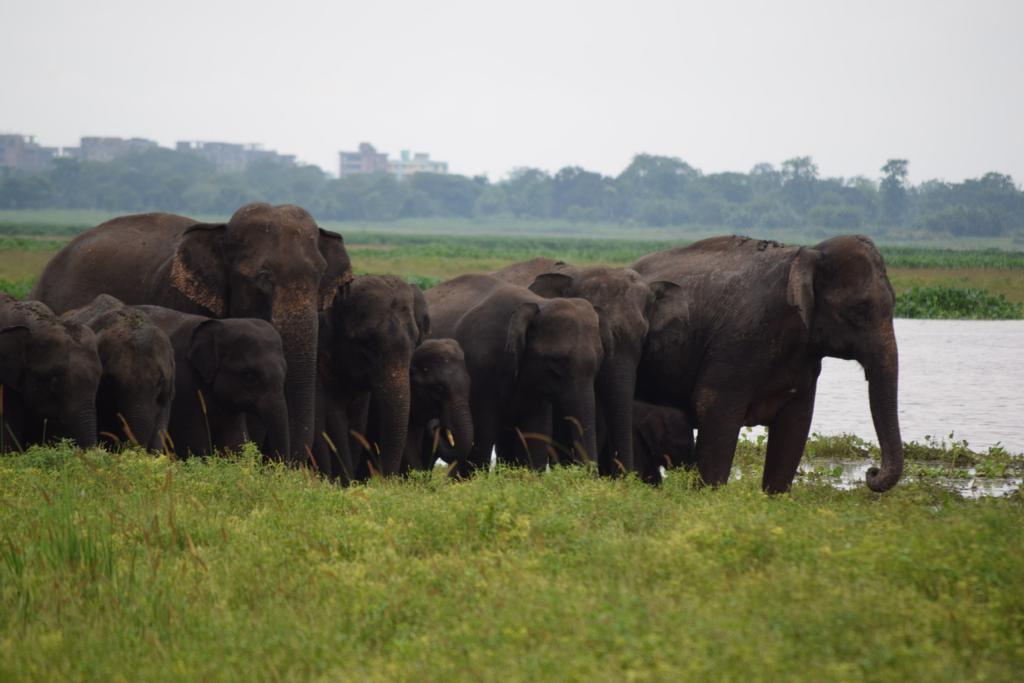
India’s northeastern state, Assam, is a natural home to elephants, from the standpoint of climate suitability, availability of natural forages and fodder, abundant water sources, and a general accommodating culture that encourages harmonious coexistence between human and wildlife.
However, fragmentation of habitat, exploding human population resulting in large scale encroachment and loss of corridors and habitats, and expansion of railway tracks through forest areas are posing threats to the elephants of Assam. Of late, relocation of elephants is another issue that has divided opinions and raised concerns among experts on its tenability.
So, on the special occasion of World Elephant Day, Indian Masterminds spoke to senior officials of Assam Forest to get their views on healthy and sustainable ways to preserve the majestic pachyderms, keeping in mind their well-being and long term benefits.
ARE ASSAM ELEPHANTS DIFFERENT IN ANY WAY?
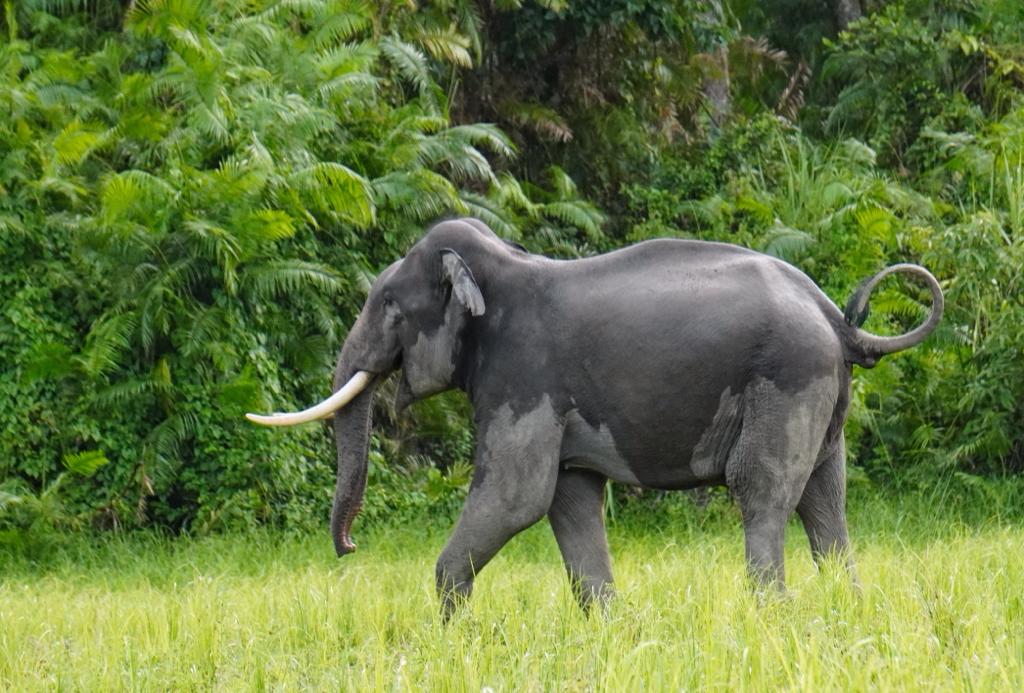
Principal Chief Conservator of Forests & Head of Forest Force and Chief Wildlife Warden, Assam, Mr. Mahendra Kumar Yadava, IFS, told Indian Masterminds that elephant herds in Protected Areas (PA) like Kaziranga National Park, Manas National Park and Orang National Park have been observed to be peaceful and less aggressive in behaviour. Elephants coming out of these PAs to human habitation usually exhibit similar characteristics.

“In contrast, the elephant population living in fragmented habitats is generally found to be more reactive to human behaviour and aggressive. No other local variation is generally observed in Assam elephants,” he said.
Corroborating his views, Field Director of Assam’s famous Kaziranga National Park, Jatindra Sarma, IFS, also said that no such special characteristics are found in elephants of Assam. However, ratio of ‘makhana’ and ‘tusker’ is tilted in favour of makhana. Most of the elephants in Assam are of ‘Dohar’ bundh and a major population, around 1000, is found in the Kaziranga Tiger Reserve, which is a part of the Kaziranga Karbi Anglong Elephant Reserve.
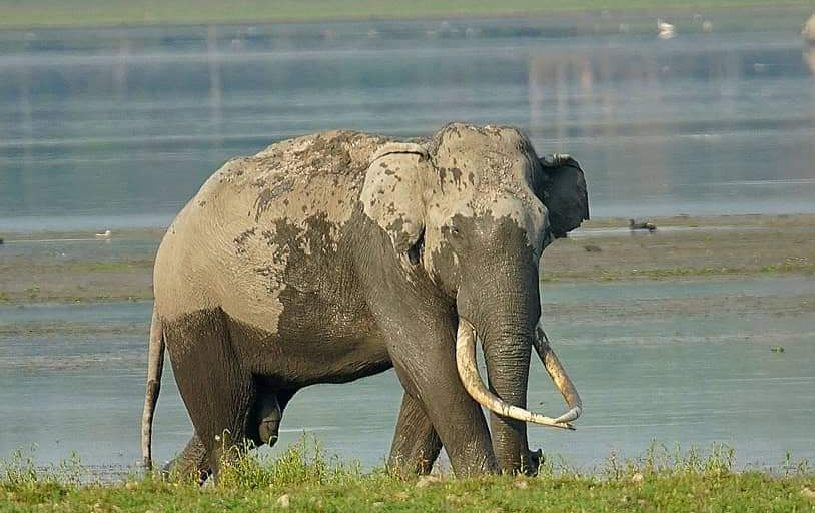
“Genetically all the Asian elephants are similar, except the Borneo elephants. There are some phenotypic variations that are difficult to describe. Assam elephants are comparatively smaller when compared to South Indian elephants. Here, in the wild, you see more makhnas than tuskers, and they have less depigmentations,” he told Indian Masterminds.
IS RELOCATION ADVISABLE?
Assam has been relocating only rescued elephants from wild to wild. 13 male and 16 female elephants have been rescued and rehabilitated in Manas National Park, after necessary veterinary care was provided in the Centre for Wildlife Rehabilitation and Conservation in Kaziranga National Park, since 2007.
Chief Wildlife Warden, Assam, Mr. Mahendra Kumar Yadava, said that sometimes, aggressive and dangerous elephants have to be captured and relocated to protect life and properties of people. He gave the example of an adult makhana turned ‘human killer’ in Goalpara district. It was captured, transported and relocated safely to Orang National Park in Mangaldoi, at a distance of about 260 km from the capture site. But it died due to injuries sustained during conflict.
“The success rate of relocation is 42% in the state. It is advisable to capture and relocate only the elephant which becomes dangerous to human life or is disabled or diseased as to be beyond recovery, under Section 11 of the Wildlife (Protection) Act, 1972,” he said.
Field Director Kaziranga, Mr. Jatindra Sarma, said that no such organized relocation of animals is attempted from wild to wild, other than the rescued ones. However, domestic elephants are at times transported out of Assam for use in temples. “Elephant is a social animal. If question of relocation comes, then the entire family has be relocated, which will be a very tough job,” he said.
Field Director of another renowned national park of Assam, Manas Tiger Reserve, Mr. Vaibhav Mathur, IFS, said that relocation is possible, provided there are vast expanses of forest with suitable welfare factors for elephants available. But, due to population and pressures of an aspirational nation, such expanses are hard to come by. Forests are now islands in a sea of humanity, which does not augur well for elephants, he said.
“There are mainly three contiguous patches of forests in Assam, the rest are fragmented. The Kaziranga and Manas landscapes, where elephants are nearing or are already at their carrying capacities, and the Dilli-Joypur-Saraipung patch in the Dihing Patkai National Park. All others are patchy forests where conflict levels are high. So relocation within Assam does not seem a tenable long-term solution,” he told Indian Masterminds.
HOW TO MITIGATE THREATS TO ELEPHANTS
The Chief Wildlife Warden of Assam, Mr. Yadava said that they are focussing on raising large scale plantation in the degraded areas of Reserve Forests and securing the identified elephant corridors to provide safe passage to elephants, as a long-term measure.
The areas of focus are: strengthening and increasing the Protected Area network in the state; connecting identified elephant corridors; recovery of encroached areas inside reserved forests/protected areas; large scale plantation in degraded areas in the reserved forests; study of ranging pattern, use of habitat and behaviour of elephant through radio-collaring method.
The Field Director of Manas, Mr. Mathur said, “The challenge is to factor in the needs of elephant conservation in the developmental paradigm, keeping their historic migratory paths intact through appropriate mitigation strategies, so that they can move between these islands and, at the same time, development happens. One cannot be at the expense of the other.”
He further said that habitat loss can be tackled by following India’s National Wildlife Action Plan in letter and spirit, which advocates a landscape approach to conservation, and by safeguarding the contiguous patches of forests and securing the corridors.
Assam has been proactive that way, he added. The state has notified several addition areas around sources, which are PAs in themselves, which has made large contiguous swathes of land protected under the law, besides notifying new PAs as well as upgrading their status.
“Conflict cannot be done away with but its negativities can be minimized, like hazard and risk. While the hazards remain, we minimize the risks, e.g., not making a house in an elephant corridor area, installation of solar fencing, growing crops which elephants do not relish, etc,” Mr. Mathur said.
The Chief Conservator of Forests, Southern Assam Circle, Mr. Sivakumar Periyasamy, IFS, also spoke to Indian Masterminds. He said that development activities disturb animal movement. Hence, it is important to balance development activities and elephant conservation. “Landscape approach is the best approach. Animal should have free movement. Limited base gives rise to in-breeding. Hence, genetic diversity has to be taken care of. The emphasis should be on quality, rather than quantity.”
PROMOTE INDIGENOUS PLANT SPECIES AS ELEPHANT FOOD
Mr. Periyasamy further said that promoting indigenous species in all plantation programmes is very important. “Local species should be grown as elephants become dependent on them. For instance, kanchan, gamari, sam kathal, kumdeep, etc., should be grown here, as these locally grown species support the elephants. An adult elephant needs at least 200 kg fodder per day,” he said.
Echoing this view, Field Director Kaziranga, Mr. Sarma said, “A long term measure should be regeneration of habitat and probable habitat with elephant preferred species of grasses and trees, like Dillenia Indica, Mallotus Philippensis, Bamboo Spp, Alpinia Allughas, Artocarpus Spp Careya Arborea Spp, Cane Spp, etc.”
NATIONAL AWARD TO ASSAM MAHOUT
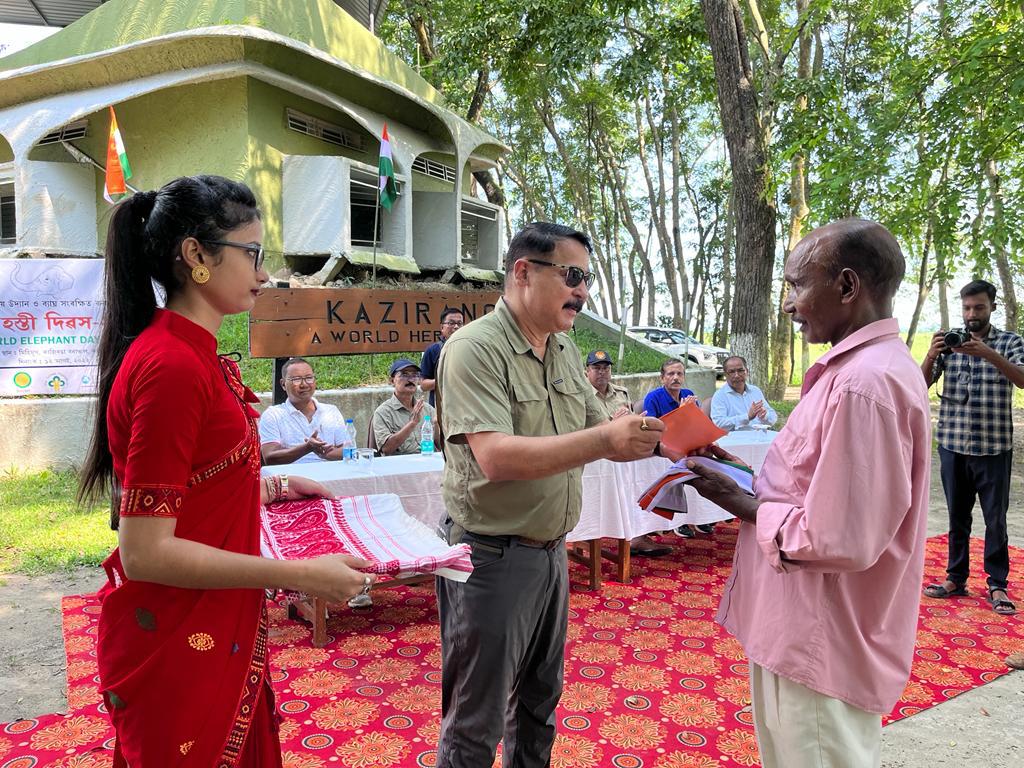
Assam is celebrating World Elephant Day 2022 today with special bath and barakhana (grand feast) to pamper the elephants, including health check-up of 173 captive ones, felicitation of mahouts and ghasis (grass cutters) who are the elephant keepers, and day-long awareness programmes in all districts.
The Manas Tiger Reserve has an added reason to celebrate. The Government of India has conferred the Gaj Gaurav Award to Manas’ head mahout Dandeswar Boro, who received it today at the Periyar Tiger Reserve in Kerala from the Union Forest Minister.
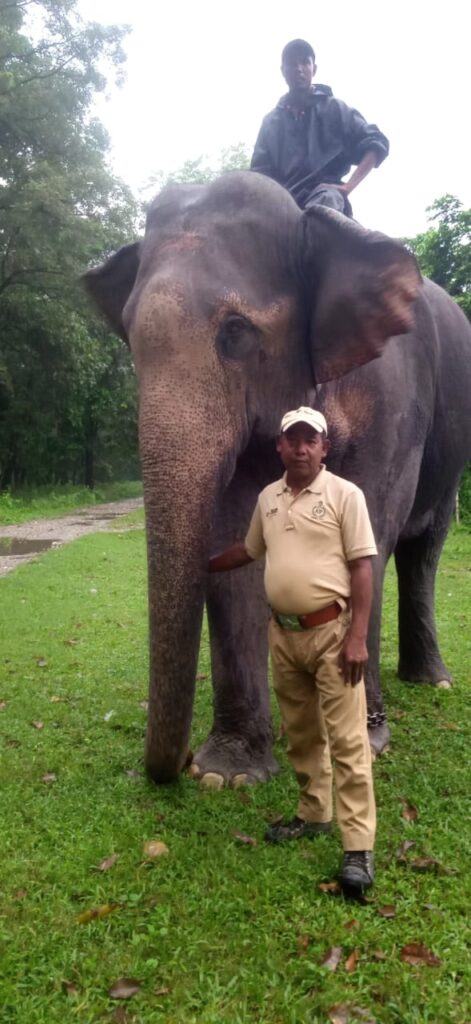
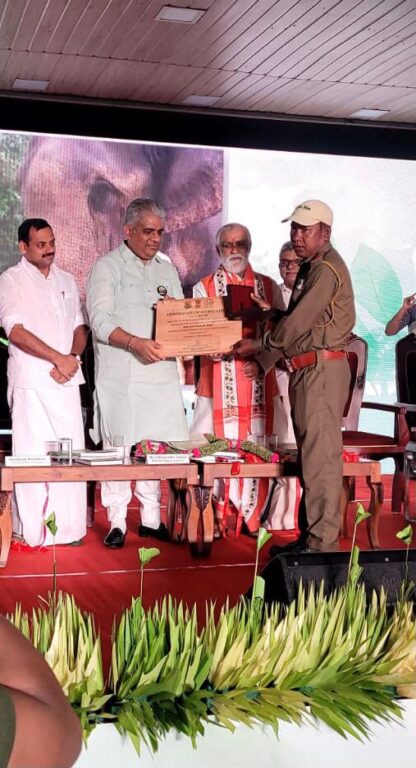
Right: Boro receiving award from Union Forest Minister on World Elephant Day 2022 at Periyar Tiger Reserve, Kerala
Revealing this piece of information, Field Director of Manas, Mr. Vaibhav Mathur summed up the true significance of this day dedicated to elephants: “Elephants are ecosystem engineers, conserving them guarantees the health of all wild habitats.”