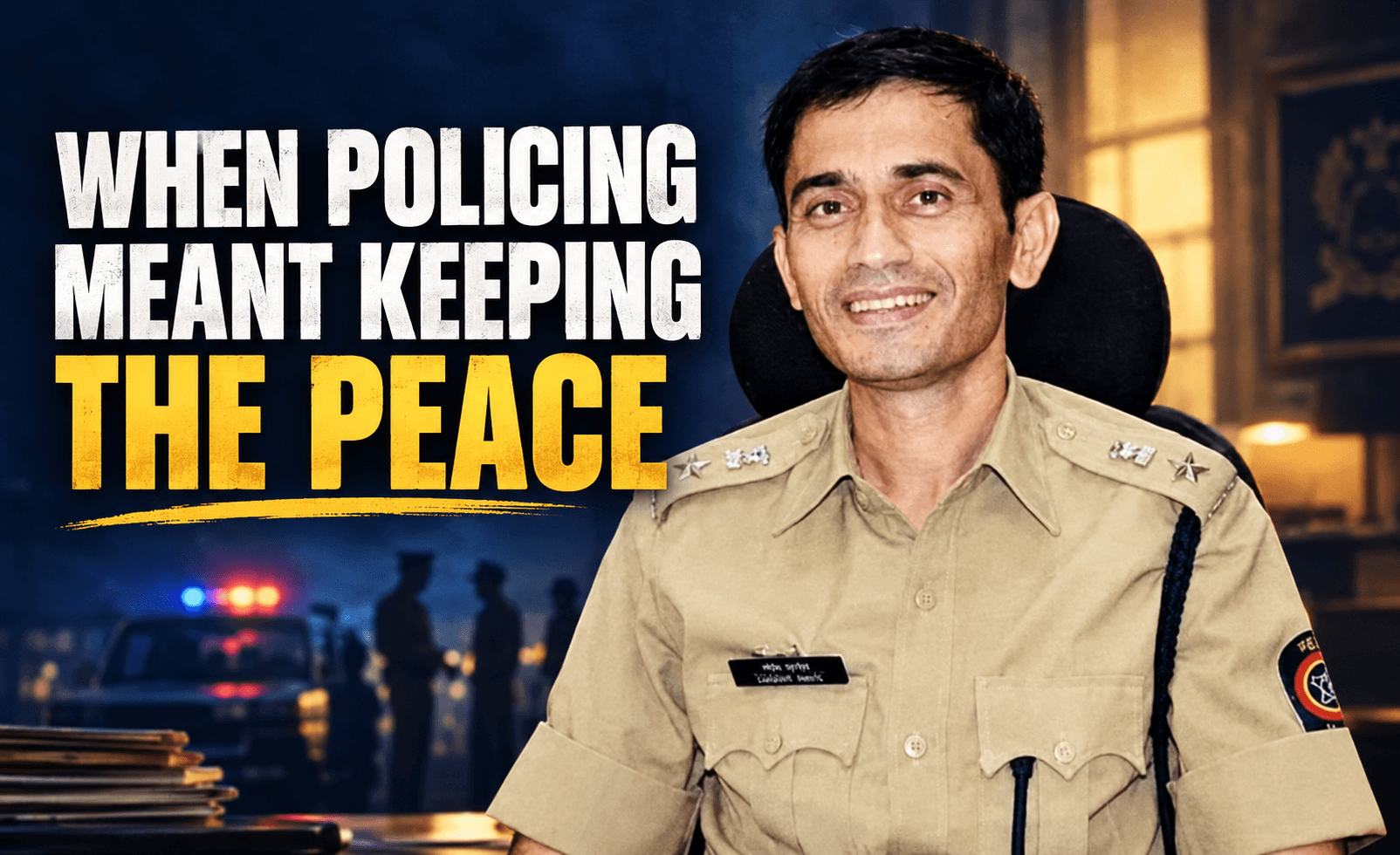
For a police officer, success is often measured by the crises that never escalate. The crowd disperses peacefully, the event concludes without violence, businesses continue operating and citizens return home without having to think about the arrangements that protected them.
During his career in Maharashtra, 2006 batch IPS officer Sandip Patil encountered situations in which maintaining that ordinary peace required extraordinary preparation.
One such period followed the violence associated with the Bhima Koregaon events. The atmosphere was sensitive, public attention was intense, and the police faced the task of ensuring that tensions did not spill over into fresh unrest.
Patil recalled that creating a positive environment after the riots was a major achievement. The next test came on January 1, 2019, when the annual Bhima Koregaon gathering again drew nationwide attention.
Effective police management, engagement with the community and cooperation among stakeholders helped the event pass peacefully.
For Patil, the experience demonstrated that crowd management is not simply about placing enough personnel at the right locations. It also depends on understanding public sentiment, coordinating with different groups and preventing uncertainty from becoming confrontation.
Also read: IPS Sandip Patil: How Gadchiroli’s Police Rewrote the Fight Against Naxalism
A Police Force That Must Earn Public Confidence
The demands of policing are particularly complicated when an event carries political, historical or social significance. A heavy-handed response can deepen mistrust, while inadequate preparation can leave the public exposed to violence.
The challenge is to uphold the law while protecting the public’s right to assemble peacefully.
Patil’s account of the January 2019 event places emphasis on coordination and engagement rather than force alone. Police preparedness had to be accompanied by communication with communities and cooperation with the different stakeholders involved.
That approach reflects a broader feature of his career: the need to balance firm law enforcement with the practical realities of a diverse society.
Why Industrial Security Became a Policing Priority
Another important strand of Patil’s work has been the relationship between public safety and economic activity.
During his tenure in Pune Rural, he focused on providing a secure environment for industry. For businesses, security is not an abstract administrative concern. It affects whether workers can travel safely, whether operations can continue without disruption and whether investors feel confident about establishing or expanding facilities.
Patil described industrial security as a priority and discussed efforts to create a more reassuring environment for businesses.
That concern has acquired fresh significance in the Nagpur region, where industrial development and connectivity with the emerging steel hub around Gadchiroli and Chandrapur are creating new economic opportunities.
Investment can bring employment and change the prospects of a region, but it also places greater demands on law enforcement. The police must respond to conventional crime, protect industrial establishments and ensure that economic growth does not create new vulnerabilities.
Speaking about his priorities in the region, Patil told Indian Masterminds, “Providing a secure environment for industry remained important because substantial investment was coming into the area.”
For him, the task is to ensure that industrial expansion and public security move together rather than at the expense of one another.
A Difficult Balance Between Law and Democratic Rights
Patil also recalled an episode from his tenure in Parbhani that tested the relationship between policing and democratic freedoms.
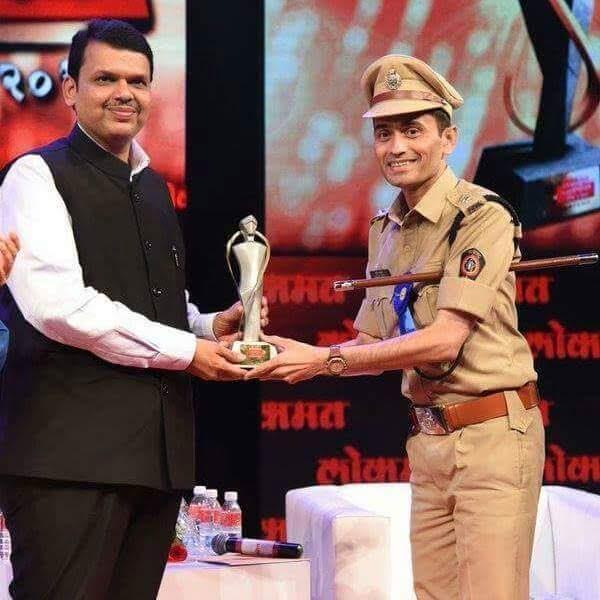
He was the first Superintendent of Police in Maharashtra to grant permission for a public meeting by Asaduddin Owaisi, whose first such meeting in the state was held in Parbhani during Patil’s tenure.
The decision came against a backdrop of reluctance among authorities to permit the event. However, as Patil explained, a High Court order had established that a sitting Member of Parliament could not simply be prohibited from holding public meetings.
The police therefore had to work within the law and make arrangements for the meeting to proceed.
The episode offers a different perspective on the responsibilities of a police officer. Maintaining order does not always mean preventing a gathering. At times, it means ensuring that a lawful gathering can take place safely, even when it is politically sensitive or attracts strong reactions.
It is a reminder that public order and democratic rights are not necessarily opposing objectives. Responsible policing must protect both.
The Work That Never Leaves the Priority List
As a senior officer, Patil has also identified crimes against women and children, cybercrime and the broader national objective of a drug-free India among the police’s continuing priorities.
The Nagpur region presents a particularly interesting combination of responsibilities: traditional law and order, industrial expansion and the continuing need to contain Left-Wing Extremism in parts of eastern Maharashtra.
Different Postings, One Central Responsibility
Patil’s experiences in Parbhani, Buldhana, Pune Rural and the Maoist-affected areas of Gadchiroli have brought him into contact with very different kinds of policing challenges. His work in Gadchiroli demanded operational preparedness and the extension of state services into remote communities. His experience in Pune involved sensitive public events and the creation of a secure environment for industry. His responsibilities in the Nagpur region bring together public safety, regional development and counter-insurgency.
The circumstances may change, but the central responsibility remains the same: to make the law effective without losing sight of the people it is meant to protect.
In the end, the measure of policing is not only how a force responds when a crisis erupts. It is also whether citizens can exercise their rights, businesses can function, vulnerable people can seek help and communities can go about their lives without fear.
Also read: Brighu Srinivasan: The IPS Officer Leading India’s Elite NSG Force