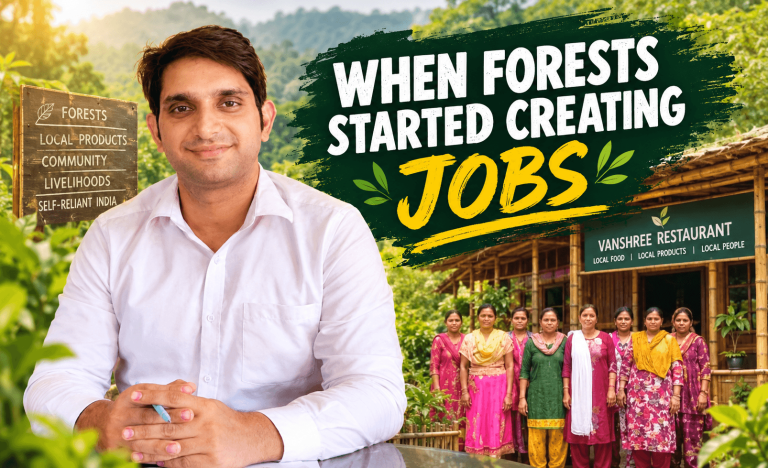
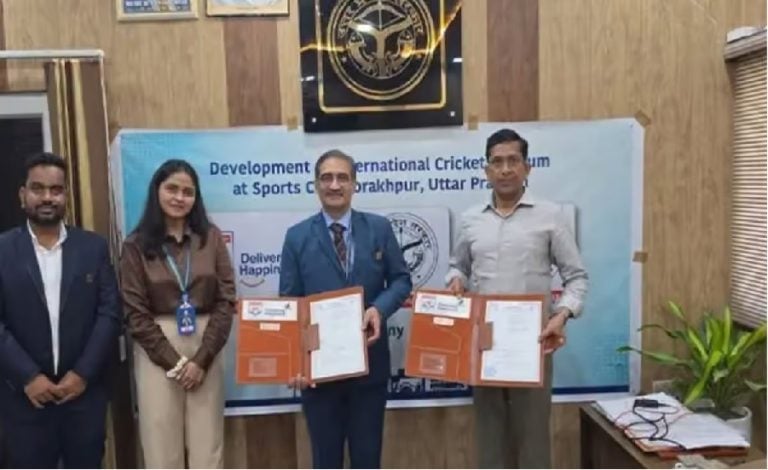
With his ‘Swawlambi Gaon’ initiative, Deputy Commissioner of Koderma, Aditya Ranjan, IAS, wants to make the villages under his jurisdiction self-sufficient in every field.
This Koderma village project beautifully showcases how development can be accomplished more quickly and sustainably when it becomes a shared objective between the people and the government.
In this second part of our story on Koderma moving towards self-sufficiency, Mr. Aditya Ranjan shares more details about the ‘Swawlambi Gaon’ programme.
MAKING VILLAGES SELF-SUFFICIENT
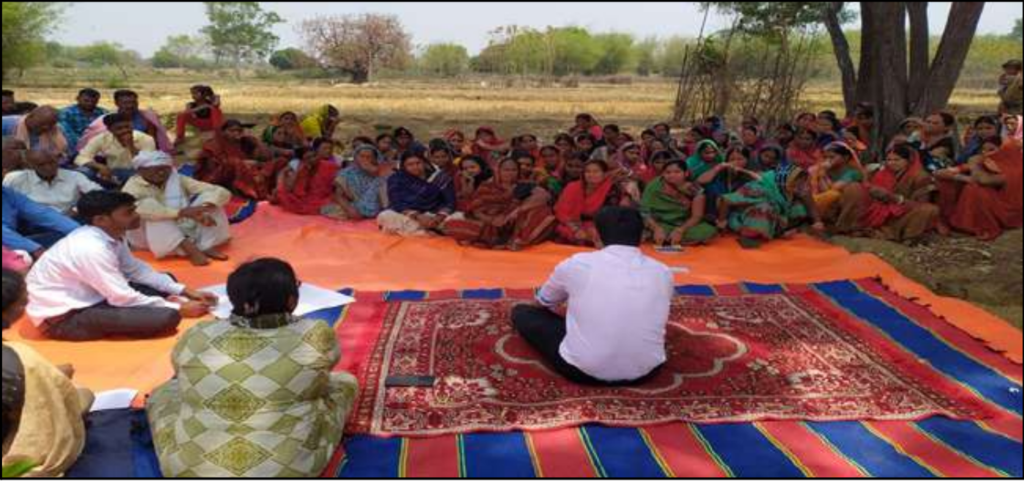
Mr. Ranjan began the programme by organising gram sabhas and ratri chopals in the villages, wherein he made note of the areas to which the villagers wished to bring development.
The success of this initiative was hugely dependent on the participation of villagers, their enthusiasm and their willingness to work collaboratively. The initial few months were entirely devoted to making this happen. Villages were visited, meetings were held, ideas were communicated and opinions were challenged, and once everyone was on board, work began on the areas identified. Community and personal hygiene, water conservation and education emerged as common areas prioritized by villagers in almost all villages.
CLEANLINESS DRIVE
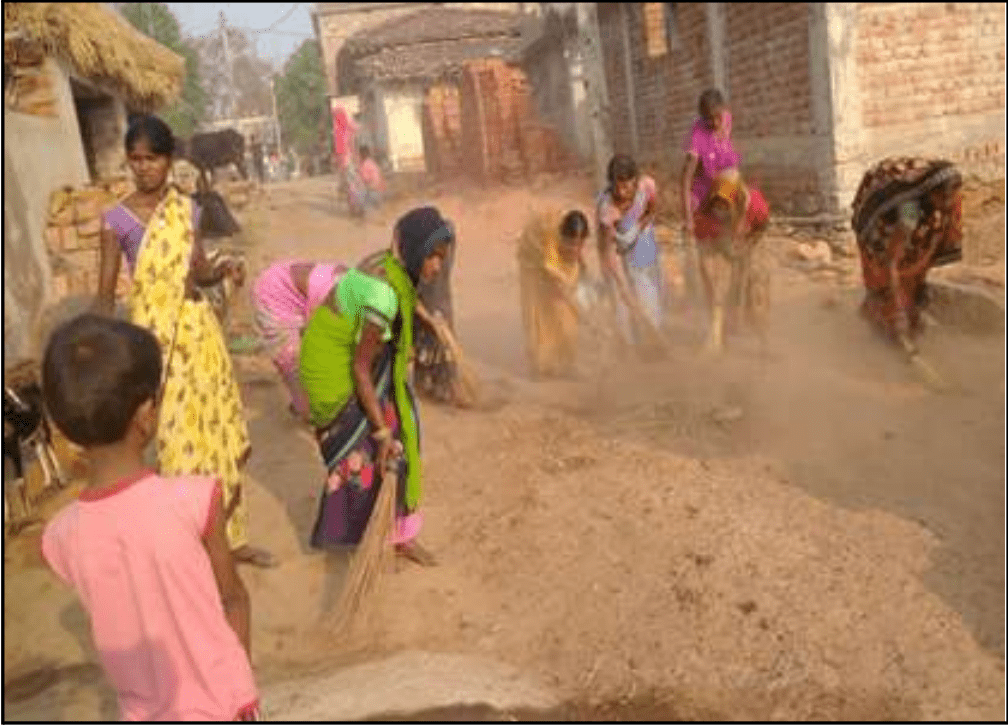
The first point of focus was cleanliness and hygiene in the villages. The concept of shramdaan was adopted by the locals as a way to start cleaning up the neighbourhoods, residences, and public areas. People volunteered to clean up the village’s common areas, including roads, wells, and other public spaces.
A strong sense of accountability and ownership was felt because the villagers themselves had contributed to the creation of this clean village. As a result, everyone started holding each other accountable for littering and scrubbing up local areas.
“Soak pits were formed in every house to drain waste water into, to prevent the collection of dirty water in villages which results in the breeding of flies and mosquitoes and spread of different viruses and diseases,” Mr. Ranjan said.
On a personal level, villagers made sure that their children are clean and paid attention to their grooming, such as cleaning and cutting nails, washing hair, wearing proper and clean clothes, etc.
WATER CONSERVATION
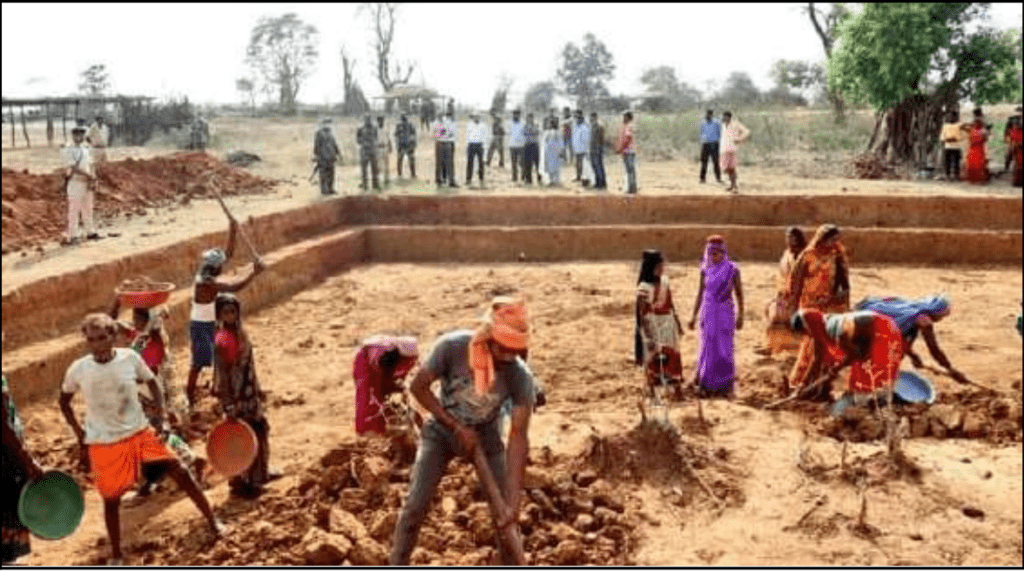
The next point of focus was water conservation in the village. Mr. Ranjan believed that conserving water in the village will bring more financial opportunities for the villagers. He selected the unproductive areas and lands in the villages and, with the help of villagers, got large trenches dug in those lands.
The trenches were dug so that ponds and check dams could be built to conserve water. Farm boundaries were elongated throughout the villages to collect rainwater in the fields for their flourishment.
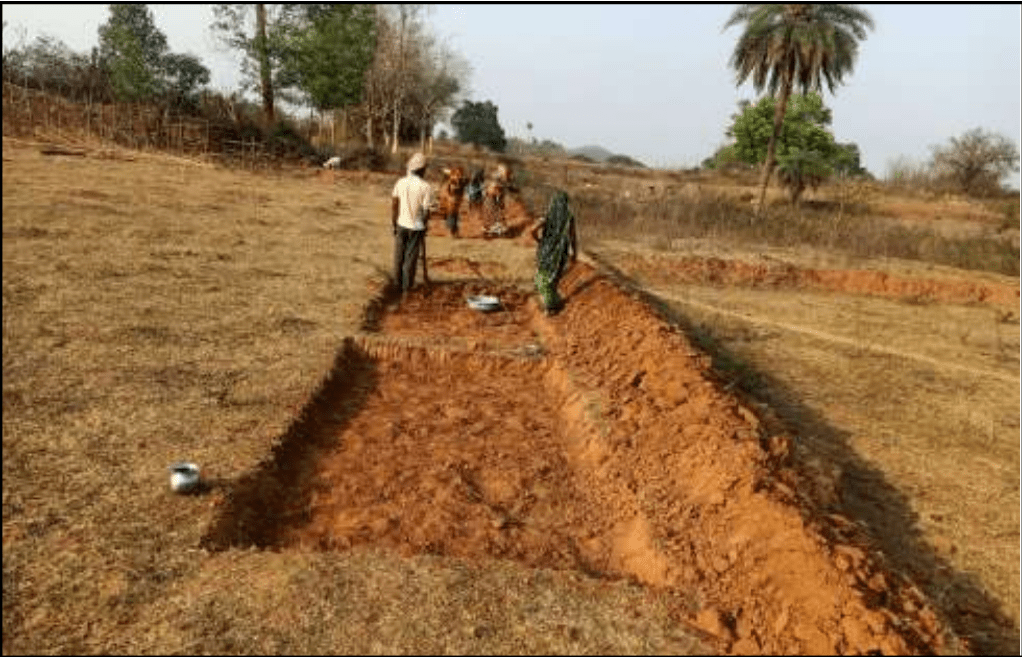
“Our water levels are going low. In this way, we will be able to increase the groundwater level which will benefit the villagers in the long run. We are able to save at least 30,000 litres of water now,” the officer said.
Moreover, the increase in groundwater levels directly increases the fertility and productivity of lands, resulting in increased crop production and growth, thereby bringing a rise in farmers’ incomes. Over 4000 acres of PCB is done through shramdaan and MGNREGA.
FOREST CONSERVATION
The pilot project of forest conservation that began in just four villages initially has now spread to over 120 villages, where there is a complete ban put on cutting down trees. The project is called ‘kulhadi bandi’ (ban on axe).
If there is an absolute necessity for an area to be cleared of trees, a discussion is held in the gram sabha to discuss it and give permission.
“No one can cut a tree otherwise. If a person tries to cut down a tree without special permission, he or she is punished by the members of the gram sabha and if he or she is still adamant in doing so, then a case is registered against them by the forest department.”
LARGE-SCALE TREE PLANTATION
To beautify the villages sustainably and protect mother nature simultaneously, a large-scale plantation campaign was also launched in the Koderma villages.
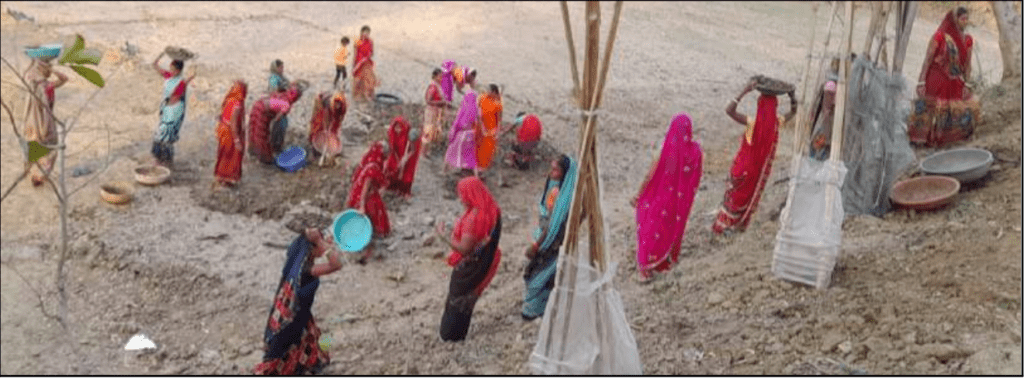
Under the campaign, villagers were responsible for excavating thousands of pits and planting saplings in them. At the same time, the district administration also ensured that saplings were available even in the most distant areas of these communities.
“Close to 1 lakh plantation was done by the villagers without any government funding,” Mr Ranjan told Indian Masterminds.
LIVELIHOOD OPPORTUNITIES
After successfully completing the first three-phase of the initiative that involved cleanliness, water conservation and plantation, and education, the district administration will now focus on the fourth phase of the project i.e., providing livelihood opportunities for the women of the villages.
For this, all the villages will be surveyed and the collective interest of the villagers will be observed. According to the interest of the villagers, concerned departments will be notified and their training will commence.
“Under this, women will be trained in stitching, weaving, organic utensil production, fish rearing, cattle rearing, agriculture, etc., so that they can earn livelihood for themselves and their families.”The pilot project started with four villages, and so far, 120 villages have been covered under ‘Swawlambi Gaon’.