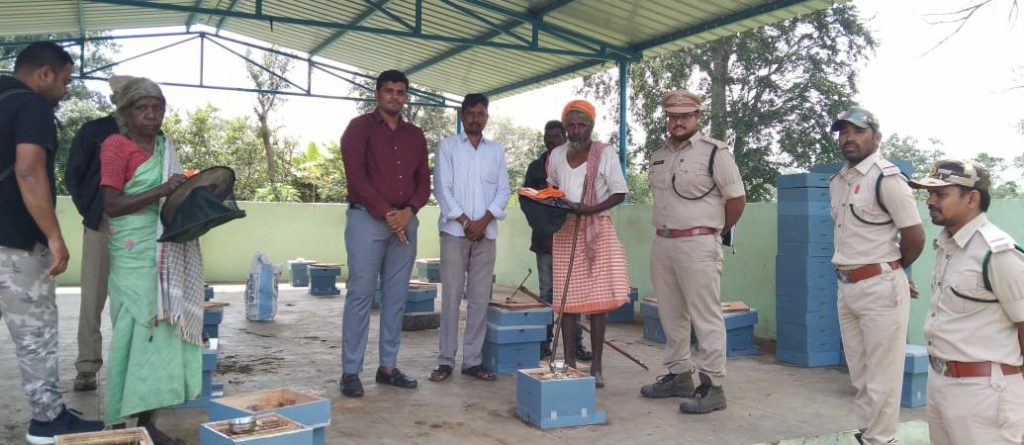
To provide an alternative source of income to the Chenchu tribe living in the Amrabad Tiger Reserve (ATR), forest officials have started the initiative of apiculture, adding some different techniques to it. Only indigenous bees are being used and the bee hives are being reused, which increase the honey production, and also save time and efforts.
Recently, forest officials distributed more than 100 honey bee boxes to promote apiculture as an alternative livelihood opportunity for the Chenchu people, and this initiative has already started producing good results. While the Chenchus are known as the hunting and gathering tribe and have been collecting honey for ages, with this initiative, they can now increase their income and earn livelihood in an organised way.
Indian Masterminds interacted with 2018-batch IFS officer Rohith Gopidi, Forest Divisional Officer, Amrabad Division, and G. Swetha, Education and Public Relation Officer at Amrabad Tiger Reserve, to get more details of this initiative.
PROMOTING APICULTURE
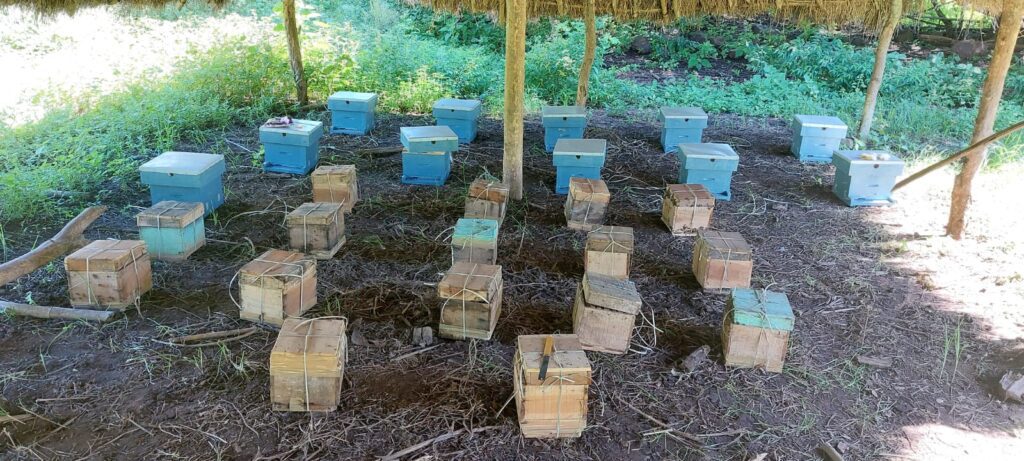
Apiculture was on the radar of the forest officials as they wanted the villagers to get more engaged in it so as to reduce their activities inside the forest. These are the villages that fall in the core area of the forest. With this initiative, the villagers can stay at home and produce more honey, which will provide them with extra income.
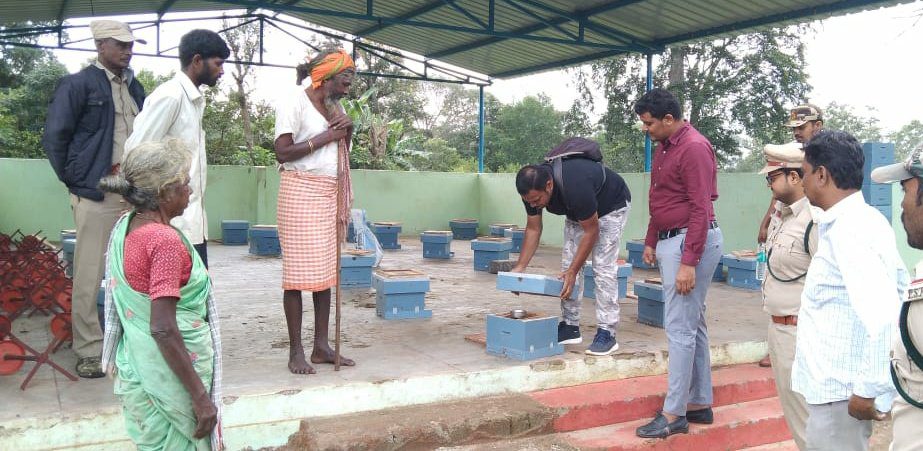
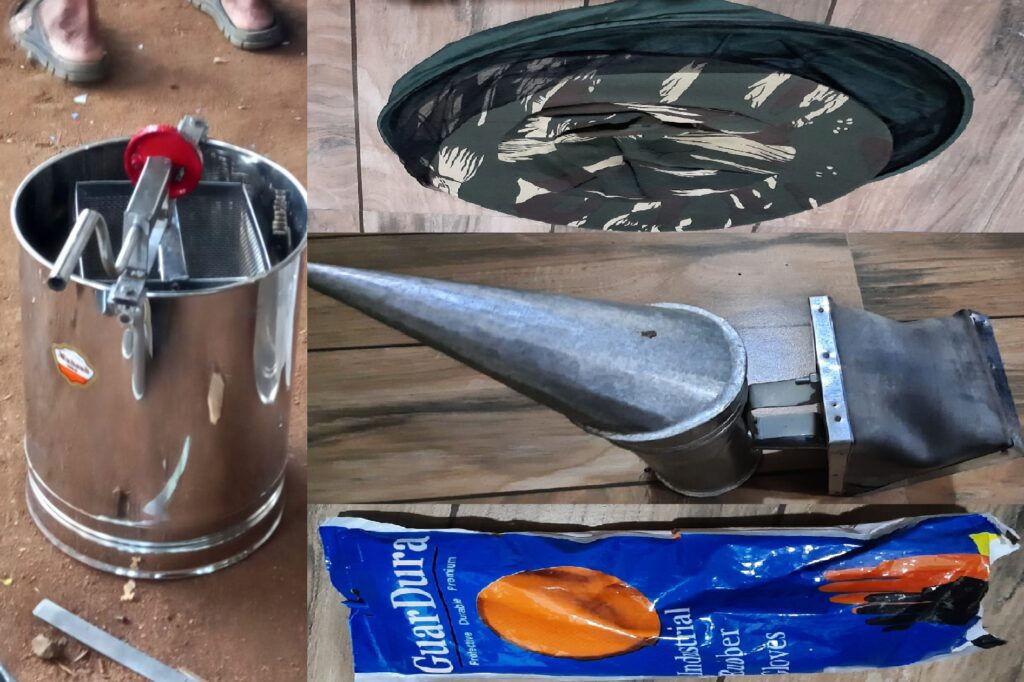
Mr. Gopidi said, “We distributed the indigenous queen bee to the villagers so that they can build their own honeycombs. We have distributed around 110 boxes in Mallapur, Rampur, Behrapur and Attapur, apart from providing honey extractors, which will help in collecting honey from the boxes. With the help of these boxes, they can now produce honey from the comfort of their homes and sell it at the price they decide. We also provided them a kit related to beekeeping, that includes mask, hand gloves, smoker, etc.”
PREFERRING INDIGENOUS BEES
Ms. G Swetha, on the other hand, highlighted the lesser known fact that in other places of India, people mostly use European bee. However, Amrabad forest decided to go indigenous and use only Indian bee. They started off with the ‘Apis Cerana Indica’, an indigenous bee.
Citing the reason for doing so, she said, “With European bee, we don’t know how it is going to affect our environment. Because, most of the time, we have seen that non-indigenous bees are somehow not good for us. Take the example of non-native fish or tree. Recently, it has come to light that a tree like the Eucalyptus, which is planted extensively in our country, consumes all the water from the ground. Hence, we are cutting it off now. Similarly, in the case of apiculture, we are not sure of the long-term impacts of the European bee.”
At the same time, she also pointed out the positives of foreign bees, They don’t sting much, and even if they do, it is less painful. Also, with these bees, it is possible to go for bigger production. So, commercially, these are more beneficial, and, hence, people are adopting them. “But we are very specific about this. We don’t know the pros and cons yet. So, we decided to stay indigenous,” she said.
REUSE OF HIVES
The fetching of the honey from bee hives is a complicated process. Honey collectors collect the hives with the help of smoke and squeeze the combs to extract the honey. But, in this process, the bee hives are damaged and new larvae are killed. And, sometimes, people also get sting bites as few bees are always left inside the hives. Hence, the forest officials in Amravad provided the villagers some technical assistance in the form of a small manual machine, that is used for honey extracting. They just need to put the hive inside the machine and rotate it. This ensures that they only get the honey from the combs and the larvae are not killed. And, the best thing is that the same hive can be reused after the honey collection.
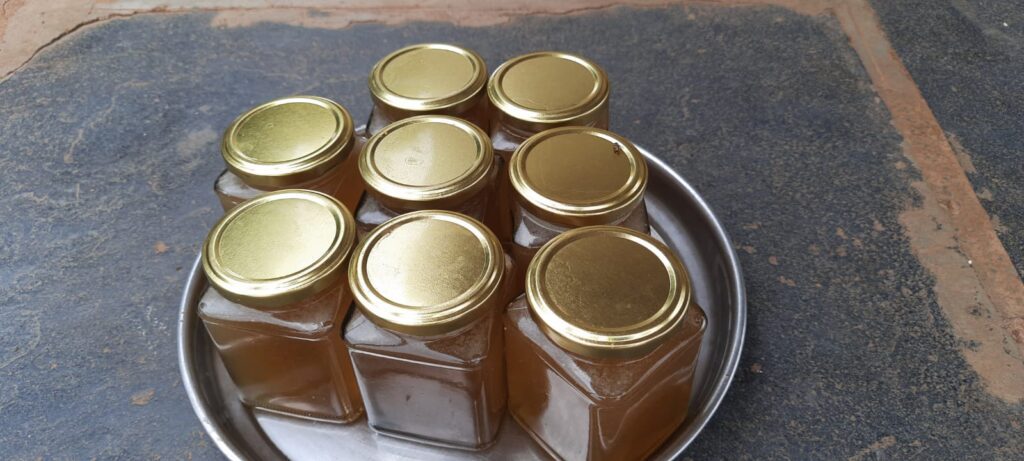
“We can place that frame again inside the bee boxes. So the honey bees do not need to make combs again and again. This increases the production, and, in every 21 days, they can collect the honey.” Ms. Swetha said.
SKILL INITIATIVE
A green skilling initiative has also started in collaboration with the Apollo Foundation. The skill centre is located in Mannanur under Total Health, an Apollo Hospitals initiative. It is a candle-making centre where people from the Chenchu tribe handcraft container candles and taper candles from bee wax.
Plans are also afoot to get the branding done for the organic indigenous honey produced here, so that the Chenchu people can get better prices, which will help in their economic uplift in the long run.