For millions of Indians, digital governance is no longer merely about convenience – it is about trust. Every property tax payment made online, every birth or death certificate downloaded, every application for a municipal service carries with it an expectation that personal information will remain safe, services will be delivered transparently, and government systems will work seamlessly. As India rapidly embraces digital public services, securing citizens’ data has become as important as delivering the services themselves.
Madhya Pradesh has emerged as a national leader in fulfilling this promise. Through its flagship e-Nagar Palika 2.0 platform, the state has demonstrated that technology, when designed with security at its core, can transform governance while strengthening public confidence. Recognized for its path-breaking approach to secure digital governance, the Urban Administration and Development Department’s Cyber Security Framework in e-Nagar Palika was honoured with the prestigious National e-Governance Award 2026, making Madhya Pradesh a national benchmark in citizen-centric urban governance.
The award is not merely a recognition of technological excellence; it is a testament to the state’s commitment to innovation, transparency, cybersecurity, and efficient public service delivery. It reflects years of planning, digital transformation, institutional collaboration, and the vision of creating a governance model where every citizen can access municipal services securely, quickly and without unnecessary bureaucracy.
A National Recognition for Digital Excellence
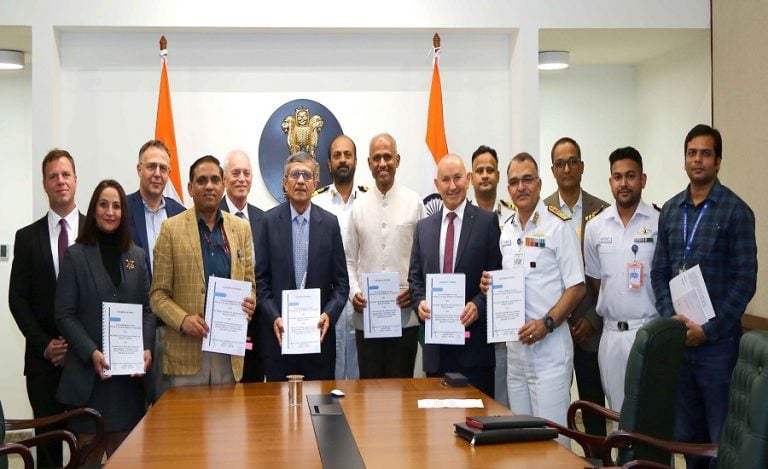
Madhya Pradesh’s flagship e-Nagar Palika platform was conferred the prestigious National e-Governance Award during the 29th National e-Governance Awards Ceremony held in Jaipur. The award was presented by Union Minister Dr. Jitendra Singh and received by a high-level delegation from the Urban Administration and Development Department led by Commissioner Sanket S. Bhondve, an IAS officer of 2007 batch.
The delegation also included senior administrative leaders such as Additional Commissioner and 2017 batch IAS officer Divyank Singh, who played a significant role in managing the execution and statewide rollout of the platform across urban local bodies. Following the ceremony, the delegation formally presented the national award to Chief Minister Dr. Mohan Yadav in Bhopal, acknowledging the collective efforts of administrators, engineers, developers and technical experts who transformed the vision into reality.
Read Also: From AI to Gram Panchayats: India Celebrates 17 Digital Governance Breakthroughs at NAeG 2026
Chief Minister Dr. Mohan Yadav described the recognition as a matter of immense pride for Madhya Pradesh. In a post on X, he said that the Urban Administration and Development Department’s Cyber Security Framework in e-Nagar Palika receiving the National e-Governance Award reflects the state’s unwavering commitment to innovation, digital governance and technology-driven public service delivery.
How the Journey Began: A Vision Beyond Digitisation
The vision behind e-Nagar Palika was never limited to simply digitising municipal services. The Urban Administration and Development Department envisioned creating a comprehensive digital ecosystem that would modernize urban governance while ensuring the highest standards of cybersecurity.
As government services increasingly moved online, protecting citizens’ personal information became a critical priority. The department therefore adopted a “Security by Design” approach, ensuring that cybersecurity was embedded into the platform from the very beginning rather than being added later.
Today, the result is e-Nagar Palika 2.0, a unified Enterprise Resource Planning (ERP) platform that synchronizes more than 415 Urban Local Bodies (ULBs) across Madhya Pradesh under one secure digital network.
The platform enables citizens to access municipal services efficiently while ensuring that every transaction is protected through globally accepted cybersecurity standards.
Security at the Heart of Digital Governance
One of the defining features of e-Nagar Palika 2.0 is its robust cybersecurity architecture.
The platform has been completely re-engineered using a Security by Design framework and integrates several advanced security technologies, including:
- Zero Trust Architecture (ZTA)
- End-to-end data encryption
- Multi-layer identity management
- Continuous cyber monitoring
- Secure cloud infrastructure
- Audited cybersecurity framework
- Advanced compliance and security standards
Together, these technologies ensure the confidentiality, integrity and availability of citizens’ information while protecting municipal databases against evolving cyber threats.
Urban Administration and Development Commissioner Sanket Bhondve said the platform has been designed not only to simplify civic services but also to guarantee the highest standards of privacy and data protection.
“The e-Nagar Palika system is not limited to providing online municipal services. Every component has been developed with the objective of ensuring the highest standards of data security and citizen privacy. Digital governance can succeed only when citizens have complete trust in the systems that serve them,” IAS Bhondve said.

Transforming Urban Governance Through a Unified Digital Platform
At its core, e-Nagar Palika 2.0 is a centralized digital governance platform built on modern cloud infrastructure and open-source technologies.
Rather than functioning as isolated municipal software, it brings together more than 415 urban local bodies into a single integrated ecosystem.
The platform currently incorporates:
- More than 20 administrative modules
- 24 citizen-centric services
- Unified financial systems
- Online payment gateways
- Digital approvals
- Municipal asset management
- Property management
- Utility services
- Citizen engagement systems
This unified approach has significantly reduced duplication of work, improved administrative efficiency and standardized municipal governance across the state.
Modern Features Driving Smart Urban Administration
The upgraded e-Nagar Palika 2.0 introduces several cutting-edge technological capabilities that are redefining municipal administration.
GIS-Based Property Management
Properties, municipal assets, water pipelines and infrastructure are digitally mapped using Geographic Information Systems (GIS). This enables accurate property verification, improved tax assessments and efficient planning of civic infrastructure.
Artificial Intelligence-Driven Services
Artificial Intelligence supports automation of repetitive administrative tasks, accelerates application processing, predicts tax demand and improves decision-making across municipal departments.
Cloud-Based Data Management
A secure cloud environment ensures centralized data storage, high system availability and seamless accessibility for urban local bodies across the state.
Integration with National Digital Platforms
The platform integrates with multiple government digital services, including UMANG, enabling citizens to access municipal services through familiar national digital channels.
Multilingual Citizen Interface
Powered by Bhashini, the platform supports multilingual interactions, making municipal services more inclusive and accessible.
How e-Nagar Palika 2.0 Works
The system digitizes municipal governance from application to service delivery through three integrated operational stages.
Citizen Portal Interaction
Citizens securely log into the e-Nagar Palika platform using verified credentials to access a wide range of municipal services.
Applications may include:
- Birth certificates
- Death certificates
- Marriage certificates
- Property tax services
- Water connections
- Building permissions
- Utility services
- Solid waste management requests
The entire application process is digital, reducing paperwork and eliminating unnecessary visits to municipal offices.

AI and Event-Driven Processing
Once submitted, applications are processed through intelligent workflow engines.
Tax payments automatically generate annual billing schedules. SMS and email notifications keep citizens informed at every stage.
GPS-enabled municipal systems support operational activities such as vehicle movement, fuel optimization and waste collection routes, ensuring better civic management.
Administrative Approval and Service Delivery
Officials verify applications digitally through unified administrative dashboards.
Integrated financial gateways facilitate online payments while approved certificates, receipts and permissions are issued electronically without requiring physical movement of files.
Implementation Across More Than 415 Urban Local Bodies
Rolling out a unified digital governance system across more than 415 municipalities required coordinated institutional leadership, technological expertise and administrative collaboration.
The implementation was led by the Urban Administration and Development Department under the leadership of Chief Minister Dr. Mohan Yadav, with Commissioner Sanket Bhondve overseeing the initiative.
Senior officials, including Additional Commissioner and Additional Managing Director of MP Urban Development Company IAS Divyank Singh, played a key role in managing the platform’s execution and statewide implementation.
The project represents the combined efforts of policy makers, administrators, software developers, cybersecurity experts and municipal officers working together to create a secure digital ecosystem for urban governance.

Driving the Vision of Digital India
According to Commissioner IAS Bhondve, the initiative is fully aligned with Prime Minister Narendra Modi’s Digital India mission.
The objective has been to ensure that citizens receive accessible, transparent and technology-enabled services without compromising data protection or cybersecurity.
“Our objective has always been to make municipal services faster, more transparent and easily accessible while ensuring complete security of citizens’ information. Technology must simplify governance and simultaneously strengthen public trust,” IAS Bhondve said.
He emphasized that strengthening digital systems across urban local bodies is enabling citizens to receive essential municipal services at their doorstep while improving governance outcomes.
Measurable Impact Across Urban Madhya Pradesh
The impact of e-Nagar Palika 2.0 extends far beyond digitization.
The initiative has fundamentally transformed urban governance by replacing fragmented manual processes with an integrated digital ecosystem.
Massive Scale and Reach
- Connected 415+ Urban Local Bodies
- More than 115 million digital transactions processed
Faster Public Service Delivery
The unified digital framework has significantly reduced service turnaround times by eliminating manual paperwork and connecting multiple municipal departments through one platform.
Revenue Enhancement
Digital service integration has streamlined municipal revenue collection.
Within just two months of selected service rollouts, the platform generated more than ₹6 crore in online collections.
Operational Efficiency
Unified administrative workflows have improved coordination among departments, minimized duplication and enhanced governance efficiency across municipalities.
Greater Transparency
Digital processing, online approvals and integrated financial systems have reduced bureaucratic delays while increasing accountability.
Stronger Public Trust
Advanced cybersecurity safeguards ensure citizen information remains protected from digital threats, strengthening confidence in online governance.
A Model for Citizen-Centric Governance
Officials believe that e-Nagar Palika has fundamentally changed the relationship between citizens and urban governance.
Residents no longer need to make repeated visits to municipal offices for routine services. Instead, they can access multiple services through one secure digital platform from their homes.
The platform combines technology, transparency and accountability while ensuring that convenience never comes at the cost of cybersecurity.
A Collective Achievement
While the National e-Governance Award recognizes the Urban Administration and Development Department institutionally, it also celebrates the collective contribution of the leadership team, administrative officers, software engineers, cybersecurity specialists and municipal staff who successfully implemented the project across the state.
The recognition reflects the combined efforts of Commissioner Sanket Bhondve, Additional Commissioner IAS Divyank Singh, senior departmental officials, technical experts and implementation teams whose coordinated work transformed a vision of secure digital governance into a statewide reality.

The Road Ahead
The National e-Governance Award 2026 is more than an accolade – it is a milestone in Madhya Pradesh’s digital transformation journey. It reinforces the state’s commitment to secure governance, technological innovation and citizen-first administration.
Commissioner Sanket Bhondve described the honour as an inspiration to continue strengthening digital governance in the years ahead.
“This recognition motivates us to further strengthen secure digital governance and build an urban administration that is transparent, technology-driven and fully focused on citizens’ needs. Our journey toward a digitally empowered Madhya Pradesh will continue with even greater commitment,” he said.
As India moves rapidly towards a digitally connected future, Madhya Pradesh’s e-Nagar Palika 2.0 stands as a powerful example of how innovation and cybersecurity can work together to transform governance. By placing citizens’ trust at the centre of technology, the state has not only modernized municipal administration but also created a model that demonstrates how digital public infrastructure can be secure, transparent and truly citizen-centric.