Leadership is often measured in files cleared and orders passed. But real leadership is measured in lives changed — in healthier newborns, safer villages, empowered students, and communities that feel heard.
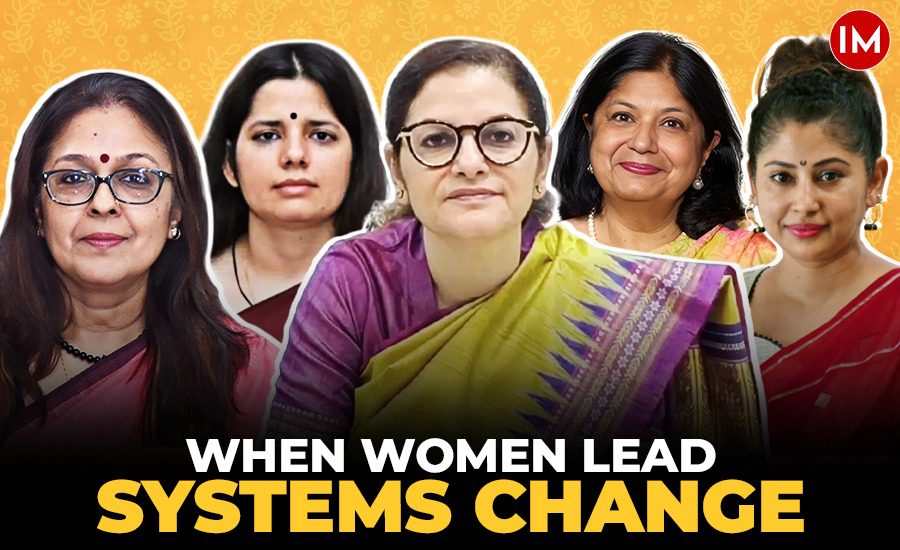
This International Women’s Day, Indian Masterminds presents the stories of women IAS officers who are not just administering districts and departments – they are reshaping the idea of governance itself. In tribal Chhattisgarh, one officer transformed a simple laddu into a powerful intervention against maternal anaemia and low birth weight. In Telangana, another redefined grassroots development through a participatory “Smart Village, Smart Ward” model. At the national level, one senior bureaucrat strengthened India’s disaster management framework, coordinating relief during floods, cyclones, and droughts. In Madhya Pradesh, an officer ensured that tribal schools became truly inclusive for Divyang children. And in Uttarakhand, a district magistrate demonstrated calm, decisive leadership during a volatile law-and-order crisis.
These women did not seek headlines — they built systems. They did not chase visibility — they delivered results. Their journeys reflect courage in crisis, empathy in administration, and innovation in policy. Together, they remind us that when women lead with conviction and clarity, governance becomes not just efficient — but transformative.
Here are the stories :
How IAS Officer Chandan Sanjay Tripathi Turned a Simple Laddu into a Lifeline for Mothers
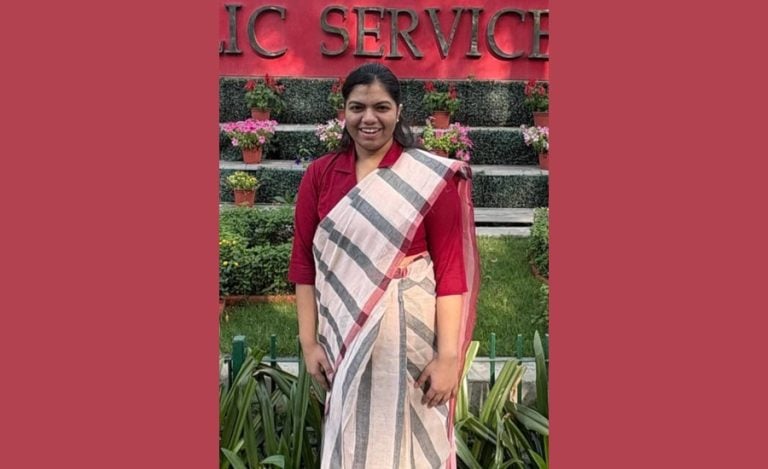
In the tribal district of Korea in Chhattisgarh, a quiet transformation in maternal and child health bears the imprint of 2016-batch IAS officer Chandan Sanjay Tripathi. When she took charge as District Collector, nearly 20 percent of babies were being born underweight — a stark reflection of deep-rooted malnutrition and maternal anaemia.
Read Also: Women Who Lead, Create and Inspire | Women’s Day Special
Refusing to treat it as just another statistic, she launched the Korea Modak Laddu Initiative in February 2025 — a locally designed nutrition model built around ragi, jaggery, groundnuts, sesame seeds, and cardamom. Pregnant women were prescribed two nutrient-dense laddoos daily, alongside iron supplements, with door-to-door monitoring by trained Poshan Sangwaris.
Under her leadership, what began as a pilot in Baikunthpur block rapidly scaled across the district. Within a year, the low birth weight rate dropped dramatically from 20 percent to nearly 3 percent.
Beyond improving health outcomes, Ms Tripathi’s initiative created livelihoods for self-help group women, proving that governance, when rooted in community participation, can nourish both lives and dignity — one laddu at a time.
Smita Sabharwal’s ‘Smart Village, Smart Ward’: The Initiative That Redefined Development in Karimnagar
When Smita Sabharwal took charge as Collector of Karimnagar, she did not view development as a checklist of schemes — she saw it as a systems overhaul. Her flagship initiative, “Smart Village, Smart Ward,” became the blueprint for transforming a backward region into a participatory, technology-enabled growth model.
The initiative focused on holistic development — strengthening infrastructure, sanitation, drinking water supply, digital classrooms, healthcare access, and women’s empowerment. But what made it distinctive was its community-centric approach. Villagers were not passive beneficiaries; they were stakeholders. Through regular consultations and accountability mechanisms, local communities helped identify gaps and monitor progress.
Technology was used as a governance tool — for better service delivery, grievance redressal, and transparency. From upgrading schools and anganwadis to improving ward-level infrastructure in towns, the program aimed to bridge rural-urban disparities while ensuring inclusive growth.
Under Sabharwal’s leadership, “Smart Village, Smart Ward” became more than a development slogan — it evolved into a replicable governance model that blended administrative efficiency with grassroots participation, redefining what responsive public service can achieve.
Rajni Sekhri Sibal: The IAS Officer Who Led India’s Disaster Response from the Frontlines to Policy Tables
A trailblazer who became the first woman to top the Civil Services Examination in 1986, Rajni Sekhri Sibal has built a distinguished career anchored in crisis leadership and disaster governance. As Additional Secretary (Disaster Management) in the Ministry of Home Affairs, Government of India, she played a pivotal role in shaping national disaster response frameworks and coordinating relief during some of the country’s most challenging crises — including the devastating Kerala floods, major cyclones, and prolonged drought situations.
Her responsibilities extended beyond immediate response. She handled international cooperation in disaster management, policy formulation, and inter-agency coordination during severe emergencies. Holding additional charge as Executive Director of the National Institute of Disaster Management (NIDM), she strengthened institutional capacity and preparedness mechanisms across states.
Sibal also represented India at global disaster management forums, ensuring alignment with international best practices. Through her book, Are You Prepared for a Disaster?, she translates policy experience into practical guidance — emphasising preparedness, risk mitigation, and community awareness.
Her career reflects a core principle: disasters cannot always be prevented, but their impact can be decisively managed through planning, coordination, and informed leadership.
How IAS Pallavi Jain Govil Made Tribal Schools Truly Inclusive for Divyang Students in Madhya Pradesh
Pallavi Jain Govil, a 1994-batch IAS officer of the Madhya Pradesh cadre, led a transformative push to make tribal residential schools inclusive for children with disabilities. With an M.A. in Economics and an M.Phil., and currently serving as Secretary in the Department of Youth Affairs, she combined administrative clarity with social sensitivity while heading the Tribal Welfare Department.
Realising that reservation alone was not enough, she initiated a comprehensive accessibility audit of residential schools in partnership with an NGO. The survey revealed structural barriers — inaccessible classrooms, unsafe stairways, and inadequate washrooms. Beginning with 12 model institutions, including Eklavya Model Residential Schools, infrastructure improvements were scaled to more than 150 schools across the state.
She also prioritised capacity building by training over 200 teachers in inclusive education practices and collaborated to customise entrance exams for better participation. Through Gram Sabha campaigns, community radio outreach, and direct engagement with parents, enrolment of disabled tribal students significantly increased, restoring both access and dignity to education.
DM Vandana Singh Chauhan: Who Promptly Controlled Haldwani Violence
On 8 February 2024, when violence erupted in Haldwani following an anti-encroachment drive, IAS officer Vandana Singh Chauhan stood at the centre of one of Uttarakhand’s most challenging law-and-order crises. As District Magistrate of Nainital at the time, she maintained that the attack was against the state machinery, not any community, and worked swiftly to restore order through curfew and coordinated action.
A 2012-batch IAS officer who secured AIR 8 in her very first UPSC attempt (Hindi medium), Ms. Chauhan rose from a small town in Haryana where girls’ education was restricted. She completed Sanskrit Honours and LLB before entering the civil services.
Earlier, as DM Rudraprayag during Covid’s first wave, her personal calls to quarantined patients reflected rare administrative empathy. She also served as DM Almora and became the first woman CDO of Pithoragarh.
Currently, she is posted as Director General (DG) of Agriculture and Horticulture, with additional charge as Additional Secretary, Planning, Uttarakhand.
Worked for Child Welfare enrolment – Anjali Rajoria, pallavi jain govil