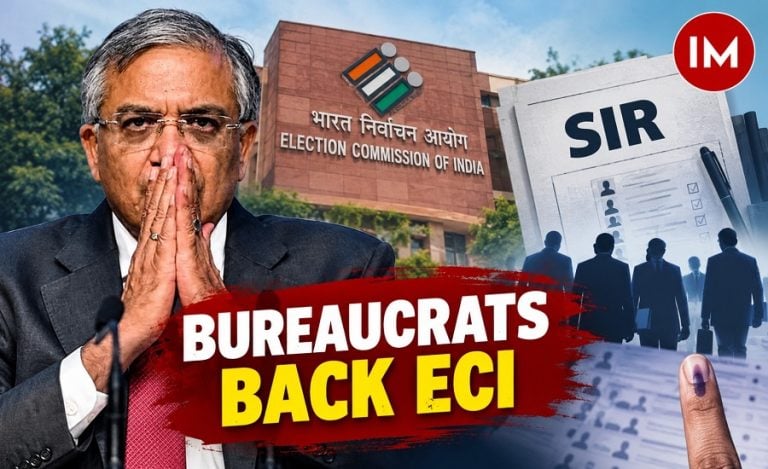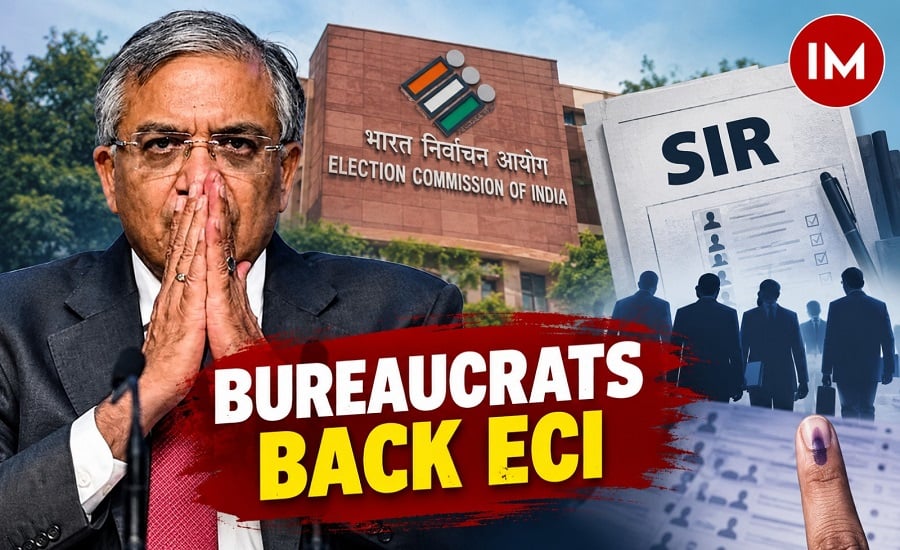
New Delhi: A group of 124 former bureaucrats, including former Foreign Secretary Kanwal Sibal, a 1966 batch Indian Foreign Service (IFS) officer, has issued an open letter to the citizens of India defending the Election Commission of India (ECI) and its Special Intensive Revision (SIR) of electoral rolls amid an escalating political controversy over voter-list revision and allegations of electoral irregularities.
The former IAS, Indian Foreign Service (IFS) and allied services officers have urged citizens to maintain faith in the country’s electoral process, questioning the repeated use of the term “rigging” without what they consider credible supporting evidence.
In their letter, the former officials argued that unsubstantiated allegations against elections and the constitutional institution responsible for conducting them could weaken public confidence in democracy. They also recalled India’s past experience with booth capturing, ballot-box theft, fake voting and electoral violence to underline how the country’s election machinery has evolved.
The letter comes amid protests by opposition parties and civil society groups against the Election Commission and the ongoing SIR exercise. It follows an open letter issued on October 8 by 42 former judges who defended Chief Election Commissioner Gyanesh Kumar, a 1988 batch IAS officer from the Kerala cadre, and cautioned against allegations against constitutional institutions without supporting evidence.
‘Rigging’ Allegations Must Be Backed by Evidence, Say Former Officials
In their appeal to citizens, the 124 former officers expressed concern over the repeated use of the term “rigging” in discussions about Indian elections.
The letter stated: “We are writing this letter because the word ‘rigging’ is being used these days regarding our elections without any evidence. Repeatedly using this term erodes public trust in democracy.”
The former officials argued that claims questioning the integrity of elections should be assessed on the basis of evidence rather than repeated assertions. Their intervention places the emphasis on maintaining public confidence in electoral institutions while the controversy over SIR and the Election Commission continues.
The officers also defended the Election Commission’s role in administering elections and supported the electoral-roll revision exercise, presenting it as part of the institutional process for maintaining voter lists.
Their letter reflects one side of a wider debate over how electoral institutions should be scrutinised, how voter rolls should be revised and how allegations of irregularities should be investigated.
Read also: Why Are 42 Former Judges Supporting The Election Commission In India?
From Booth Capturing to Modern Electoral Safeguards
The former bureaucrats recalled a period when electoral malpractice included armed groups entering polling stations, influential local strongmen intimidating voters, fake votes being cast, ballot boxes being stolen and eligible voters being prevented from exercising their franchise.
They cited booth capturing as one of the serious challenges that India’s electoral system had faced in earlier decades. The practice became so widespread that Parliament made booth capturing a criminal offence in 1989.
According to the former officials, the electoral process has since developed multiple safeguards intended to strengthen accountability and protect the integrity of voting.
These include the presence of polling agents representing candidates, the sealing of electronic voting machines (EVMs), security arrangements for strong rooms where voting machines are stored, and verification procedures involving voter-verifiable paper audit trails (VVPATs).
The letter invokes this institutional evolution to argue that the present electoral system should not be equated with the conditions that prevailed during periods marked by booth capturing and widespread poll violence.
The former officers’ position is that allegations of contemporary electoral malpractice must be examined through evidence and established procedures, rather than through generalised claims that could undermine confidence in the entire process.
42 Former Judges Back Gyanesh Kumar and Support SIR
The letter from the 124 former bureaucrats follows a similar intervention by 42 former judges on October 8, 2026.
The former judges issued an open letter supporting Chief Election Commissioner Gyanesh Kumar and the Election Commission amid protests and criticism over the SIR exercise. They expressed concern about what they described as a sustained effort to discredit constitutional institutions through allegations that, in their view, lacked adequate evidence.
The former judges argued that grievances against the Election Commission should be raised through democratic and legal channels. They also defended SIR as a lawful exercise and cautioned against language that could damage public confidence in constitutional authorities.
Their intervention came amid opposition demands for Gyanesh Kumar’s resignation and criticism of the Election Commission’s handling of electoral-roll revision.
The two letters, issued within two days of each other, reflect the support expressed by groups of retired civil servants and former members of the judiciary for the Election Commission. Both groups have stressed the importance of evidence-based allegations and the use of established legal mechanisms to resolve disputes.
Justice Ujjal Bhuyan Raises Concerns Over Voter Disenfranchisement
The controversy has also drawn attention to remarks by sitting Supreme Court Justice Ujjal Bhuyan, who spoke about the constitutional importance of voting rights at an event at NALSAR University of Law in Hyderabad on October 4.
Justice Bhuyan said that any process resulting in the disenfranchisement of millions of Indian citizens would be intrinsically arbitrary and inconsistent with constitutional guarantees. He referred to Articles 14 and 326 of the Constitution, which concern equality before the law and elections based on adult suffrage.
He also stressed that the Constitution does not envisage two categories of citizens—those who can exercise their voting rights and those who cannot.
Justice Bhuyan’s remarks were made amid the wider controversy over electoral-roll revision. His comments did not, by themselves, constitute a judicial ruling on the pending SIR cases before the Supreme Court.
Former CJI B R Gavai Questions Public Comments on Pending Matter
On October 5, former Chief Justice of India B R Gavai criticised Justice Bhuyan’s public remarks, arguing that judicial propriety required caution when commenting on a matter pending before the Supreme Court.
Gavai said a sitting judge should not make public comments on a sub judice issue. Two retired Delhi High Court judges also questioned the propriety of the remarks.
The exchange brought a second dimension to the controversy: alongside the substantive debate over voter eligibility and the revision of electoral rolls, it raised questions about how judges should address issues that are under consideration before the courts.
The differing interventions have added to the public debate over the Election Commission, SIR and the constitutional safeguards governing voting rights..
Over 2,000 Citizens Had Earlier Opposed SIR
The support expressed by former bureaucrats and former judges has come alongside objections from citizens and civil society groups challenging the SIR process.
In September 2026, more than 2,000 citizens reportedly signed an open letter addressed to the Chief Justice of India and Justice Surya Kant, urging the Supreme Court to halt the exercise pending an independent inquiry into its legality and procedure.
The signatories called for a court-monitored investigation into alleged irregularities in voter-list management and the Election Commission’s ECINet platform.
Those associated with the appeal included former Navy Chief Admiral Vishnu Bhagwat, former IAS officer Aditi Mehta, senior advocate Prashant Bhushan, historian Aditya Mukherjee and actor Prakash Raj, alongside academics, lawyers, journalists and social activists.
The signatories sought greater scrutiny of the revision process, arguing that concerns about the accuracy of electoral rolls and the possible exclusion of eligible voters warranted independent examination.
Their intervention illustrates the contrasting positions in the debate: while the former bureaucrats and judges who have written in support of the Election Commission emphasise institutional credibility and legal procedures, critics have called for closer scrutiny of SIR and safeguards against the wrongful exclusion of voters.
Supreme Court Proceedings on SIR and Election Commission Decisions
Petitions concerning the SIR process and the functioning of the Election Commission remain part of the legal debate.
On October 5, the Supreme Court sought responses from the Election Commission and the Centre in proceedings concerning allegations that certain decisions connected with the electoral-roll revision exercise had been taken without the agreement of the other Election Commissioners.
The Court did not grant an interim stay at that stage. It issued notices seeking responses and indicated that decisions found to be contrary to law could be set aside.
The proceedings are significant because they concern the legal and procedural basis of decisions taken by the poll panel, alongside the broader dispute over the conduct of SIR. The allegations raised in the petitions remain matters for judicial consideration; the issuance of notice does not itself establish that the challenged decisions were unlawful.
Debate Over Electoral Integrity Continues
The open letter from 124 former bureaucrats has added to a growing series of public interventions over the Election Commission, the SIR exercise and allegations of electoral irregularities.
The former officers have called for public confidence in the electoral process and argued that accusations of rigging must be supported by credible evidence. The 42 former judges who wrote earlier similarly defended the Election Commission and urged that grievances be pursued through legal and democratic channels.
At the same time, citizens and civil society groups have raised concerns about the revision of electoral rolls, while Justice Ujjal Bhuyan’s remarks have highlighted the constitutional importance of protecting voting rights.
With petitions pending before the Supreme Court, the debate now involves institutional credibility, the accuracy of voter lists, procedural safeguards and the responsibility of public officials and political actors to substantiate their claims.