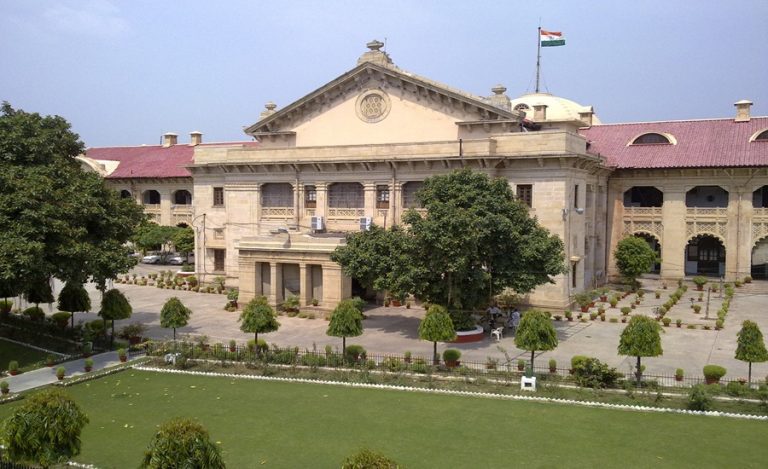
Lucknow: The Allahabad High Court found that a trial judge ignored a verified compromise between the parties and proceeded with the trial, allegedly to facilitate payment of legal fees. The ruling underscores that judicial officers must act strictly according to law and not allow personal or external considerations to influence proceedings.
The case arose from criminal proceedings in which the accused and victims had already reached a compromise. Despite clear directions from the High Court to decide the compromise application, the trial court moved ahead with the trial, leading to sharp criticism from the High Court.
Details of Allahabad Additional Chief Judicial Magistrate Case
Justice Raj Beer Singh observed that the conduct of the Additional Chief Judicial Magistrate (ACJM) was contrary to the High Court’s earlier order. The Court noted that instead of deciding the compromise application, the trial judge chose to conduct the trial and frame charges against the accused.
The High Court said this amounted to a blatant violation of judicial directions and showed disregard for the provisions of law.
Allahabad Additional Chief Judicial Magistrate Case: Court Criticizes Remark About Lawyer’s Fees
A key factor in the case was the statement recorded by the presiding officer that the lawyer for the accused had indicated he would receive his fees if the matter proceeded to trial. The High Court expressed concern over this observation and questioned why the compromise was not acted upon despite being verified.
The Court observed that once parties had approached the court for quashing proceedings based on compromise, it could not be assumed that they wanted to abandon the settlement and continue with a full criminal trial.
Background Of The Allahabad Additional Chief Judicial Magistrate Case
The dispute involved allegations of physical assault and criminal intimidation. During the proceedings, the accused and the victims resolved their differences and filed a compromise before the court.
The compromise was reportedly verified by the presiding officer. The Allahabad High Court had also directed the trial court to take an appropriate decision on the compromise application.
Trial Continued Despite High Court Direction
Instead of deciding the compromise application, the trial court proceeded to frame charges and conduct the trial. Eventually, the accused were acquitted.
The High Court later examined the sequence of events and concluded that the trial judge had acted in violation of its earlier directions.
High Court Finds Judge’s Explanation Unsatisfactory
The Court noted that the judicial officer claimed the parties had not pressed for the compromise. However, records before the Court showed that the compromise had in fact been filed and verified.
According to the judgment, the trial court’s own records contradicted the explanation offered by the judge. This led the High Court to conclude that the explanation was not supported by the available evidence.
Allahabad Additional Chief Judicial Magistrate Case: Serious Observations By The Court
The Court remarked that the actions of the presiding officer reflected a lack of regard for the High Court’s order. It emphasized that judicial officers are expected to faithfully implement directions issued by superior courts. The judgment serves as a reminder that failure to follow judicial directions can undermine confidence in the justice delivery system.
No Further Action Taken Against The Judge
During the hearing, counsel representing the judicial officer informed the Court that the judge had tendered an apology for her conduct. It was also submitted that she had a long judicial career and expressed regret over the incident.
Considering the apology, the Allahabad High Court decided not to recommend further disciplinary action against the judge. However, the Court cautioned her to remain careful in the future and ensure strict compliance with legal procedures and judicial orders.
Recall Application Rejected
The matter came before the High Court through an application seeking recall of an earlier order that had quashed the proceedings on the basis of compromise. Since the trial had already concluded and the accused had been acquitted, the High Court held that no useful purpose would be served by recalling its earlier order. Accordingly, the recall plea was dismissed.
Read also: Allahabad High Court Orders Demolition of 72 Illegal Lawyers’ Chambers in Lucknow
FAQs
No. The High Court accepted the judge’s apology and decided not to recommend further action, but it warned her to be careful in the future.
The Court found that the trial judge ignored a verified compromise between the parties and proceeded with the trial despite earlier directions to decide the compromise application.
The accused were ultimately acquitted. The High Court later observed that the trial should not have proceeded after the compromise had been verified and placed before the court.