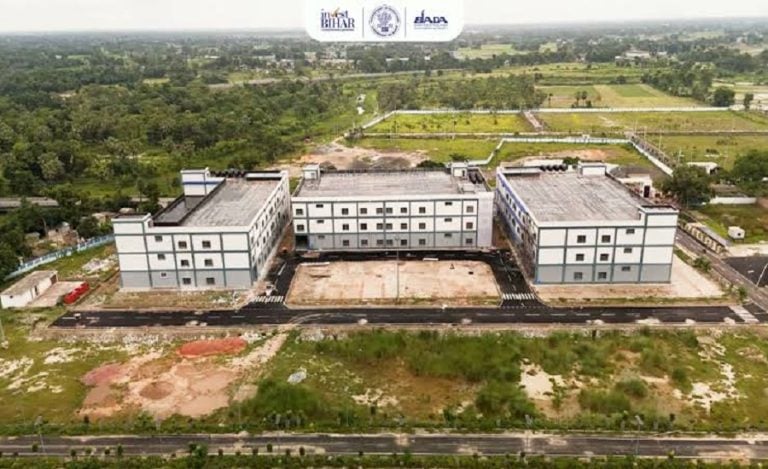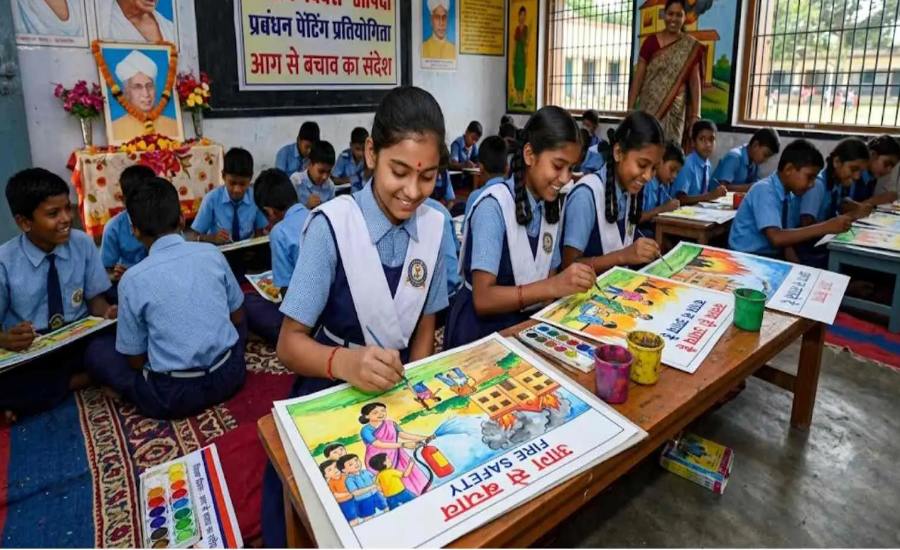
Patna: The Bihar government is planning to develop at least one government school in each of the state’s 38 districts as a Centre of Excellence, with modern classrooms, digital laboratories, advanced science facilities, sports infrastructure and career-oriented skill development.
Education Minister Mithilesh Tiwari said the Education Department has prepared a detailed roadmap to transform selected government high and higher secondary schools into model institutions. The plan will give priority to established, reputed and better-performing schools and introduce technology-driven learning along with sports, arts, culture and vocational education.
Smart Classrooms and Digital Learning
A major focus of the proposed Centre of Excellence schools will be the creation of modern digital infrastructure.
The schools are planned to have smart classrooms equipped with interactive panels and smart boards, along with computer and Information and Communication Technology (ICT) laboratories. High-speed internet connectivity and digital libraries are also part of the proposed facilities.
Students will be able to use digital learning content and audio-visual resources alongside conventional classroom teaching. The objective is to expand access to technology-enabled education within government schools.
The move also comes amid wider efforts to improve digital infrastructure in Bihar’s schools. The state has already been working on hybrid smart classrooms and ICT laboratories through its educational infrastructure agencies.
Read Also: From AI to 20,477 Placements: Bihar’s Government Technical Colleges Gain Momentum
AI, Robotics and Coding to Enter Classrooms
The proposed schools will also introduce students to emerging technologies and innovation.
Innovation and robotics laboratories, including facilities similar to Atal Tinkering Labs, are planned to encourage experimentation and practical learning. Students are expected to receive exposure to coding, artificial intelligence and astronomy kits.
The focus is not limited to textbook-based learning. The proposed model aims to help students develop technology skills that can support their future studies and career choices.
The plan also includes digital skills, communication and leadership training, giving students opportunities to develop abilities beyond their regular academic curriculum.
Modern Science Labs and Digital Libraries
Academic infrastructure will also be upgraded in the selected schools.
Modern laboratories for physics, chemistry, biology, mathematics and computer science are proposed, with improved equipment to support practical learning.
Libraries will combine printed books with digital resources, while dedicated study rooms are planned to provide students with suitable spaces for independent learning.
These facilities are intended to make classroom education more practical and give students greater access to learning resources within their own districts.
Sports and Fitness to Be Part of the Model
The proposed Centres of Excellence will not focus only on academics.
The plan includes improved playgrounds and facilities for sports such as football, cricket, basketball, volleyball, badminton and tennis. Swimming pools are also proposed at selected major centres.
Yoga and fitness facilities are planned as part of the broader focus on students’ physical development. Regular sports competitions, quizzes and cultural programmes are also expected to form part of school activities.
The approach would give government schools a wider role in supporting academic, sporting and extracurricular development.
Better Facilities and Safer Campuses
The initiative also places emphasis on basic school infrastructure and student-friendly campus facilities.
Proposed improvements include better toilets, drinking water facilities and campus security. Special nutrition programmes are also being considered on a pilot basis at some schools.
These upgrades are particularly important for creating a safe and comfortable learning environment and improving the overall experience of students.
The proposed model also seeks to make modern educational opportunities available closer to students’ homes rather than limiting access to better-equipped institutions.
Focus on Career and Skill Development
The Education Department’s plan links school education with future career preparation.
Along with academic subjects, students will be encouraged to develop communication, leadership and digital skills. Exposure to coding, AI, robotics, science and vocational activities could help students understand different career pathways at an earlier stage.
The inclusion of arts and culture is also part of the proposed model, ensuring that the Centre of Excellence approach covers more than science and technology.
Infrastructure and Teachers Will Be Crucial
Implementing the plan across all 38 districts will require adequate infrastructure, funding and trained personnel.
Some older government schools may not have enough space or existing facilities to accommodate laboratories, smart classrooms and sports infrastructure. The availability of trained teachers and technical experts will also be important as schools introduce subjects and activities related to robotics, artificial intelligence, coding and ICT.
Recent reports have also highlighted gaps in school infrastructure and digital facilities in Bihar. The Education Department has sought additional central assistance for school buildings, ICT laboratories, smart boards and interactive learning panels, indicating the scale of infrastructure work still required.
Teacher training will therefore be an important part of the initiative. Existing teachers may need regular training to effectively use digital tools and incorporate technology into classroom teaching.
A Model School in Every District
The proposed Centre of Excellence programme aims to create at least one modern government school in every district of Bihar.
By combining smart classrooms, digital resources, advanced laboratories, AI and robotics exposure, sports, arts and vocational skills, the initiative seeks to create a broader model of government school education.
Its implementation, however, will depend on the availability of infrastructure, trained personnel, funding and effective management. If these requirements are addressed, the proposed schools could provide students across Bihar’s 38 districts with access to a wider range of modern educational facilities and learning opportunities.
Read Also: No More Running Between Offices: Bihar Puts 62 Investor Services on One Portal