New Delhi: The Centre has called for stronger biodiversity governance at the State and local levels, with Union Environment Minister Bhupender Yadav urging States and Union Territories to align their rules, institutional mechanisms and implementation processes with the amended national framework.
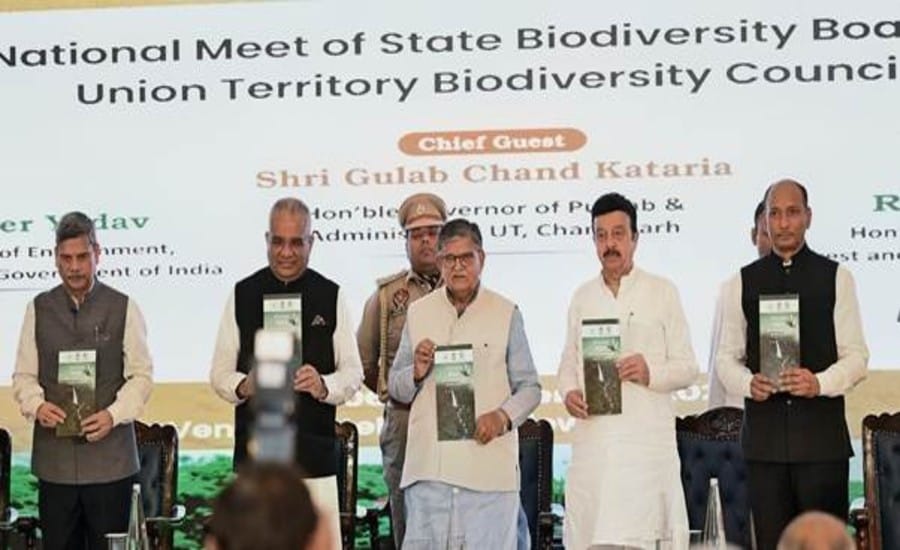
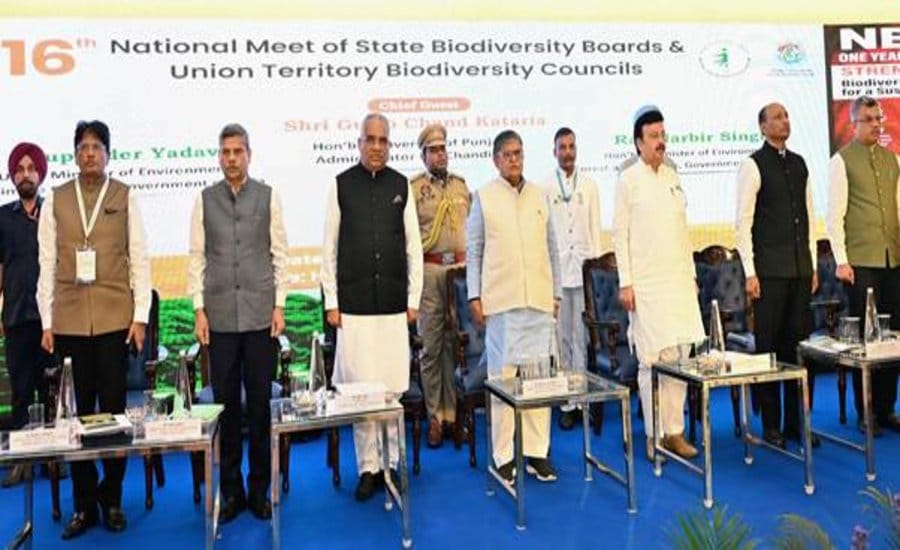
The call came during the 16th National Meet of State Biodiversity Boards (SBBs) and Union Territory Biodiversity Councils (UTBCs), inaugurated in Chandigarh on September 6. Organised by the National Biodiversity Authority (NBA), the two-day meet is being held from September 6 to 7, bringing together officials, experts and scientists from across the country.
The discussions are focused on improving biodiversity conservation at the grassroots level, strengthening local institutions and ensuring that traditional knowledge and community participation contribute to sustainable development.
States and UTs Asked to Align Biodiversity Framework
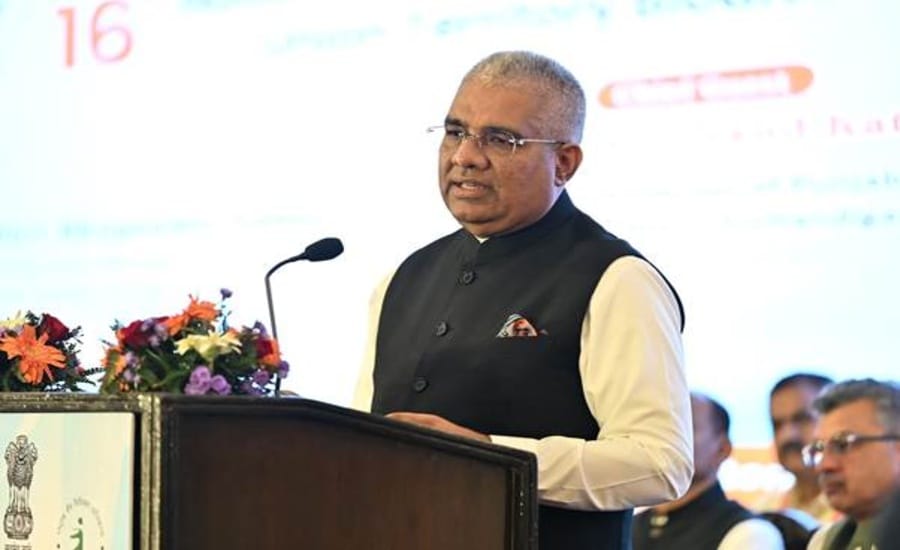
Addressing the gathering, Bhupender Yadav said States and UTs need to align their rules, institutional mechanisms and implementation processes with the Biological Diversity (Amendment) Act, 2023 and the Biological Diversity Rules, 2024.
The minister highlighted India’s long-standing environmental traditions and said scientific capabilities need to work alongside traditional community knowledge in biodiversity conservation.
He also referred to initiatives such as Mission LiFE, Ek Ped Maa Ke Naam, Amrit Sarovar and the Green Credit Programme, which support broader environmental and sustainability goals.
Yadav also noted India’s progress in meeting international biodiversity commitments, including the submission of the 7th National Report to the Convention on Biological Diversity and the 1st National Report on the Nagoya Protocol on Access and Benefit Sharing.
Read Also: 300+ Painted Storks Begin Nesting at Delhi Zoo, Highlighting Its Wetland’s Ecological Value
2.76 Lakh Biodiversity Committees to Get Stronger Role
A key focus of the meet is the functioning of more than 2.76 lakh Biodiversity Management Committees (BMCs) across the country.
Yadav called for these committees to become functional and effective at the grassroots level. BMCs can help local communities participate in biodiversity conservation and ensure that local ecological knowledge informs planning and decision-making.
The minister also called for People’s Biodiversity Registers (PBRs) to evolve into dynamic planning instruments rather than remaining only records of local biodiversity.
Such registers can document local species, ecosystems and associated traditional knowledge and provide useful information to local bodies while preparing development plans.
Traditional Knowledge and Communities at the Centre
Punjab Governor and Chandigarh Administrator Gulab Chand Kataria highlighted India’s rich biological heritage and traditional environmental ethos.
He said ecological security is closely connected with food and water security, livelihoods and sustainable development. He stressed the need to combine traditional knowledge and community participation with contemporary approaches to biodiversity conservation.
Kataria also highlighted the ecological importance of wetlands, riverine ecosystems and agricultural biodiversity. He called for stronger coordination between biodiversity institutions and local communities, along with better functioning of BMCs and PBRs.
Over ₹200 Crore Distributed Through ABS Funds
Access and Benefit Sharing (ABS) was another major issue highlighted during the meet.
Yadav said the National Biodiversity Authority has shared more than ₹200 crore in ABS funds with farmers, local communities, Biodiversity Management Committees, State Biodiversity Boards, Union Territory Biodiversity Councils and research institutions.
The minister stressed that ABS should provide tangible benefits to communities while supporting biodiversity conservation and sustainable livelihoods.
The event also saw the release of knowledge products, including a document covering the NBA’s achievements over the past year and information on the ABS scheme and distribution of funds among stakeholders.
Biodiversity Conservation Linked to Climate Action
Yadav also highlighted the close relationship between biodiversity conservation and climate action.
India’s Updated National Biodiversity Strategy and Action Plan (NBSAP) 2024–2030 is aligned with the Kunming-Montreal Global Biodiversity Framework (KMGBF).
The minister called for measurable outcomes in ecosystem restoration, species and habitat conservation, agro-biodiversity and climate-resilient landscapes. He also encouraged States and UTs to contribute towards the global 30-by-30 conservation target.
He emphasised that India is pursuing a “Whole of Government” and “Whole of Society” approach to biodiversity conservation, combining government action with scientific expertise and community participation.
Haryana Highlights Local Conservation Efforts
Haryana Environment and Forest Minister Rao Narbir Singh highlighted the state’s conservation and restoration efforts.
He stressed the importance of strengthening biodiversity governance at both State and local levels and highlighted the role of Biodiversity Management Committees in protecting local biodiversity.
He also called for greater training and capacity building for BMCs and local communities so that they can play a stronger role in conservation.
National Meet to Strengthen Grassroots Biodiversity Governance
The two-day national meet provides States and UTs an opportunity to share experiences, innovations and challenges in implementing biodiversity policies.
The deliberations are expected to support stronger institutional mechanisms, improved functioning of BMCs, better quality and utilisation of PBRs and enhanced capacity building.
The broader aim is to make biodiversity conservation part of local development planning. Better documentation of local biodiversity and traditional knowledge can help communities, local bodies and governments make more informed decisions on conservation, livelihoods and sustainable development.
With stronger State institutions and more effective local participation, the biodiversity governance framework can help India balance environmental conservation with the economic and livelihood needs of communities.
Read Also: India Launches First-Ever Guide to Grasslands and Open Natural Ecosystems at UNCCD COP17