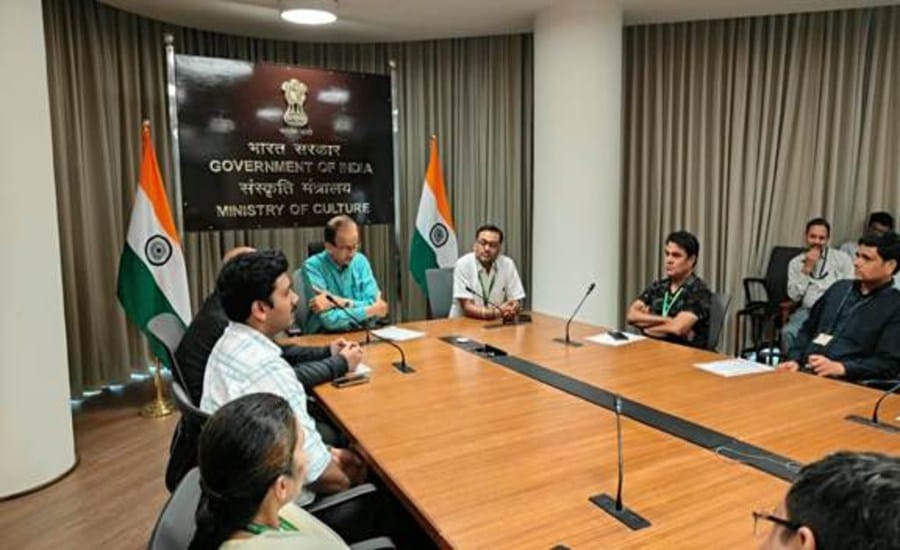
New Delhi: The Ministry of Culture has reported significant progress in clearing pending matters, managing official records and promoting cleanliness under the Special Campaign for Disposal of Pending Matters (SCDPM).
Between November 2025 and August 2026, the Ministry disposed of 3,512 public grievances, along with references received from the Prime Minister’s Office, Members of Parliament and State Governments. It also reviewed 870 physical files and weeded out 400 of them as part of its record-management efforts.
The Ministry has been regularly uploading its monthly progress reports on the SCDPM portal during the period, providing updates on the progress of the campaign.
3,512 Public Grievances Disposed Of
Public grievances formed the largest category of pending matters addressed by the Ministry during the campaign period.
The Ministry disposed of:
- 3,512 public grievances
- 53 PMO references
- 282 MP references
- 46 references from State Governments
The disposal of these matters is part of the government’s broader effort to reduce pendency and improve the efficiency of administrative processes.
For citizens, timely handling of public grievances can reduce delays in getting responses from government departments. Clearing pending references can also help departments focus on current requests and improve the overall flow of official work.
870 Physical Files Reviewed
The campaign also focused on reducing the accumulation of physical records.
During the period, the Ministry reviewed 870 physical files, of which 400 files were weeded out.
File review and weeding are part of record-management practices that help government offices identify records that no longer need to be retained under applicable rules. This can help free up office space and make it easier for officials to manage active records.
The Ministry’s approach therefore combines disposal of pending matters with efforts to improve the organisation and management of government records.
Swachhata Pakhwada Held in April
Alongside pendency disposal, the Ministry of Culture conducted Swachhata Pakhwada from April 16 to April 30, 2026.
The fortnight focused on creating greater awareness among officials and staff about cleanliness and encouraging their participation in Swachhata-related activities.
Three key activities were organised during the period:
- A Swachhata Pledge was administered to Ministry officials and staff on April 16.
- A Swachh Bharat-themed quiz competition was organised on April 21.
- An essay competition on various Swachhata-related themes was held on April 30.
The activities were intended to promote awareness and participation among employees while supporting the wider objectives of the Swachhata campaign.
Preparing for Special Campaign 6.0
The Ministry is now preparing its attached, subordinate and autonomous organisations for the next phase of the campaign.
On August 17, 2026, the Ministry issued instructions and guidelines to these organisations to actively participate in Special Campaign 6.0.
The upcoming campaign is scheduled to run from October 2 to October 31, 2026.
The move is aimed at extending the focus on cleanliness, pending-matter disposal and efficient record management across the Ministry’s wider organisational network.
Record Management Training for Officials
As part of its efforts to strengthen record-management practices, the Ministry has also scheduled a specialised training session.
The National Archives of India will conduct the training on September 29, 2026, for officials of the Ministry and its 43 organisations.
The session is expected to provide officials with guidance on record management and related practices. Better handling of official records can help departments locate information more efficiently while supporting systematic preservation and disposal of documents.
Focus on Efficient Government Workspaces
The SCDPM exercise goes beyond simply clearing old files and pending references. It also seeks to encourage government offices to maintain cleaner and more organised workspaces and improve internal administrative practices.
For the Ministry of Culture, the campaign has brought together several areas of administrative functioning — grievance disposal, references from constitutional and government stakeholders, physical file review, cleanliness activities and record management.
The Ministry’s regular progress reporting through the SCDPM portal also provides a mechanism for tracking the implementation of these activities.
What It Means for Public Service Delivery
The disposal of thousands of grievances and references can help reduce administrative backlogs, while systematic record management can make official processes more organised.
For citizens, one of the most visible aspects of such efforts is the timely handling of grievances. Faster movement of pending matters can improve communication between government offices and the public and potentially reduce delays in resolving issues.
At the institutional level, cleaner workspaces and better-managed records can support more efficient day-to-day functioning.
Road Ahead With Special Campaign 6.0
With Special Campaign 6.0 scheduled to begin on October 2, the Ministry has already issued instructions to its associated organisations and planned record-management training for officials.
The ongoing efforts show a continued focus on reducing pendency while making cleanliness and record management part of regular administrative practices.
The Ministry of Culture said it remains committed to creating cleaner and more efficient government workspaces, strengthening record-management systems and continuously improving public service delivery and citizen experience.
Read Also: India’s First Soil Carbon Payments: Over ₹2.9 Crore to Reach 2,550 Farmers in Punjab and Haryana