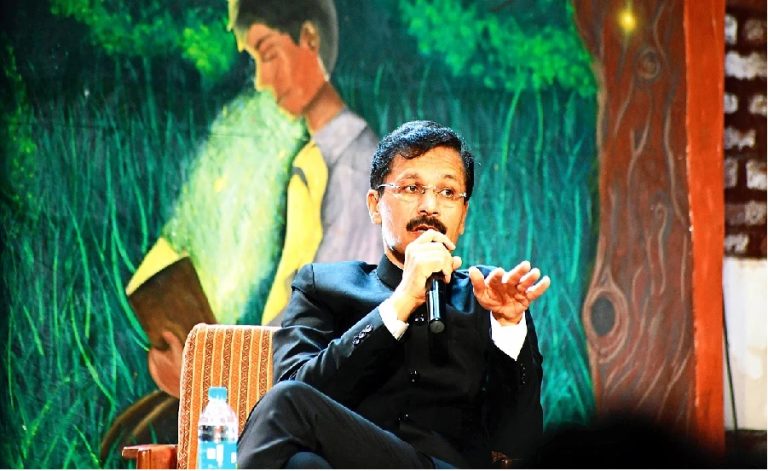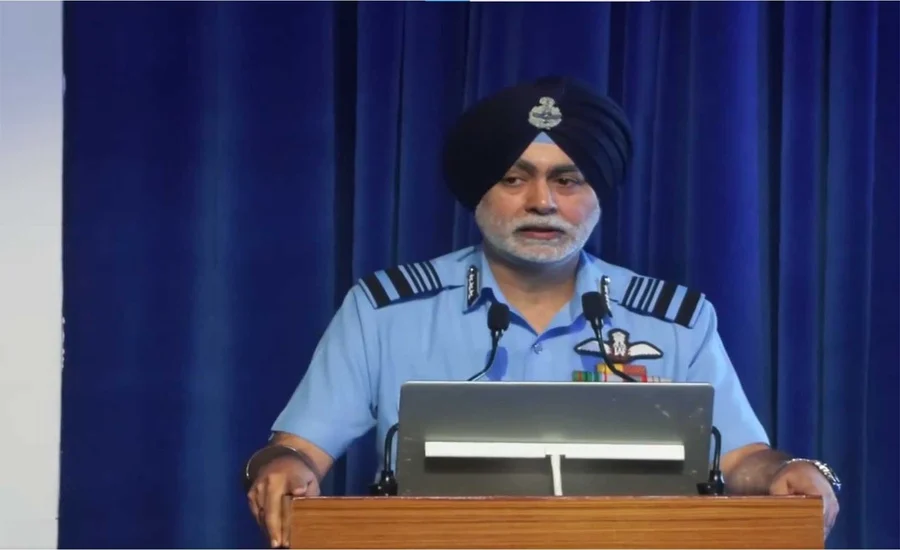
New Delhi: Information superiority is becoming the most important factor in modern warfare, according to Indian Air Force Deputy Chief Air Marshal Tejpal Singh. Speaking at a defence seminar in New Delhi, he said future battles will not be won only through weapons and platforms but through faster information processing, network-centric operations, and quick decision-making.
He stressed that armed forces must integrate advanced technologies, surveillance systems, and communication networks to maintain an advantage over adversaries.
Air Marshal Tejpal Singh Explains Changing Nature Of Warfare
Speaking at the joint seminar on “Surveillance, C4I2 & Electro-Optics” organized with Indian Military Review (IMR), Air Marshal Tejpal Singh said modern warfare is increasingly shaped by information superiority and the ability to act faster than opponents.
Read also: Inside the Indian Army’s ‘Bhairav’ Force: How 100,000 Drone Warriors Are Transforming Modern Warfare
He noted that while military platforms and weapons remain important, success in future conflicts will depend on how quickly forces can gather information, understand the situation, make decisions, and take action.
What Is The OODA Loop?
Air Marshal Singh highlighted the importance of reducing the OODA Loop, which stands for:
- Observe
- Orient
- Decide
- Act
According to him, the military that completes this cycle faster than its adversary gains a significant battlefield advantage. He said the objective is to make India’s decision-making process quicker than that of potential opponents.
Information Superiority Is Becoming The New Battlefield Advantage
The Deputy Chief of Air Staff said today’s battlefields are increasingly defined by:
- Information superiority
- Network-centric operations
- Real-time intelligence sharing
- Split-second decision-making
He explained that future military success will come from the ability to process and act on information rapidly across multiple domains, including land, air, sea, space, and cyber operations.
Why Network-Centric Operations Matter
Air Marshal Singh emphasized that modern military systems can no longer function in isolation.
Instead, surveillance systems, intelligence networks, communication platforms, and weapon systems must work together as a connected ecosystem. This approach allows commanders to receive a common and real-time operational picture.
He described this integration as a major force multiplier that can improve operational effectiveness and battlefield awareness.
Information Superiority: Need For A Common Digital Ecosystem Across Armed Forces
A major focus of Air Marshal Singh’s speech was the creation of a common digital framework across India’s armed forces.
He said standardized communication protocols are essential for seamless cooperation among different military branches. Ground sensors, communication systems, surveillance assets, and aerial intelligence platforms should all operate on compatible networks.
Importance Of Interoperability
The Deputy Chief stressed that interoperability should be built into military systems from the design stage itself.
According to him, different platforms must be able to exchange information smoothly and operate using common digital standards. This would strengthen joint military operations and improve overall combat readiness.
Information Superiority: Military Must Become Self-Reliant In Communication Systems
Air Marshal Singh also highlighted the need for self-reliance in modern communication technologies. He said India must develop secure and resilient communication networks capable of supporting military operations in challenging environments. Such systems are essential for maintaining uninterrupted command and control during conflicts.
Shift From System-Centric To Problem-Centric Thinking
The Deputy Chief called for a change in how defence planners approach technology acquisition.
Instead of asking what system is needed, planners should first identify the operational challenge and then seek solutions from industry and academia. This approach would encourage innovation and ensure technology directly addresses battlefield requirements.
Industry And Academia Have A Key Role
Air Marshal Singh said closer collaboration between the armed forces, defence industry, and academic institutions will be necessary to accelerate technological advancements.
Such partnerships can help develop innovative solutions for future warfare challenges and strengthen India’s defence capabilities.
Who is Air Marshal Tejpal Singh
Air Marshal Tejpal Singh recently assumed the appointment of Deputy Chief of the Air Staff.
A fighter pilot commissioned in June 1990, he has accumulated more than 3,500 hours of flying experience. He is a Category ‘A’ Qualified Flying Instructor and an Experimental Test Pilot. He has held several important operational, command, and staff appointments during his career in the Indian Air Force.
Read also: Unmanned, Unstoppable: How India Is Reshaping Modern Warfare With Hi Tech Drones
FAQs
Information superiority means having better, faster, and more accurate information than the enemy, helping military forces make quicker and smarter decisions.
The OODA Loop (Observe, Orient, Decide, Act) helps armed forces respond quickly to threats. A shorter OODA Loop gives a strategic advantage on the battlefield.
Air Marshal Tejpal Singh said future wars will be defined by information superiority, network-centric operations, and faster decision-making rather than weapons alone.