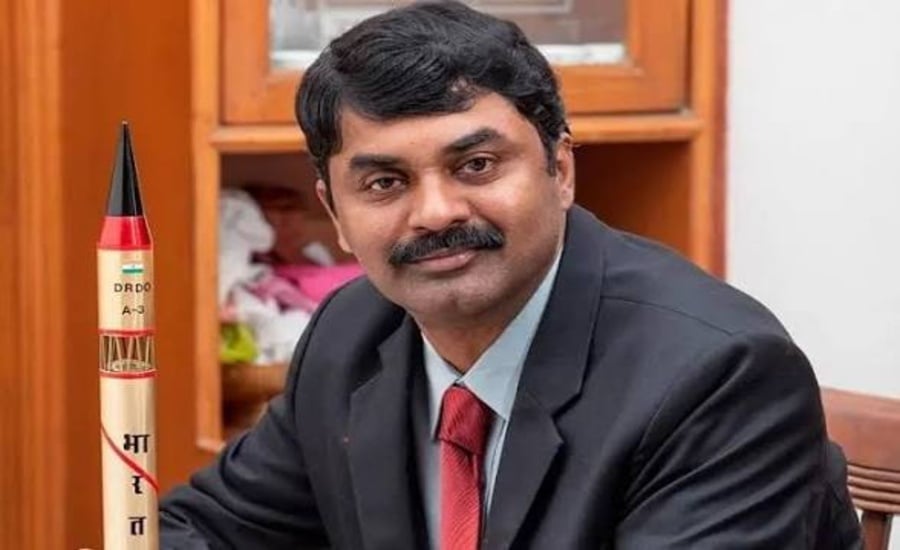
New Delhi: India’s dream of building a fully operational Hypersonic Cruise Missile has received a major boost after a successful scramjet engine test by DRDO. Former DRDO Chairman Dr. G. Satheesh Reddy has urged scientists, engineers, and the defence industry to accelerate development so that India can deploy an operational hypersonic cruise missile by 2035. The call comes after a key propulsion milestone that could help India join the world’s most advanced hypersonic missile powers.
Details of India Hypersonic Cruise Missile Development
India recently achieved an important breakthrough in hypersonic technology. In May 2026, DRDO’s Defence Research and Development Laboratory (DRDL) successfully tested a full-scale actively cooled scramjet combustor for 1,200 seconds at its Hyderabad testing facility. This was a significant improvement over an earlier test that ran for more than 700 seconds.
The test also validated the use of an indigenous liquid-hydrocarbon endothermic fuel, an important requirement for future hypersonic weapons.
Why Is This Test Important?
A missile is only as good as its engine. For hypersonic cruise missiles, the most important technology is the scramjet engine, which allows the missile to travel at extremely high speeds while remaining inside the atmosphere.
The successful long-duration test proves that India is making steady progress toward developing a reliable propulsion system for future hypersonic weapons. Without a working scramjet engine, a hypersonic cruise missile cannot sustain its speed over long distances.
What Is A Hypersonic Cruise Missile
A hypersonic missile is generally defined as a weapon that travels faster than Mach 5, which is more than five times the speed of sound. To understand this better:
- Commercial aircraft fly at around Mach 0.8
- Fighter jets often fly around Mach 2
- Hypersonic missiles travel above Mach 5
- Some future systems may exceed Mach 8
At such speeds, intercepting the missile becomes extremely difficult.
How Does A Scramjet Engine Work?
Traditional rockets carry both fuel and oxidizer. A scramjet engine works differently. Instead of carrying oxygen, it takes oxygen directly from the atmosphere while flying at extremely high speeds. This reduces weight and improves efficiency, allowing a missile to maintain hypersonic speeds for longer periods. Think of it like a vehicle that can “breathe” air while travelling at extraordinary speed.
What are the Challenges in India Hypersonic Cruise Missile Development
The recent test was conducted on the ground. While this is a major achievement, experts point out that operating a scramjet engine inside a laboratory and operating it during an actual flight are very different challenges. To create a combat-ready weapon, India must successfully integrate the engine with:
Advanced Airframe Design
The missile’s body must survive extreme heat generated at hypersonic speeds.
Flight Control Systems
The missile must remain stable and controllable while travelling at tremendous speed.
Navigation Systems
Precise guidance is needed to ensure accuracy over long distances.
Thermal Protection
Special materials and cooling systems are required to prevent damage from intense atmospheric heating.
Why Is The Year 2035 Important for India Hypersonic Cruise Missile
Former DRDO Chief Dr. G. Satheesh Reddy believes India should target 2035 for operational deployment. This gives scientists, engineers, defence laboratories, and industry partners roughly a decade to convert today’s technological achievements into a battlefield-ready weapon. The timeline is ambitious but considered achievable if development continues at an accelerated pace.
Read also: India Set To Deploy Indigenous Laser Weapon As DRDO Launches Production Push
FAQs
The test demonstrated that India’s scramjet technology can operate for a long duration, which is essential for future hypersonic cruise missile development.
A hypersonic cruise missile is a missile that travels at speeds above Mach 5 while using air-breathing propulsion technology such as a scramjet engine.
Former DRDO Chairman Dr. G. Satheesh Reddy has suggested that India should aim to deploy a fully operational hypersonic cruise missile by 2035.