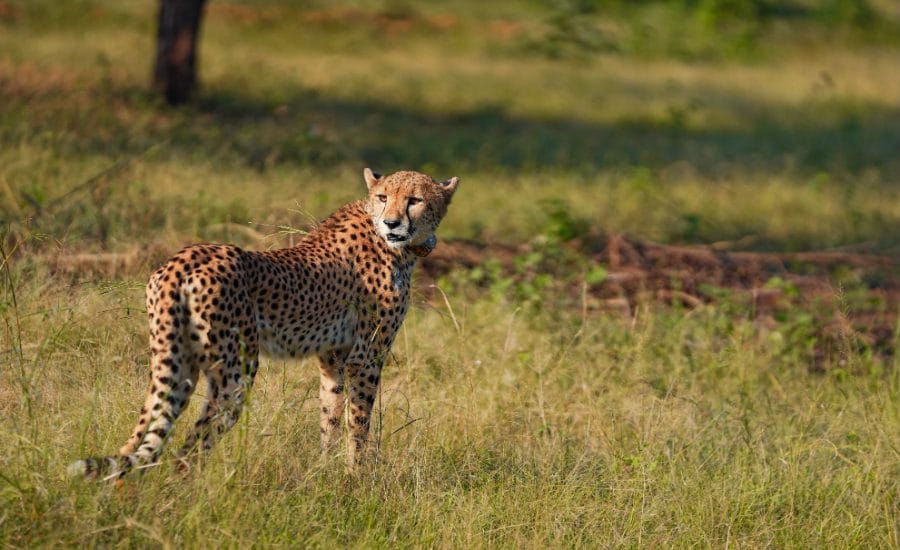
Bhopal: Madhya Pradesh is set to expand its cheetah conservation programme as Chief Minister Dr Mohan Yadav releases two cheetahs at the Veerangana Durgavati Tiger Reserve on October 7. The move will make the reserve the third cheetah habitat in the state, after Kuno National Park and Gandhi Sagar Wildlife Sanctuary.
The release will take place during the concluding programme of Wildlife Conservation Week and marks a significant step in extending India’s cheetah reintroduction programme to another suitable habitat in Madhya Pradesh.
The arrival of cheetahs is also expected to strengthen wildlife tourism in Sagar and the wider Bundelkhand region, creating opportunities for local businesses, tourism services and employment.
Veerangana Durgavati to Become MP’s Third Cheetah Habitat
Madhya Pradesh has already emerged as the centre of India’s cheetah reintroduction programme through Kuno National Park. Gandhi Sagar Wildlife Sanctuary later became the state’s second cheetah habitat.
With the introduction of two more cheetahs, Veerangana Durgavati Tiger Reserve will join this network.
The two cheetahs scheduled for release are male Tholo and female CCB-3, which will be shifted from Kuno National Park to the new habitat on October 7.
The move is intended to expand the geographical base of the cheetah population and create another suitable landscape for the species within the state.
Read also: MP CM Mohan Yadav Reviews Pandhurna Development, Highlights ₹248 Crore Ongoing Works
439 Hectares Prepared for Cheetahs
The state has developed a dedicated 439-hectare area within the reserve for the cheetahs.
Special facilities have been created to support their safety, adaptation and health monitoring. These include secure enclosures, commonly known as bomas, along with other infrastructure required before the animals are released into the larger habitat.
The Forest Department has also made arrangements for regular monitoring, veterinary care and protection of the animals.
At the same time, the authorities have worked to maintain a suitable ecological environment for other wildlife already present in the area.
The preparation of a separate secure area is intended to help the animals adapt to their new surroundings while allowing forest officials to closely monitor their condition.
MP’s Largest Tiger Reserve
Veerangana Durgavati Tiger Reserve, also known as Nauradehi Tiger Reserve, is spread across approximately 2,339 square kilometres in Sagar, Damoh and Narsinghpur districts.
It is the largest tiger reserve in Madhya Pradesh.
The landscape was originally established as a protected area in 1997 and later received tiger reserve status on September 20, 2023, following its integration with the Nauradehi Wildlife Sanctuary.
The reserve already provides habitat for a wide variety of wildlife, including:
- Tigers and leopards
- Chital and sambar
- Nilgai and bears
- Several important bird species, including endangered Indian vulture species
Its large landscape and diverse wildlife make it an important conservation area in central India.
Cheetah Tourism Could Boost Bundelkhand Economy
The arrival of cheetahs could have an impact beyond wildlife conservation.
Sagar and the Bundelkhand region could attract more visitors interested in wildlife tourism. Tourists travelling to the reserve can generate demand for accommodation, transport and local tourism services.
Hotels, resorts, homestays, guides, drivers, restaurants, handicraft sellers and small businesses around the reserve could benefit from increased visitor movement.
The expansion of wildlife tourism could also create new employment opportunities for people living in nearby villages, particularly in tourism-related services.
For the region, the cheetah project therefore combines conservation with the potential for a wider local economic opportunity.
India’s Cheetah Reintroduction Programme Enters a New Phase
India’s cheetah reintroduction programme began on September 17, 2022, when Prime Minister Narendra Modi released cheetahs brought from Namibia at Kuno National Park.
The programme later expanded with the arrival of cheetahs from South Africa.
The development of Veerangana Durgavati as another habitat represents the next step in creating multiple suitable locations for the species.
Instead of concentrating the entire population in a single landscape, expanding to additional habitats can support the broader long-term objective of establishing a sustainable cheetah population in India.
India’s Cheetah Population Reaches 60
The expansion comes at a time when India’s cheetah population has reached a new milestone.
On October 5, 2026, a female cheetah born in India, KJP21, gave birth to five healthy cubs at Kuno National Park. The births increased the country’s total cheetah population to 60, including 41 cheetahs born in India.
After Tholo and CCB-3 move to Veerangana Durgavati, Kuno will have 54 cheetahs.
Gandhi Sagar Wildlife Sanctuary currently has four cheetahs mentioned in the state’s conservation programme: South African-origin males Prabhas and Pavak, female Dheera, and female Radha, which was brought from Botswana and released in September 2026.
A Wider Conservation Landscape for Madhya Pradesh
The addition of Veerangana Durgavati to Madhya Pradesh’s cheetah network gives the state three separate locations supporting the national reintroduction effort.
For the Forest Department, the focus will now be on ensuring the animals adapt successfully, maintaining close health and security monitoring and managing their interaction with the wider ecosystem.
For Bundelkhand, the project could bring a new dimension to wildlife tourism and generate opportunities for communities located around the reserve.
The October 7 release is therefore more than the arrival of two animals. It marks an expansion of India’s cheetah conservation landscape and gives Madhya Pradesh another opportunity to combine wildlife protection with tourism and local economic development.
Read also: A New Chapter in Dairy: Madhya Pradesh Sets White Revolution 2.0 in Motion