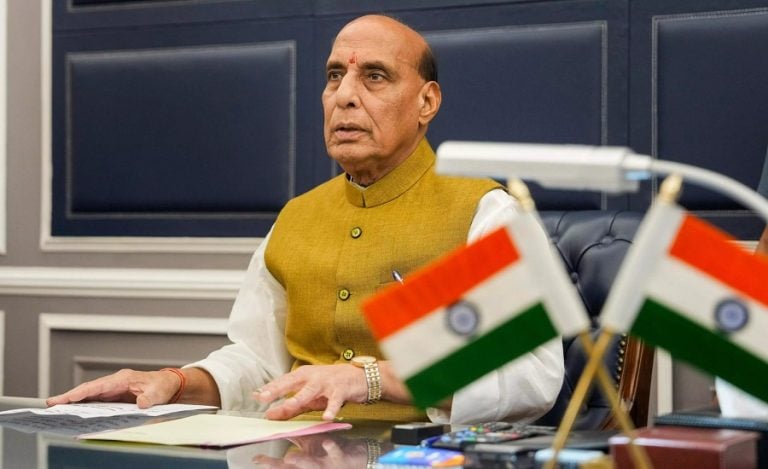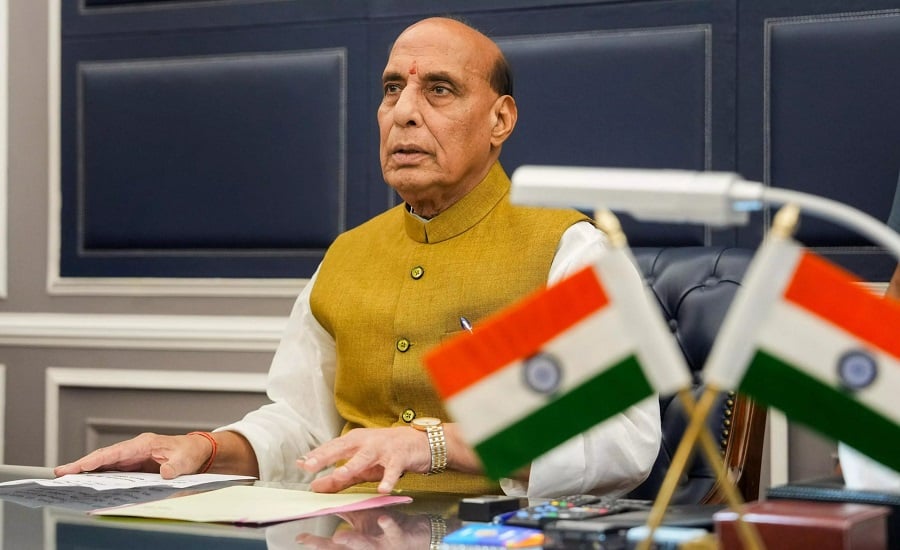
New Delhi: India’s Defence Minister Rajnath Singh has called for a major change in how countries approach maritime security. Speaking at the Indo-Pacific Regional Dialogue 2026 in New Delhi on November 4, he stressed that protecting shipping routes alone is no longer enough.
India must also focus on protecting undersea communication cables, commercial ports, offshore energy facilities and other critical infrastructure from growing security threats.
Indo-Pacific Regional Dialogue 2026: Rajnath Singh Calls For A New Approach To Maritime Security
Defence Minister Rajnath Singh said that the changing nature of global threats requires countries to expand their understanding of maritime security.
Read also: Indo-Pacific Regional Dialogue 2026: These 5 Key Areas India Wants To Strengthen
Addressing the Indian Navy’s annual Indo-Pacific Regional Dialogue 2026, he explained that oceans are important not only for international trade but also for internet connectivity, energy supplies and economic growth.
He highlighted that maritime security now goes beyond protecting ships and traditional sea routes. Countries must also protect important infrastructure located beneath the sea and along coastlines.
According to the Defence Minister, modern maritime security requires better information, stronger infrastructure, advanced technology and cooperation between countries.
Why Protecting Undersea Cables Is Important
Undersea fibre-optic cables are among the most important parts of the world’s digital infrastructure.
More than 95 per cent of global digital traffic travels through fibre-optic cables placed on the ocean floor. These cables support international internet connections, financial transactions and communication services.
Any serious damage or disruption to these cables could affect businesses, banks, governments and millions of internet users.
Rajnath Singh stressed that protecting undersea cables has become an important national security priority.
He also highlighted the need to protect offshore energy infrastructure, including oil and gas facilities, which play an important role in maintaining energy supplies.
Maritime Security Threats Are Growing Beyond Naval Conflicts
The Defence Minister explained that maritime security threats are no longer limited to traditional military activities.
Countries also face several non-traditional challenges that can affect maritime safety and economic stability. Some of the major threats include:
- Piracy: Attacks on commercial ships and vessels at sea.
- Illegal Fishing: Unauthorised fishing activities that damage marine resources.
- Human And Drug Trafficking: Illegal transportation of people and goods through maritime routes.
- Cyberattacks: Digital attacks that can affect ports, ships and important maritime systems.
- Natural Disasters: Storms, cyclones and other environmental events that can damage maritime infrastructure.
- Trade Disruptions: Actions that affect the safe movement of goods through important shipping routes.
He also warned about growing challenges to freedom of navigation and the use of narrow maritime passages for political or strategic pressure. These threats show why countries need a broader and more modern maritime security system.
India Calls For Stronger Maritime Awareness And International Cooperation in Indo-Pacific Regional Dialogue 2026
Rajnath Singh highlighted the importance of improving Maritime Domain Awareness (MDA).
Maritime Domain Awareness means collecting and understanding information about activities taking place across the oceans and surrounding maritime areas.
Better maritime awareness can help countries identify unusual activities, understand possible threats and respond more effectively to security challenges.
The Defence Minister called for stronger information-sharing, reliable maritime infrastructure and greater cooperation among regional partners.
He also stressed the importance of diversifying supply chains so that disruptions in one area do not seriously affect the wider global economy.
According to him, countries must develop the ability to predict, prevent and recover from different types of disruptions.
Rajnath Singh Says Technology Should Benefit All Countries
The Defence Minister also highlighted the growing importance of advanced technology in improving maritime security. However, he warned that technology should not become another source of inequality between countries.
The Indo-Pacific region includes nations with different levels of economic development and technological capabilities.
He emphasised that advanced technology should benefit more countries rather than only a small group of developed nations.
For this reason, India supports greater cooperation in scientific research, education, innovation and technology development.
Such cooperation can help countries improve their maritime capabilities and build stronger regional security arrangements.
FAQs
Undersea fibre-optic cables carry more than 95 per cent of global digital traffic. They support internet connectivity, international communication and financial transactions, making their protection important for national and economic security.
Rajnath Singh said that maritime security must expand beyond protecting traditional shipping routes. He called for stronger protection of undersea cables, ports, offshore energy facilities and other critical maritime infrastructure.
The Indo-Pacific Regional Dialogue 2026 is the Indian Navy’s annual international strategic conference. It is being held in New Delhi from November 3 to 5, 2026, with a focus on science, technology and academic cooperation in the Indo-Pacific.