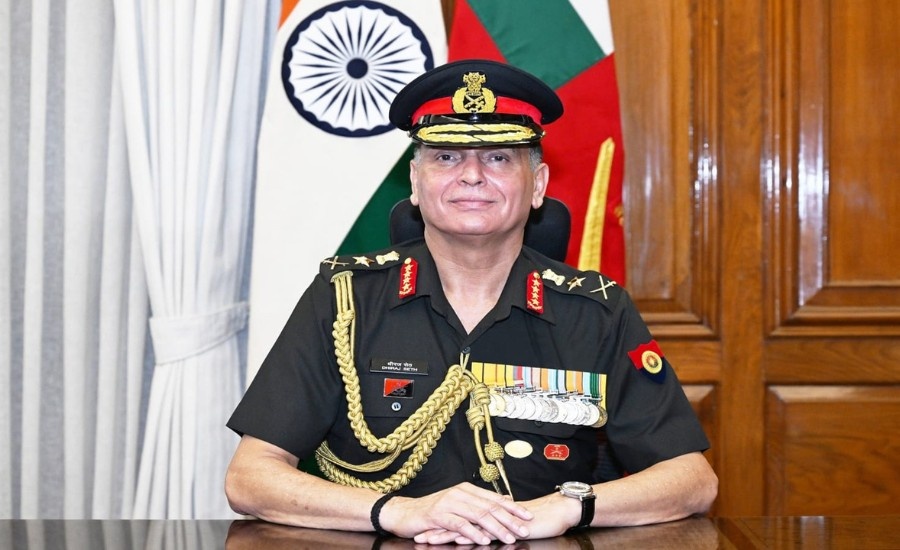
New Delhi: SAMARTH Framework is the latest vision presented by Indian Army Chief General Dhiraj Seth to prepare the force for future battlefields. Speaking at the NDTV Defence Summit, the Army Chief explained how the Indian Army plans to strengthen mission readiness, adopt advanced technologies, and remain effective in an era of rapidly changing warfare. The framework focuses on endurance, adaptability, modernization, technology integration, and human-machine cooperation to ensure the Army stays prepared for future challenges.
Indian Army Chief Explains SAMARTH Framework
The Indian Army Chief said that a modern military force must be able to endure long conflicts while quickly adapting to new threats. He emphasized that technology should help soldiers make faster and better decisions rather than replacing them.
Read also: What Is ‘Smart Power’? Army Chief Dwivedi Explains India’s New Strategy
According to the Army Chief, the Indian Army must continue evolving its capabilities to remain mission-ready in what he described as an era of “transformative wars.”
What Is The SAMARTH Framework
The word SAMARTH means “capable” in Hindi.
The Army Chief used this term as an acronym to explain the future direction of the Indian Army. Each letter represents a key pillar of military preparedness and operational effectiveness.
S Stands For Sustainability
The first pillar of SAMARTH is Sustainability. It refers to the ability of the Army to sustain operations during prolonged conflicts. A sustainable force can maintain combat effectiveness, logistics, supplies, and operational readiness over an extended period.
A Stands For Adaptation
The second pillar is Adaptation. The Army Chief stated that armed forces must continuously upgrade and adjust their capabilities as threats evolve. Adaptation ensures that soldiers and military systems remain effective against new challenges.
M Stands For Modernisation
The letter M represents Modernisation. This includes upgrading equipment, improving infrastructure, and introducing new military capabilities. Modernisation aims to keep the Indian Army mission-ready at all times.
Second A Stands For Acceleration
The next A stands for Acceleration. The Army Chief explained that acceleration involves rapidly integrating capabilities that improve the effectiveness of existing military systems. It also includes the quick adoption of emerging technologies.
R Stands For Relevance
The letter R represents Relevance. Military forces must remain relevant by continuously improving doctrine, training, and operational concepts. This helps ensure success in future battlefield environments.
T Stands For Technology
Technology is one of the most important pillars of the SAMARTH framework. The Army Chief highlighted the growing importance of:
- Artificial Intelligence (AI)
- Robotics
- Drones
- Autonomous Systems
- Advanced Communication Networks
He said technology should empower soldiers by providing better information and improving decision-making.
H Stands For Human-Machine Teaming
The final pillar of SAMARTH is Human-Machine Teaming. This concept focuses on integrating advanced technologies with human expertise.
The goal is to improve operational effectiveness while ensuring that soldiers remain at the center of military decision-making.
Why The SAMARTH Framework Matters
Modern warfare is changing rapidly due to advancements in technology and the increasing use of unmanned systems. Military experts believe future conflicts will involve greater use of AI, autonomous platforms, cyber capabilities, and real-time data analysis. The SAMARTH framework aims to prepare the Indian Army for these evolving battlefield requirements.
Strengthening India’s Defence Preparedness
By focusing on sustainability, adaptation, modernization, technology, and human-machine cooperation, the framework provides a roadmap for future force development. It also aligns with India’s broader efforts to strengthen national security and military readiness.
Read also: Indian Army to Modernise Warfare With Drone Fleet Expansion and Baaz Battalions
FAQs
SAMARTH stands for Sustainability, Adaptation, Modernisation, Acceleration, Relevance, Technology, and Human-Machine Teaming.
The SAMARTH Framework is a strategic vision introduced by the Indian Army Chief to improve mission readiness through sustainability, adaptation, modernization, technology adoption, and human-machine teaming.
Technology helps soldiers make faster and better-informed decisions through the use of AI, robotics, drones, autonomous systems, and advanced digital tools.