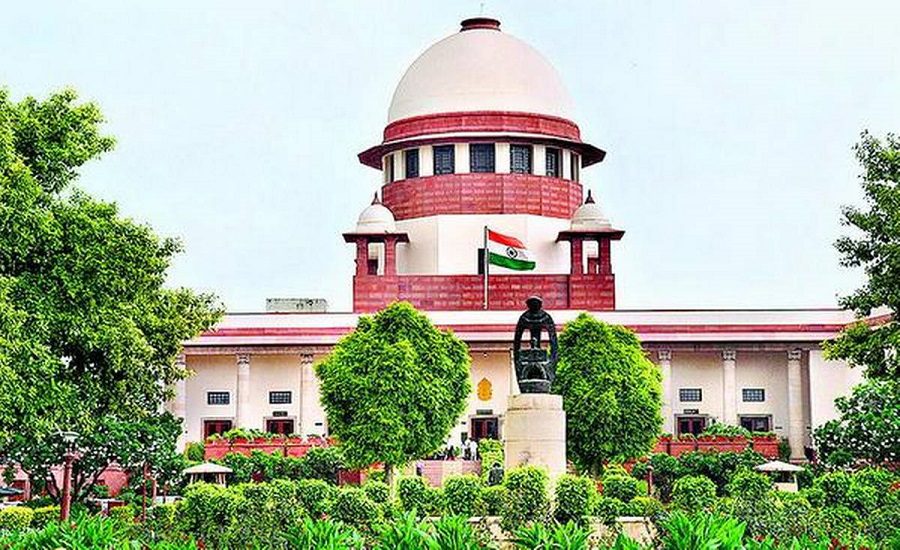
New Delhi: The Supreme Court asks centre to consider framing rules to regulate social media accounts of minors in a significant hearing focused on online safety and legal compliance.
The Court suggested that the Central government examine whether statutory rules can be introduced to ensure social media platforms follow Indian laws regarding contracts entered into by minors. The observations came during the hearing of a Public Interest Litigation (PIL) seeking safeguards for children below 18 years of age using social media and digital platforms.
Background of Supreme Court Minors Social Media Regulation Ruling
The case was heard by a Bench comprising Chief Justice of India (CJI) Surya Kant, Justice Joymalya Bagchi, and Justice V. Mohana. The PIL was filed by NGO Just Rights for Children Alliance.
The petition raised concerns that minors can create social media accounts by accepting platform terms and conditions despite legal provisions that generally treat minors as incapable of entering into binding contracts under Indian law.
Why Did The Petition Reach The Supreme Court
The petitioner argued that children below 18 years can independently create accounts on social media platforms. To do this, they accept the terms of service provided by digital platforms.
According to the petition, this creates a legal issue because Section 11 of the Indian Contract Act states that minors are not competent to contract.
Demand For Better Safeguards
The petition did not seek a complete ban on minors using the internet. Instead, it requested safeguards such as age verification systems, parental consent mechanisms, and stronger protections for children using digital platforms. The aim is to make online spaces safer while allowing children to access educational and social resources.
Minors Social Media Regulation: What Did The Supreme Court Observe
During the hearing, the Supreme Court asked the Central government to examine whether rules can be framed to ensure social media platforms comply with Indian law.
Justice Joymalya Bagchi observed that social media intermediaries should operate in conformity with Indian legal requirements. The Court indicated that platforms may need to align their systems and policies with existing laws governing minors.
Focus On Legal Compliance
The Bench highlighted that software, systems, and platform operations should function in accordance with Indian law. The Court also referred to the legal framework governing intermediaries, including provisions under the Information Technology Act. The judges emphasized the importance of ensuring that digital platforms follow domestic legal standards.
Arguments Presented Before The Court
Senior Advocate H.S. Phoolka, appearing for the petitioner, argued that existing Indian law already addresses the issue. He submitted that contracts entered into by minors are generally void under current legal principles. According to the petitioner, there is no need to wait for future legislation to address the issue.
Government’s Response
Solicitor General Tushar Mehta informed the Court that the government would examine the matter. He indicated that action could be taken within the existing regulatory framework if required. The Centre was asked to consider whether current intermediary rules adequately address the issue of minors creating social media accounts.
Why Is Minors Social Media Regulation Important
Millions of children and teenagers use social media platforms every day. These platforms are used for communication, education, entertainment, and content creation. As digital participation increases, concerns about privacy, online safety, and legal accountability have also grown.
Need For Age Verification And Parental Controls
Many countries are exploring stronger age-verification systems and parental consent requirements. Experts believe such measures can help protect children from harmful content, privacy risks, and online exploitation.
The ongoing Supreme Court proceedings could influence future policy discussions in India regarding child safety in digital spaces.
Read also: Women’s Safety Under Spotlight As Supreme Court Takes Suo Motu Cognizance Of Delhi-NCR Rape Cases
FAQs
The Court asked the government to examine whether rules can be framed to ensure social media platforms comply with Indian laws concerning minors and online safety.
The petition was filed by NGO Just Rights for Children Alliance seeking safeguards for children below 18 years using social media and digital platforms.
No. The discussion focused on safeguards such as age verification, parental consent, and compliance with Indian law rather than a complete ban.