20 November 2026
ADVERTISEMENT
ADVERTISEMENT

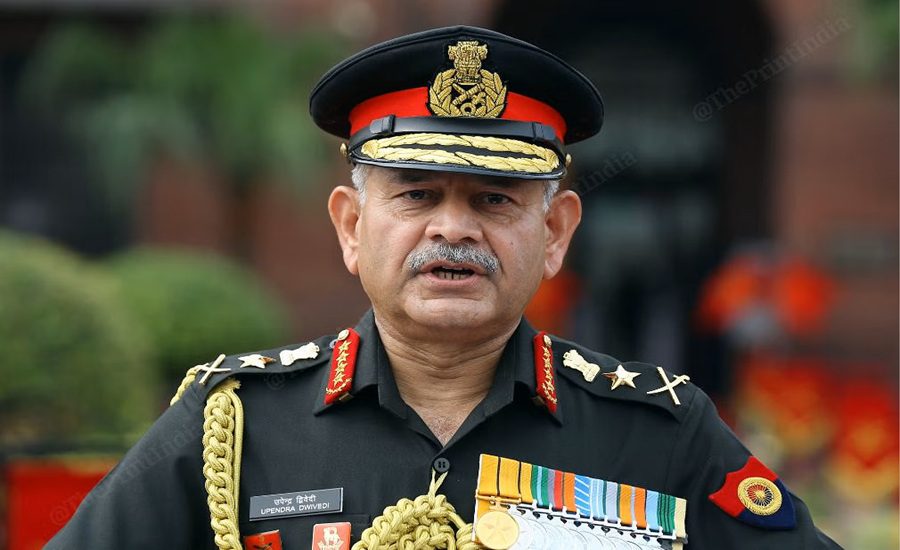
What Is ‘Smart Power’? Army Chief Dwivedi Explains India’s New Strategy

Army Chief General Upendra Dwivedi called for expanding India’s Smart Power strategy by combining military, diplomatic, economic and technological strengths to ensure national security and long-term prosperity in a volatile global environment.
India Smart Power Strategy
Indian Masterminds Stories

New Delhi: India’s Chief of Army Staff, General Upendra Dwivedi, has called for expanding India’s “Smart Power” strategy to protect national security and ensure long-term prosperity in an increasingly unstable global environment. 

Speaking at the seminar “Security to Prosperity: Smart Power for Sustained National Growth” in New Delhi, the Army Chief said India must combine military, diplomatic, economic, technological and informational strengths to face modern global challenges.

Army Chief Highlights Need for India Smart Power Strategy

During the seminar organized by the Centre for Land Warfare Studies (CLAWS), General Dwivedi explained that traditional military strength alone is no longer enough in modern warfare and geopolitics.

Read also: Inside the Indian Army’s ‘Bhairav’ Force: How 100,000 Drone Warriors Are Transforming Modern Warfare

He stressed that:

  • Global politics is becoming more unpredictable.
  • Supply chains, technology and semiconductors are now strategic tools.
  • Economic security and national security are deeply connected.
  • Nations must use a “whole-of-nation” approach for future conflicts.

According to the Army Chief, India should intelligently combine:

  • Military power
  • Diplomatic influence
  • Economic capability
  • Technological innovation
  • Information warfare tools

to protect national interests and maintain strategic resilience.

What Does “Smart Power” Mean?

The concept of “Smart Power” combines both hard power and soft power.

Hard power includes:

  • Military strength
  • Defence capabilities
  • Strategic deterrence

Soft power includes:

  • Diplomacy
  • Economic partnerships
  • Technology leadership
  • Cultural influence

General Dwivedi referred to the idea originally developed by political scientist Joseph Nye. He said modern nations cannot depend only on military force. Countries must also build influence through technology, economy and strategic partnerships.

Semiconductor and Technology Security Become Key Focus

One of the biggest highlights of the Army Chief’s speech was the importance of semiconductors and critical technologies.

He warned that:

  • Semiconductor availability is becoming a strategic issue.
  • Technology control can influence global power balance.
  • Digital connectivity and supply chains can be used as geopolitical tools.

This reflects India’s increasing focus on:

  • Indigenous defence production
  • Semiconductor manufacturing
  • Technology self-reliance
  • Cyber and information security

“Security Is the Foundation of Prosperity”

General Dwivedi strongly stated that prosperity cannot grow without security.

Key points from his speech included:

  • Security is no longer separate from economic growth.
  • Stable nations attract investment and innovation.
  • Modern conflicts impact industries, governance and research systems.
  • National resilience is now as important as military preparedness.

He also said future conflicts will not be limited to battlefields. Economic pressure, technology restrictions and information warfare are becoming major tools in global competition.

India Smart Power Strategy: India Moving Towards Integrated National Power

Experts at the seminar discussed how India can build integrated national power using:

  • Defence modernization
  • Artificial intelligence
  • Domestic manufacturing
  • Supply chain resilience
  • Strategic diplomacy
  • Industrial growth

The Army Chief emphasized that India must act quickly in a rapidly changing world order. He said the country should use strategic wisdom along with national strength to secure peace and economic progress.

Why This Matters for India

The speech comes at a time when:

  • Global conflicts are increasing.
  • Indo-Pacific security tensions are rising.
  • Technology wars are growing worldwide.
  • Nations are focusing on defence self-reliance.

India is also expanding defence partnerships with global allies while increasing indigenous production under initiatives like Atmanirbhar Bharat.

Read also: Unmanned, Unstoppable: How India Is Reshaping Modern Warfare With Hi Tech Drones


Indian Masterminds Stories
Join our WhatsApp Channel
ADVERTISEMENT
ADVERTISEMENT
Related Stories
ADVERTISEMENT
ADVERTISEMENT
NEWS
Aero India
Aero India 2027 Media Registration Opens; Journalists Must Apply by January 4
IAS Archana Singh
Rajasthan Sampark 181: IAS Archana Singh Calls for Separate Classification of Grievances, Stresses Timely IPR Filing
ChhattisgarhGovt_resized
Chhattisgarh Promotes Four IAS Officers; Subodh Singh and Niharika Barik Elevated to ACS Rank
Madhya Pradesh Sports Development
MP Sports Development: 11 Academies, 201 International Medals and World-Class Facilities Under CM Mohan Yadav
MoHUA Resized
PM SVANidhi Samman Awards 2026: 52 Awards to Honour Contributions to Street Vendors’ Empowerment
India-Japan Defence Cooperation
India, Japan Strengthen Defence and Strategic Cooperation at Fourth 2+2 Ministerial Meeting in Tokyo
flyover-bridge-
Delhi Plans 8-Km Elevated Corridor with Four Flyovers on Mehrauli-Badarpur Road to Ease Traffic
punjab
Punjab CM Bhagwant Mann Reaffirms Welfare Guarantees, Highlights Government's Development Initiatives
ADVERTISEMENT
ADVERTISEMENT
Videos
Five years after Kargil, India sent its cricketing heroes to Pakistan where terrorism posed a deadly threat. The man guarding them, former Special Director of Intelligence Bureau, Mr. Yashovardhan Azad, reveals what all went behind the scenes during that crucial tour. 
Trust No One, Said His Instinct in Pakistan
Gajendra Singh Shekhawat
How India Plans to Boost Tourism, Create Jobs and Ease Overcrowding : Gajendra Singh Shekhawat on the Road to 2047
Dr Saket Badola IFS
Beyond Tigers and Safaris: How Corbett Literature Festival Wants to Change the Conservation Conversation
ADVERTISEMENT
UPSC Stories
Mayank Gurjar
He Lost His Father in Class 12, Then Cleared UPSC in One Attempt to Become an IPS Officer
After losing his father in Class 12, Mayank Gurjar held on to his dream of public service, graduated...
Gautam UPSC
He Studied at 4 AM in a 10×10 Mumbai Slum Room; Today, Gautam Padibhar is an Indian Forest Service Officer
Meet IFS officer Gautam Padhibhar, a 2023-batch Chhattisgarh cadre officer who rose from financial hardship...
Aniket Sagar ICoAS
No Coaching, Full-Time Job and Two Attempts: How Aniket Sagar Cleared ICoAS
Aniket Sagar, a chartered accountant from Bundelkhand, cleared UPSC ICoAS 2025 after working at PwC,...
CSR NEWS
Coal India CSR Programme
Coal India Organises CSR Programme to Align Mining Operations with Community Development 
Initiative Aims to Strengthen CSR Implementation in Coal-Bearing Regions and Improve Community Well-Being...
hurl
HURL Signs MoU with Injot Trust to Launch Project ANGOR for Children's Education in Assam
The three-year CSR initiative will cover five locations in Assam, focusing on holistic education, digital...
cmpdil
CMPDIL Partners with Tata Steel Foundation to Upgrade Technical Education at ITI Tamar 
The project will modernise training infrastructure with robotic welding technology, digital learning...
ADVERTISEMENT
ADVERTISEMENT
ADVERTISEMENT
Latest
Aero India
Aero India 2027 Media Registration Opens; Journalists Must Apply by January 4
IAS Archana Singh
Rajasthan Sampark 181: IAS Archana Singh Calls for Separate Classification of Grievances, Stresses Timely IPR Filing
ADVERTISEMENT
ADVERTISEMENT
ADVERTISEMENT
ADVERTISEMENT
ADVERTISEMENT
ADVERTISEMENT
ADVERTISEMENT
Videos
Five years after Kargil, India sent its cricketing heroes to Pakistan where terrorism posed a deadly threat. The man guarding them, former Special Director of Intelligence Bureau, Mr. Yashovardhan Azad, reveals what all went behind the scenes during that crucial tour. 
Gajendra Singh Shekhawat
Dr Saket Badola IFS
ADVERTISEMENT
ADVERTISEMENT