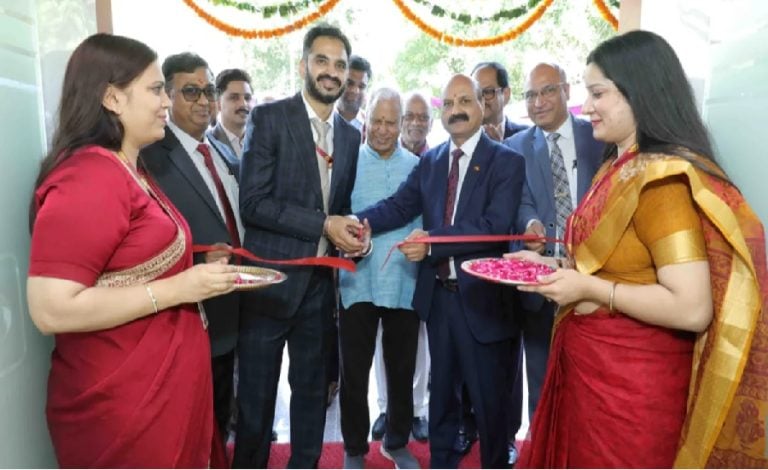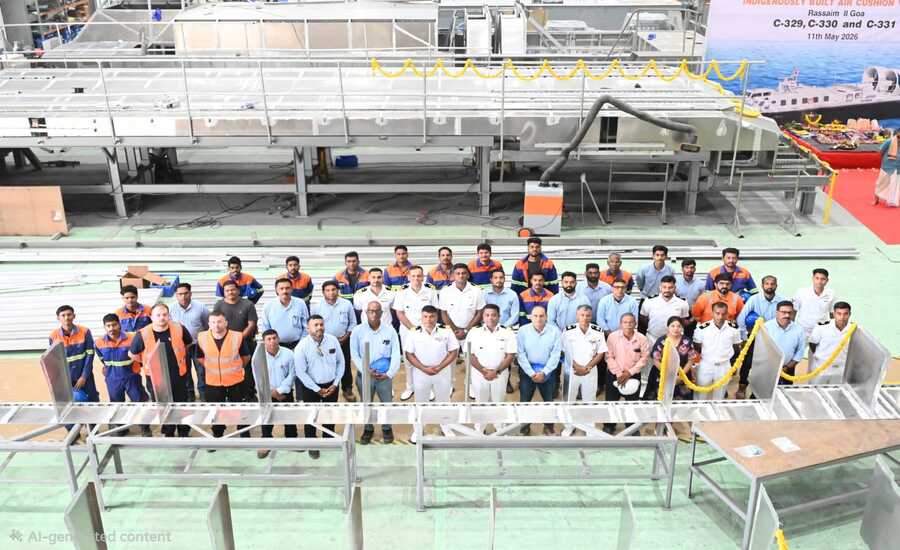
Goa: The Indian Coast Guard Air Cushion Vehicles project received a major boost after the girder laying ceremony for the 4th, 5th and 6th ACVs was held in Goa on May 11, 2026.
The ceremony marks another important step under India’s Aatmanirbhar Bharat mission, with these modern hovercraft-style vessels being built using nearly 50% indigenous material. The new ACVs are expected to improve India’s coastal security, rapid response capability, and maritime surveillance operations in difficult terrains.
Details of Indian Coast Guard Air Cushion Vehicles Ceremony
The ceremony took place at the Rassaim Yard of Chowgule Shipyard in Goa. The project is being executed by Chowgule & Company Private Limited under a contract signed with the Ministry of Defence in October 2024.
Key Highlights
- Ceremony conducted for the 4th, 5th and 6th ACVs
- Event held on May 11, 2026
- Project being developed in Goa
- ACVs built with around 50% indigenous content
- Part of India’s self-reliance defence manufacturing push
According to the official PIB release, these vessels represent a major technological advancement for India’s maritime defence sector.
What Are Air Cushion Vehicles?
Air Cushion Vehicles (ACVs), commonly known as hovercraft, are special vessels that move on a cushion of air. They can travel smoothly across:
- Water
- Marshy regions
- Mudflats
- Sandy coasts
- Shallow waters
This makes them highly useful for coastal security and rescue operations where normal ships face difficulty.
What is the Role of Indian Coast Guard Air Cushion Vehicles
The upcoming ACVs will perform multiple maritime operations for the Indian Coast Guard.
Expected Operational Roles
- High-speed coastal patrolling
- Maritime reconnaissance missions
- Search and rescue operations
- Interception and interdiction missions
- Assistance to ships and boats in distress
- Day and night coastal surveillance
The vessels are expected to significantly improve the operational flexibility of the Indian Coast Guard across India’s long coastline.
A Big Push for Aatmanirbhar Bharat
The project is being seen as a major achievement for India’s indigenous defence manufacturing ecosystem.
Why This Project Matters
- Encourages domestic shipbuilding
- Reduces dependency on imports
- Strengthens Indian maritime defence capability
- Creates opportunities for local manufacturing
- Supports future export potential in hovercraft technology
Reports also suggest that these ACVs are based on Griffon Hovercraft design technology and are being indigenously constructed in Goa.
Strategic Importance for India
India has a coastline of more than 7,500 kilometers. Coastal regions often include shallow waters and marshlands where conventional ships cannot operate effectively.
The new ACVs will help the Coast Guard:
- Respond faster during emergencies
- Monitor sensitive coastal regions
- Improve anti-smuggling and anti-infiltration operations
- Enhance disaster response capability
Experts believe such indigenous projects will strengthen India’s long-term maritime preparedness.
Indian Coast Guard Modernisation Continues
The ACV project is part of the larger modernization drive of the Indian Coast Guard.
In recent years, the Coast Guard has expanded its fleet with:
- Fast patrol vessels
- Pollution control vessels
- Offshore patrol vessels
- Next-generation interceptor crafts
Several of these projects are also being developed with high indigenous content under the government’s Make in India initiative.
Read also: Made-in-India ICGS Achal Joins Coast Guard, Enhancing Maritime Surveillance