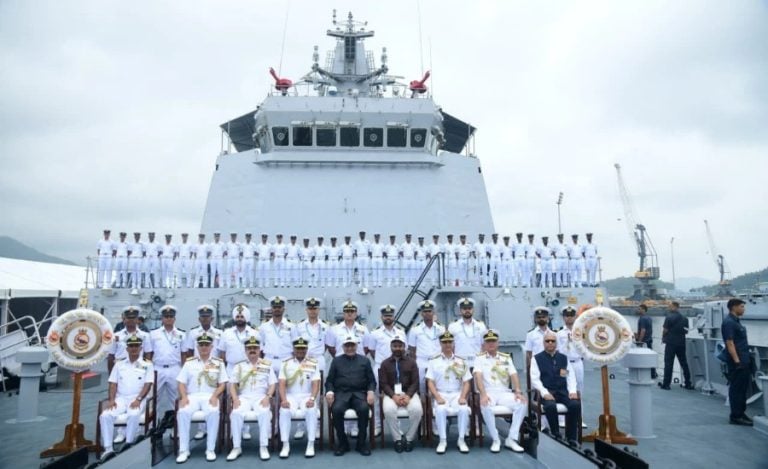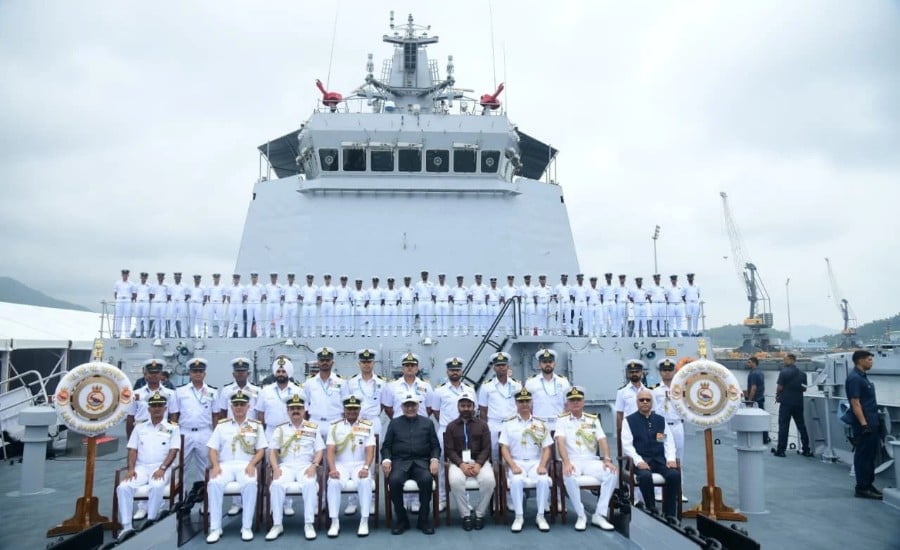
Karwar: India has taken an important step towards defence self-reliance as INS Samarthak, the Indian Navy’s first indigenous Multi-Purpose Vessel (MPV), was commissioned at Karwar, Karnataka, on October 16, 2026. Vice-President C. P. Radhakrishnan led the commissioning ceremony in the presence of senior naval officials and defence representatives.
Built by Larsen & Toubro (L&T), the vessel has more than 75% indigenous content. It will help the Navy test advanced weapons, sensors and unmanned systems while supporting maritime security and other important operations.
INS Samarthak Commissioning: Key Highlights
- Ship Name: INS Samarthak
- Commissioned On: October 16, 2026
- Location: INS Kadamba Naval Base, Karwar, Karnataka
- Chief Guest: Vice-President C. P. Radhakrishnan
- Builder: Larsen & Toubro (L&T)
- Indigenous Content: More Than 75%
- Main Role: Testing Weapons, Sensors and New Naval Technologies
- Other Roles: Maritime Surveillance, Offshore Patrolling and Humanitarian Assistance
Read also: Indian Navy BrahMos Missile Deployment: Key Plans, Benefits and 2030 Roadmap
Vice-President C. P. Radhakrishnan Commissions INS Samarthak
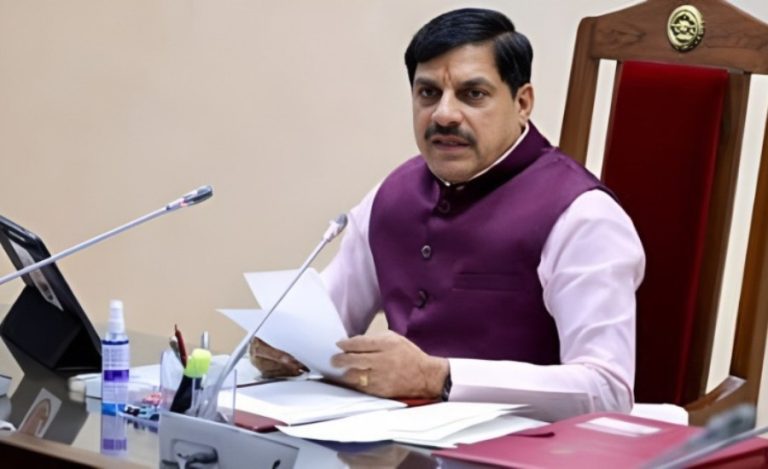
Vice-President C. P. Radhakrishnan officially commissioned INS Samarthak into the Indian Navy on October 16, 2026. The event marked an important development in India’s efforts to strengthen its domestic defence manufacturing capabilities.
Admiral Krishna Swaminathan, Chief of the Naval Staff, and other senior naval and defence officials attended the ceremony. Representatives from L&T and companies involved in supplying indigenous equipment were also present.
During the event, the Vice-President highlighted the importance of locally developed naval platforms in improving India’s maritime capabilities and technological independence. He also stressed the growing importance of cooperation between the Indian Navy, private shipyards, defence organisations, research institutions and Indian industries.
What Is INS Samarthak
INS Samarthak is a Multi-Purpose Vessel designed to perform several naval duties. Unlike a vessel built for only one specific role, it can support different operational, training, testing and development activities.
The ship will mainly serve as a platform for testing and evaluating new weapons, sensors and other naval technologies. This will help the Indian Navy assess new equipment before it is introduced into operational service.
The vessel will also support maritime surveillance, offshore patrolling, unmanned system operations and humanitarian missions when required.
The name “Samarthak” means “The Proponent”. It reflects the ship’s role as a dependable platform that enables different naval missions and technological developments.
What are the Features of INS Samarthak
One of the most important roles of INS Samarthak will be to help the Indian Navy test and evaluate new defence technologies developed in India.
These technologies include advanced weapons, radars, sensors and unmanned systems. Testing them on a dedicated vessel will help the Navy understand how they perform in different maritime conditions.
The ship will also support the launch and recovery of test targets. This capability can help naval teams evaluate weapons and other systems in practical conditions.
The vessel is expected to strengthen the connection between Indian defence research and the equipment used by the armed forces.
More Than 75% Indigenous Content Strengthens Make In India
INS Samarthak has more than 75% indigenous content, meaning that a significant share of its components, equipment and technology comes from India.
The ship was designed and built by Larsen & Toubro under the government’s Make in India initiative. It also represents the growing contribution of India’s private shipbuilding industry to national defence.
The project used modular construction and pre-outfitting methods. These techniques allow different sections and equipment to be prepared before final assembly, helping improve construction efficiency.
The programme has also supported employment, technical skill development and the growth of domestic suppliers.
The commissioning of INS Samarthak supports the broader goal of Aatmanirbhar Bharat, which aims to reduce dependence on foreign suppliers and strengthen India’s ability to develop and manufacture its own defence equipment.
What Are The Main Capabilities Of INS Samarthak
INS Samarthak is designed to support a wide range of naval and maritime activities.
1. Maritime Surveillance And Reconnaissance
The vessel can support maritime surveillance and reconnaissance missions. These activities help the Navy observe maritime areas, gather information and improve awareness of activity at sea.
2. Offshore Patrolling
INS Samarthak can undertake offshore patrolling duties when required. Such operations support the protection of maritime interests and help the Navy monitor activity in India’s surrounding waters.
3. Testing Weapons And Sensors
The vessel will provide a platform for testing and evaluating new weapons, radars, sensors and other defence technologies. This will help the Navy assess indigenous equipment before wider operational use.
4. Support For Unmanned Systems
The ship can support operations involving unmanned and autonomous systems. These systems can perform selected tasks with limited or no direct human control, depending on their design.
5. Humanitarian Assistance And Disaster Relief
INS Samarthak can also support humanitarian assistance and disaster relief operations. Such missions may include helping people affected by natural disasters and supporting emergency response efforts.
Why Is INS Samarthak Important For The Indian Navy
Modern naval operations increasingly depend on advanced sensors, unmanned systems and rapidly developing technologies.
INS Samarthak will give the Navy a dedicated platform to test and evaluate these technologies. This can help it understand their capabilities and improve the process of introducing new equipment.
The ship’s multi-purpose design also allows it to support several activities instead of being limited to one particular task. Its commissioning is therefore important not only for naval operations but also for India’s domestic defence research and manufacturing industries.
Karwar’s Strategic Importance In India’s Naval Security
INS Samarthak was commissioned at Karwar in Karnataka, an important naval location on India’s western coast. Karwar’s deep natural harbour and position near the Arabian Sea make it valuable for naval operations. The region also hosts major naval infrastructure being developed under Project Seabird.
Project Seabird aims to strengthen the Navy’s ability to accommodate and support ships and submarines. Modern naval facilities at Karwar are important for maintaining India’s maritime security capabilities.
The commissioning ceremony also highlighted the importance of developing infrastructure, technology and industrial capacity to support the Indian Navy’s future needs.
INS Samarthak And India’s Defence Self-Reliance Mission
India has been working to increase domestic production of defence equipment and strengthen cooperation between the armed forces, research institutions and private manufacturers.
INS Samarthak reflects this approach through its high level of indigenous content and its role in testing technologies developed within the country. The project also demonstrates how private shipyards can contribute to India’s naval modernisation.
Greater domestic manufacturing capacity can help develop technical skills, support Indian businesses and improve the availability of locally developed defence systems.
Read also: What Is the 107-Tonne End Shield? The Critical Component Driving Kaiga Units 5 & 6 Forward
FAQs
Vice-President C. P. Radhakrishnan commissioned INS Samarthak at Karwar, Karnataka, on October 16, 2026.
INS Samarthak is the Indian Navy’s first indigenous Multi-Purpose Vessel. It was designed and built by Larsen & Toubro and is intended to support weapons testing, sensor evaluation, maritime surveillance and other naval operations.
INS Samarthak has more than 75% indigenous content. The vessel will help the Indian Navy test and evaluate locally developed weapons, sensors and unmanned systems.