New Delhi: India marked the first anniversary of Operation Sindoor with a strong and clear warning against terrorism and cross-border threats.
Senior officers from the Indian Army, Navy, and Air Force gathered in Jaipur and said that Operation Sindoor was not just a military response, but the beginning of a long-term security strategy against terror networks.
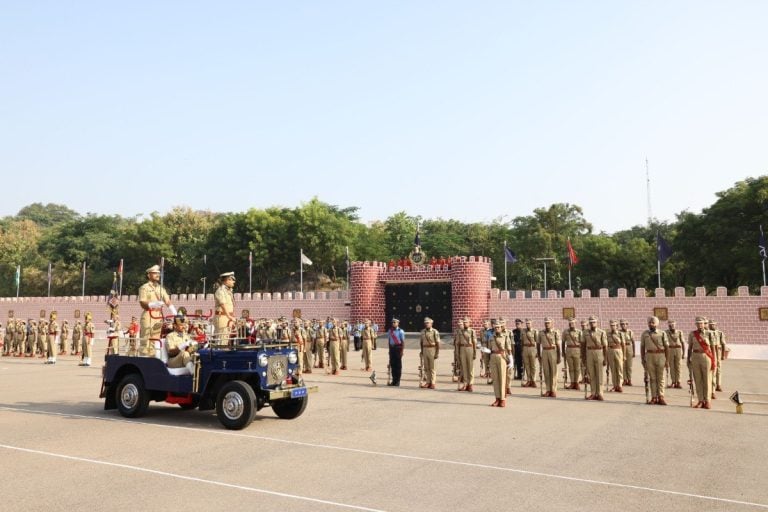
The event was held at the South Western Command during the Joint Commanders’ Conference attended by top military leadership and Defence Minister Rajnath Singh. Officials stressed that India will continue to respond firmly to any act of terrorism and protect national security with precision and strategic restraint.
Background of Operation Sindoor Anniversary
Operation Sindoor was launched on May 7, 2025, after the deadly Pahalgam terror attack in Jammu and Kashmir that killed 26 civilians, including tourists. In response, India carried out precision strikes on terror infrastructure located in Pakistan and Pakistan-occupied Kashmir (PoK).
Read also: From Drones to Rafales: How Operation Sindoor Changed Indian Defence Spending Pattern
According to military officials, nine terror camps were targeted during the operation. The strikes were conducted jointly by the Indian Army and Indian Air Force using long-range precision weapons.
Operation Sindoor Anniversary: Indian Military Leadership Issues Strong Warning
During the anniversary event in Jaipur, senior officers made it clear that India’s response to terrorism has changed permanently.
Lieutenant General Rajiv Ghai said Operation Sindoor was “not an end, but just the beginning.” He added that India would continue to defend its sovereignty and security with full determination.
Air Marshal Avdhesh Kumar Bharti stated that every act of terror would now have consequences. He said the operation proved India’s ability to conduct coordinated tri-service warfare with speed and accuracy.
Vice Admiral A.N. Pramod also highlighted how India successfully countered strategic pressure during the operation. He said the strikes exposed the limitations of nuclear threats used as strategic pressure tools.
Focus on Self-Reliance and Indigenous Defence Systems
A major highlight of the conference was India’s growing defence self-reliance under the “Aatmanirbhar Bharat” initiative.
Lieutenant General Rajiv Ghai said that nearly 65 percent of India’s defence equipment is now produced domestically. He called self-reliance a “force multiplier” for modern warfare.
Officials also highlighted the role of indigenous systems and advanced technologies used during Operation Sindoor. The military leadership stressed that future conflicts will increasingly involve cyber warfare, AI-driven systems, drones, and space-based intelligence.
Joint Commanders’ Conference Focused on Future Warfare
The anniversary coincided with the second edition of the Joint Commanders’ Conference in Jaipur. The conference theme was “Military Capability in New Domains.”
According to the Ministry of Defence, discussions focused on cyber warfare, cognitive warfare, unmanned systems, artificial intelligence, and future military readiness.
The conference also showcased futuristic defence applications and new operational doctrines designed for future battlefields.
Operation Sindoor Anniversary: India Signals Zero Tolerance Against Terrorism
Military officials repeatedly emphasized that no terror infrastructure threatening India would remain safe.
The armed forces said Operation Sindoor demonstrated India’s capability to carry out coordinated military action while maintaining strategic restraint. Officials added that India would continue to respond decisively to terrorism and safeguard national interests.
Why Jaipur Was Chosen for the Operation Sindoor Anniversary Event
Jaipur played a major strategic role during Operation Sindoor due to Rajasthan’s proximity to the international border and the presence of key military installations.
The South Western Command headquarters in Jaipur hosted the anniversary ceremony and the commanders’ conference. Senior defence officials, including Defence Minister Rajnath Singh and Chief of Defence Staff General Anil Chauhan, attended the event.
Strategic Significance of Operation Sindoor
Defence experts believe Operation Sindoor has become an important example of India’s evolving military doctrine.
The operation showcased:
- Precision strikes capability
- Joint Army-Air Force coordination
- Indigenous defence technology
- Rapid intelligence sharing
- Controlled escalation strategy
Military officials said the operation established a new security doctrine where acts of terrorism would invite immediate and calibrated retaliation.
Read also: Why Did India Stop Operation Sindoor? Rajnath Singh Reveals the Real Reason Behind the Decision