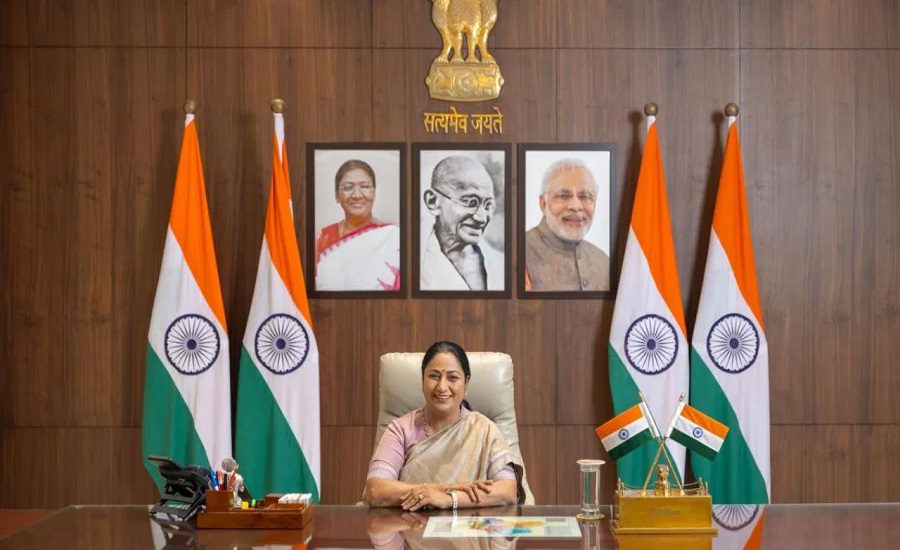
New Delhi: The Delhi government has approved a major increase in the fixed monthly incentive for Accredited Social Health Activists (ASHA) workers, raising it from ₹3,000 to ₹6,000. The decision was taken at a Cabinet meeting chaired by Chief Minister Rekha Gupta on Tuesday, September 15.
The increase will apply to all serving ASHA workers in Delhi. Around 6,725 workers currently form part of the city’s community-level healthcare network, making them the direct beneficiaries of the decision. Other incentives available to ASHA workers will continue unchanged.
The move comes as the Delhi government seeks to strengthen primary healthcare services and recognise the role of ASHA workers in connecting communities with essential health services.
6,725 ASHA Workers to Benefit
According to the Delhi government, around 6,725 ASHA workers are currently working in the national capital. An ASHA worker generally remains connected with around 2,000 people or nearly 400 families.
Their work takes place largely at the community level, where they act as a link between families and the public healthcare system. The workers visit households, share health-related information and encourage families to access vaccination services.
They also assist pregnant women and new mothers and participate in health and nutrition days, awareness programmes, surveys and community meetings.
With the revised incentive, the fixed monthly payment will increase by ₹3,000 for each eligible ASHA worker. The government has described the increase as a step towards improving their financial security while supporting the continuity of community-based healthcare services.
Read Also: Delhi’s Mega Seva Sankalp: ₹13,820 Crore Projects Set to Reshape the Capital
ASHA Workers’ Role in Primary Healthcare
ASHA workers play an important role in taking basic health information and services closer to households. Their responsibilities include promoting vaccination, supporting maternal and child health initiatives and helping families connect with healthcare services.
Their role becomes particularly important in communities where frontline workers serve as the first point of contact between residents and the formal healthcare system.
Chief Minister Rekha Gupta said ASHA workers are an important link in Delhi’s primary healthcare system. She also highlighted their contribution during the COVID-19 pandemic, when they continued providing essential health services at the community level.
The government has said the enhanced incentive is intended to recognise this contribution and provide greater financial support to the workers.
Increase Aims to Strengthen Community Healthcare
The revised incentive is also expected to support the wider primary healthcare network in Delhi. ASHA workers regularly interact with families, making them an important channel for spreading awareness about preventive healthcare and government health services.
The increase from ₹3,000 to ₹6,000 means the fixed monthly incentive has been doubled. For the 6,725 workers covered by the decision, the change represents a direct increase in the monthly amount provided by the Delhi government.
The government has linked the decision with both healthcare delivery and women’s economic empowerment. According to the Chief Minister, better financial support can encourage ASHA workers to continue their community-level services.
The decision also builds on Delhi’s earlier enhancement of the ASHA incentive. A Delhi government budget document had recorded an increase from ₹1,500 to ₹3,000 in an earlier period.
Delhi Cabinet Also Announces Hostel Initiative
The Cabinet decision on ASHA workers came alongside another announcement concerning students in Delhi. The government has decided to expand efforts to provide hostel accommodation for 10,000 college and university students across the national capital.
The Chief Minister said students from different parts of the country come to Delhi for higher education, but accommodation remains a challenge for many of them. The government plans to identify colleges and institutions with sufficient space for hostel construction.
According to the government’s announcement, hostel construction is already underway at some Delhi government universities and institutions. A survey of other colleges with suitable space will also be undertaken before the initiative is expanded.
The two announcements cover different areas of public welfare—community healthcare and student accommodation—but both focus on expanding support through government institutions.
Focus on Frontline Services and Public Welfare
The increase in ASHA workers’ monthly incentive places greater financial support behind workers who operate at the grassroots level of Delhi’s healthcare system. With the fixed incentive now set at ₹6,000 a month, all serving ASHA workers in the capital will receive the revised amount under the Cabinet decision.
For Delhi’s primary healthcare network, ASHA workers remain an important link between households and health services. Their work in vaccination awareness, maternal healthcare, community outreach and health programmes gives them a direct role in reaching families.
The latest decision therefore combines financial support for frontline workers with the government’s stated objective of strengthening primary healthcare and promoting women’s economic empowerment.