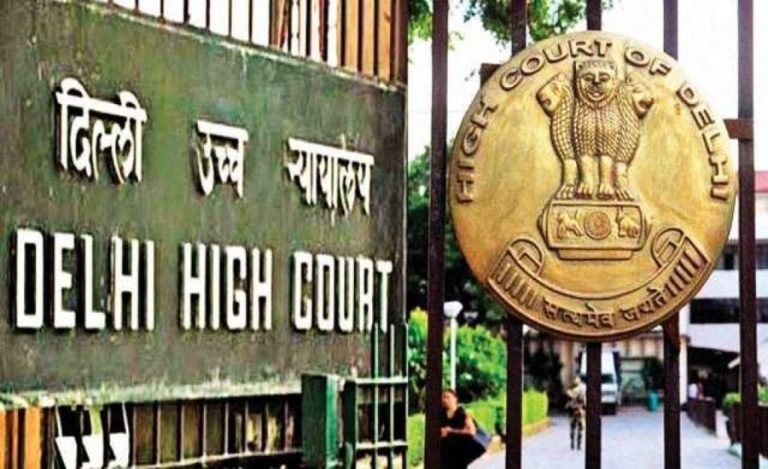
New Delhi: The Delhi High Court has upheld the Indian Air Force’s (IAF) decision to withhold flight records related to foreign visits undertaken by Prime Minister Narendra Modi and former Prime Minister Manmohan Singh. The court set aside a July 2020 order of the Central Information Commission (CIC) that had directed the IAF to disclose certain flight records under the Right to Information (RTI) Act.
Justice Amit Mahajan ruled that the CIC had erred in directing the disclosure of Special Flight Returns (SFR-II), even after removing the names and identifying details of security personnel. The court observed that redacting such information would not necessarily eliminate the potential risks to national security and the safety of the prime ministers.
The judgment emphasised that the right to information must be balanced against national security concerns and the protection of sensitive information.
Delhi High Court Says RTI Disclosure Could Compromise Security
The court rejected the argument that the flight records should be disclosed in the public interest because the foreign visits were funded by taxpayers.
Justice Mahajan observed that the expenditure of public funds on a prime minister’s foreign visits did not, by itself, justify releasing information that could compromise the security arrangements for those visits.
The court held that once the competent authority, in this case the IAF, determined that disclosure could jeopardise national security or the safety of the prime ministers, the CIC could not simply override that assessment.
The judgment also stressed the importance of the assessment made by security agencies responsible for protecting the country’s highest constitutional executive officeholders.
Read also: Why Has Delhi High Court Ordered Proceedings Against 6 CBI Officers?
Why the IAF Refused to Disclose Flight Records
The case concerned Special Flight Returns (SFR), which contain information relating to flights undertaken by the prime ministers on IAF aircraft.
The IAF argued that the records included sensitive details about:
- Aircraft and flight references.
- Aircrew and passenger information.
- Passengers’ designations, appointments and identification numbers.
- Passenger numbers and agency particulars.
- Special Protection Group (SPG) personnel accompanying the prime minister.
- Details that could help identify security personnel and reveal security deployment patterns.
According to the IAF, these details were interconnected. Even if certain names and identifying particulars were removed, the remaining information could potentially be combined with publicly available material to draw conclusions about the prime ministers’ entourages and security arrangements.
The force maintained that such disclosure could create risks for national security and the personal safety of the prime ministers.
Court Cites RTI Act Sections 8(1)(a) and 8(1)(g)
The Delhi High Court referred to exemptions under the RTI Act that protect national security and personal safety.
Section 8(1)(a) exempts information whose disclosure could prejudicially affect the sovereignty and integrity of India, the security or strategic interests of the State, and other specified protected interests.
Section 8(1)(g) protects information whose disclosure could endanger a person’s life or physical safety or identify a confidential source of information or assistance provided for law enforcement or security purposes.
The court held that the IAF was justified in relying on these exemptions in the present case.
Citing Supreme Court judgments on RTI exemptions, Justice Mahajan reiterated that the right to information is not absolute. It must be balanced against other legally protected interests, including national security and the confidentiality of sensitive information.
The court accordingly allowed the IAF’s petition, set aside the CIC’s disclosure order and disposed of all pending applications.
What the Petitioner Argued
The RTI application was filed by Commodore (retired) Lokesh Batra, who argued that the information was important in the public interest because the foreign visits involved public expenditure.
Batra’s counsel maintained that the request concerned details of private individuals who accompanied the prime ministers at public expense, rather than the identities of security personnel.
The petitioner challenged the IAF’s refusal to disclose the records, arguing that the information should be made available after sensitive details were removed.
However, the court did not accept the argument that the use of public funds was sufficient grounds to disclose records that could compromise security arrangements.
Background: How the RTI Case Began
The case originated from an RTI application filed by Batra on June 5, 2018. He sought details of foreign visits undertaken by prime ministers on IAF aircraft from April 1, 2013, up to the date of his application.
The IAF provided some information regarding Prime Minister Narendra Modi’s foreign travel. It also stated that Manmohan Singh had not travelled on IAF aircraft between April 1, 2013, and May 25, 2014.
However, the force refused to provide copies of Special Flight Returns, Parts I and II, citing national security concerns and the confidential nature of the records.
The IAF maintained that the documents contained sensitive information about aircraft, aircrew, passengers and SPG personnel accompanying the prime minister. It further argued that disclosure, particularly when combined with information already available in the public domain, could reveal details of security arrangements.
CIC Ordered Disclosure Before the IAF Approached the High Court
After the First Appellate Authority rejected Batra’s appeal in September 2018, he approached the Central Information Commission.
The CIC directed the IAF to provide certified copies of the available and relevant SFR-II records. The IAF challenged this direction before the Delhi High Court.
During the proceedings, the force reiterated that the records contained interconnected information that could help identify security personnel, reveal the composition of the prime ministers’ entourages and allow inferences about security deployment patterns.
The Delhi High Court ultimately accepted the IAF’s security-related objections and set aside the CIC’s order.
Key Takeaway from the Delhi High Court Judgment
The ruling reinforces the principle that transparency under the RTI Act must be balanced against national security and personal safety. While citizens can seek information concerning public expenditure, records containing sensitive operational or security-related details may be protected under statutory exemptions.
By upholding the IAF’s decision, the Delhi High Court concluded that the requested flight records could not be disclosed merely on the grounds that the foreign visits involved taxpayer-funded expenditure.
Read also: Aadhaar Attendance Row: Delhi High Court Stays Order For Public Prosecutors Over Privacy Challenge