New Delhi: Higher Floor Area Ratio (FAR) proposed under Delhi’s new Master Plan could make redevelopment of ageing buildings financially viable, according to D Thara, Secretary, Department of Capital Development, Ministry of Housing and Urban Affairs. The proposal comes amid renewed concerns over the safety of old structures following the recent collapse of a five-storey paying guest accommodation in Satya Niketan that killed seven people.
Higher FAR to Support Redevelopment
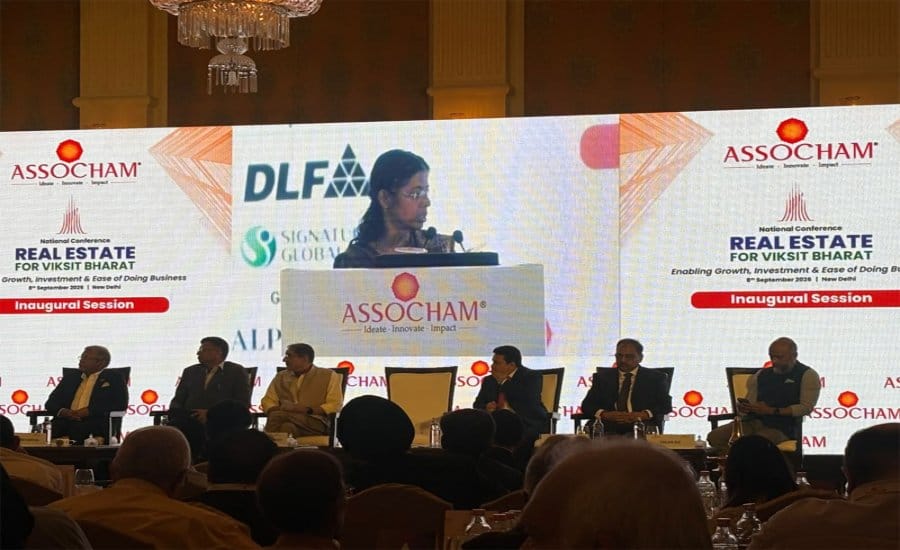
Speaking on the sidelines of the National Conference on Real Estate for Viksit Bharat, organised by ASSOCHAM, Thara said the proposed Master Plan provides greater scope for regeneration and redevelopment.
She explained that demolishing an old building and constructing a new one involves significant costs. Higher FAR could provide property owners with additional development potential, helping them recover part of the cost involved in redevelopment.
Thara said many older buildings have an FAR of around 1.5. Under the proposed approach, redevelopment could provide around 50% additional FAR.
The idea is to make redevelopment economically practical while encouraging property owners to replace ageing structures rather than continue using buildings that may require substantial repair or modernisation.
Read Also: Building Better Neighbourhoods: Delhi CM Rekha Gupta Launches Development Works in Shalimar Bagh
Delhi Could Add 40 Lakh New Homes
The proposed urban development framework also envisages a major expansion of housing in Delhi. Thara said the city could see up to 40 lakh new homes over the next 20 years.
Around 20,000 hectares along Metro corridors have been identified for high-density development. The objective is to promote housing and commercial activity in areas with strong public transport connectivity.
Thara stressed that future development should encourage people to live closer to Metro corridors and reduce dependence on private vehicles.
According to a survey referred to by Thara, around 70% of jobs are located around Metro corridors. This makes transit-oriented development important not only for housing but also for improving access to employment.
Delhi already has a substantial road network and high road density. The proposed approach seeks to make better use of existing infrastructure while directing new growth towards areas that are better connected by public transport.
‘Sponge Cities’ for Better Rainwater Management
The Master Plan discussion also touched on another growing urban challenge — waterlogging and rainfall management.
Thara advocated the concept of “sponge cities”, where urban areas are designed to absorb and retain rainwater instead of allowing large volumes of water to quickly enter drainage systems.
She also raised concerns about construction practices that prevent rainwater from reaching the soil. Extensive use of concrete around buildings can reduce the natural absorption of rainwater and increase surface runoff.
The sponge-city approach would therefore require greater attention to how buildings, roads and open spaces are designed so that rainfall can enter the ground and help reduce pressure on drainage infrastructure.
Land Pooling Seeks Greater Participation
Land pooling is another important component of Delhi’s urban development plans. Thara said the first land pooling scheme has been approved but stressed that the process will depend heavily on building confidence among landowners.
She said landowners would need to come together through associations to move the process forward.
The Delhi Development Authority (DDA) is also expected to play a greater role in aggregating land. A platform is being created to facilitate interaction between individual landowners and the authority.
Greater participation and coordination among landowners could help make land pooling more organised and support planned development instead of fragmented construction.
Building Safety and Planned Growth
The proposed higher FAR comes at a time when Delhi faces the challenge of managing a large stock of ageing buildings while accommodating growing demand for housing and urban infrastructure.
The Satya Niketan building collapse has added urgency to discussions around redevelopment, building safety and enforcement. While higher FAR can improve the financial viability of reconstruction, redevelopment would also need to follow applicable building regulations and safety requirements.
The larger Master Plan approach combines redevelopment with transit-oriented growth, housing expansion and improved water management. By concentrating higher-density development around Metro corridors, the government is also seeking to reduce pressure on roads and encourage greater use of public transport.
For Delhi residents, the impact of these changes will depend on how the proposals are implemented on the ground. Safer redevelopment of ageing structures, better use of existing infrastructure and more effective rainwater management could address some of the city’s long-standing urban challenges.
The proposed framework therefore goes beyond increasing construction potential. It points towards a model of planned urban growth that links building redevelopment with housing, public transport, land management and climate-resilient infrastructure.
Read Also: Delhi Uses Tech-Based Randomisation to Post Sub-Registrars Across All 39 Sub-Divisions