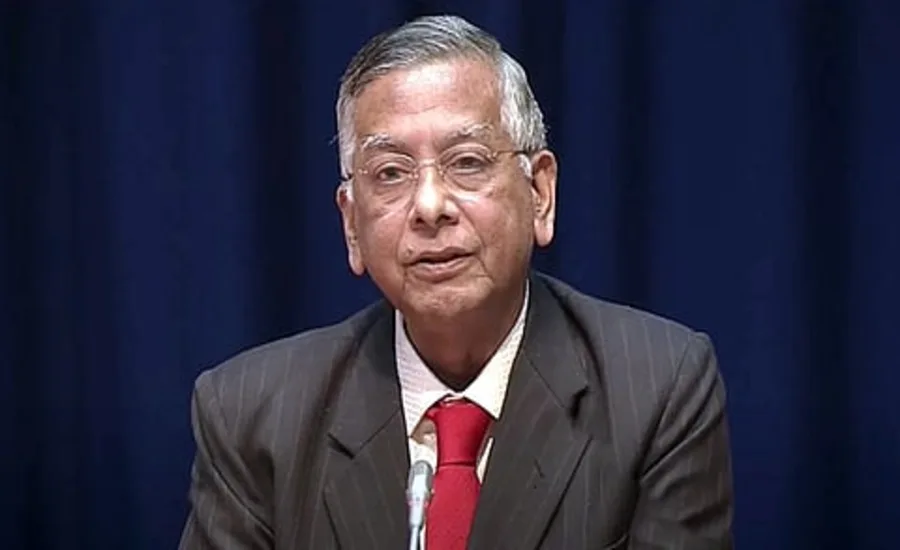
New Delhi: Attorney General R Venkataramani has revealed that he is in discussions with the government to re-examine existing rules that restrict government participation in arbitration, especially in high-value disputes. He suggested that the current framework may need to be made more flexible to better support India’s evolving arbitration ecosystem.
Details of Arbitration Norms Review Suggestion
Speaking at the Gujarat High Court Arbitration Centre (GHAC) Arbitration Week 2026 in GIFT City, Venkataramani said he has been engaging with the government to take a fresh look at the existing policy framework governing arbitration.
According to the Attorney General, the objective is to create a more relaxed and practical set of norms that would allow the government to participate in arbitration more effectively when required.
Arbitration Norms Review: What Is The Current Restriction
In June 2024, the Ministry of Finance issued an Office Memorandum (OM) that called for a re-evaluation of the government’s approach to arbitration. The memorandum argued that arbitration had become time-consuming and expensive in several cases and often led to prolonged litigation even after arbitral awards were passed.
The policy restricted disputes below ₹10 crore from routinely being referred to arbitration and encouraged government departments to consider mediation and negotiation as alternative dispute resolution methods.
AG Says Policy Can Be Changed
Venkataramani emphasized that the Office Memorandum is not a permanent law and can be modified if circumstances require. He indicated that the government has the authority to revise or even withdraw the policy after reviewing its impact.
His remarks suggest that policymakers are open to evaluating whether the current restrictions are helping or hurting India’s long-term arbitration goals.
Why Arbitration Matters For India
Arbitration is a private dispute resolution process that allows parties to settle commercial disagreements outside traditional courts.
Businesses often prefer arbitration because it can be faster, more specialized, and more suitable for complex commercial disputes.
As India seeks to become a major global investment destination, experts believe a strong arbitration system is essential for improving investor confidence and ease of doing business.
India’s Global Economic Role Is Changing
The Attorney General noted that India is no longer only a recipient of foreign investment. Indian companies are increasingly investing abroad, creating new cross-border commercial relationships and disputes. Because of this shift, India’s arbitration framework must evolve to reflect its growing role in the global economy and international investment landscape.
Arbitration Norms Review: AG Calls For Stronger Institutional Arbitration
Venkataramani stressed that India should continue moving from ad hoc arbitration toward institutional arbitration. Institutional arbitration involves specialized organizations that administer disputes using established procedures, helping improve consistency, efficiency, and credibility.
Bigger Role For Lawyers And Arbitration Institutions
The Attorney General said lawyers and arbitration professionals must play a greater role in strengthening India’s arbitration system. He argued that the legal community has not done enough to drive the transition toward institutionalized dispute resolution and encouraged greater participation in arbitration-focused professional bodies.
Need For Long-Term Arbitration Reforms
Venkataramani cautioned against making quick policy changes based on isolated concerns. Instead, he advocated for a long-term roadmap of 20 to 30 years that would guide the development of India’s domestic and international arbitration framework.
He also stressed that reforms should balance investor confidence, commercial efficiency, public accountability, and protection of public resources.
Read also: Who Is DY Chandrachud? Why Has Russia Chosen Former CJI for a Major Arbitration Case?
FAQs
The June 2024 Office Memorandum encouraged a reassessment of arbitration and promoted mediation and negotiation while limiting routine arbitration in certain government disputes.
The government is reviewing whether existing restrictions on arbitration are limiting efficient dispute resolution and whether more flexible rules could better serve India’s economic and legal interests.
He called for a long-term reform strategy, stronger arbitration institutions, greater participation by legal professionals, and a balanced approach that protects both investors and public interests.