https://indianmasterminds.com

ADVERTISEMENT
ADVERTISEMENT

Shockwave for Auto Industry: SC Pushes Phase Ban on Luxury Traditional Vehicles, Paving Way for EV Dominance

In a bold move, the Supreme Court has urged India to begin phasing out premium petrol and diesel cars to fast-track electric vehicle adoption and advance the country’s clean-transport goals.
NCERT Class 8 Textbook Judiciary Controversy
Indian Masterminds Stories

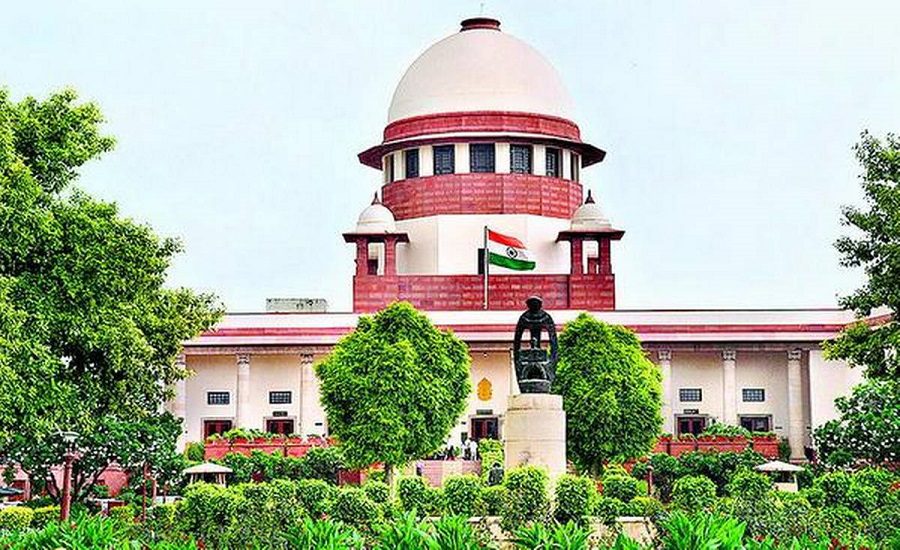
New Delhi: In a clear wake-up call for India’s auto and environment policy, the Supreme Court of India told the government to consider gradually banning high-end petrol and diesel cars, underscoring a push for cleaner transport and wider adoption of electric vehicles (EVs).  The bench, led by Justices Surya Kant and Joymalya Bagchi, emphasised that starting with luxury internal-combustion‐engine (ICE) cars would minimise impact on ordinary citizens while sending a strong signal for green mobility. 

Background of Phase Ban on Luxury Traditional Vehicles

The matter arises from a Public Interest Litigation (PIL) filed by Centre for Public Interest Litigation (CPIL) represented by advocate Prashant Bhushan, seeking effective rollout of the country’s EV policies including the National Electric Mobility Mission Plan (NEMMP, 2012) and the Zero Emission Vehicles Framework (NITI Aayog, 2018) for accelerating electric-mobility adoption.  

Read Also: EV Sound Alert System Mandatory from 2027: Govt Proposes AVAS for All Electric Vehicles

During the hearing, the bench noted that premium electric cars are now available widely in the market, making a phase-out of luxury ICE vehicles feasible. 

About the Court Bench & Officer Comments

Justice Surya Kant: During the hearing, he remarked:

> “Just think of imposing a ban on the very high-end vehicles first of all. So it will not affect the common man, because a very small part of the Indian population can afford that.” 

Justice Joymalya Bagchi: Co-bench member who participated in the hearing. 

Attorney General (AG) R. Venkataramani: Representing the government, he confirmed that 13 ministries are involved in implementing EV policy, and that the government was “alive to the idea” of the phased ban suggestion. 

Importance of the Phase ban on luxury traditional vehicles

Environmental impact: Vehicles powered by petrol and diesel contribute significantly to urban air pollution and greenhouse-gas emissions. Curbing high-end ICE vehicles helps reduce emissions from a smaller but high-emitting segment.

Signal effect: By targeting luxury ICE vehicles first, the judiciary sets a national tone for accelerating the EV transition and signals that fossil-fuel vehicles are on the path out.

Market and industrial push: The move nudges manufacturers, fleets and buyers to shift toward electric mobility more decisively, aligning with India’s climate and mobility goals.

Infrastructure multiplier: The court observed that as EV numbers grow, charging network growth will follow — utilising existing petrol stations and transport hubs. 

Key Challenges & Implications

  • Despite growth in EV models, charging infrastructure remains sparse in many parts of India. The petition flagged this as a major hurdle. 
  • A ban on high-end ICE vehicles may affect luxury car manufacturers, dealerships and related jobs. Sudden policy shifts may create uncertainty for stakeholders.
  • While luxury segment buyers can adapt, ensuring affordability and access to EVs for broader segments remains critical to avoid inequity in transition. The policy may impact export-oriented luxury car sectors.
  • Coordinating among 13 ministries, updating older EV policies (such as NEMMP and EV frameworks), and designing the “phased ban” roadmap for diverse states is a heavy governance task. 

Way Forward

  • The government must develop a detailed timeline and criteria for the phase-out of luxury petrol and diesel cars, specifying segments, cities, and transition phases.
  • Accelerate the deployment of EV charging stations across metro and tier-2/3 cities, leveraging petrol stations, bus depots and public parking hubs.
  • Revisit and update the NEMMP & EV policies (2012/2020) to reflect current technology, market realities and manufacturing ecosystem. The court explicitly noted the need for review. 
  • Expanding incentives, tax benefits, and financing for EVs so substitution is smooth, not coercive. Consider “fee-bate” models (fee for high-emission vehicles, rebate for clean ones) as flagged in earlier hearings. 
  • Launch pilot projects in major metros (e.g., Delhi, Mumbai, Bengaluru, Chennai, Kolkata) to test rollout, infrastructure readiness and consumer behaviour before scaling nationally. 
  • Drive awareness campaigns about benefits of EVs, charging convenience and cost-savings to build demand and trust in electric mobility.
Read Also: Madhya Pradesh Govt Approves 50% Motor Vehicle Tax Exemption on New Vehicles with “Certificate of Deposit”


Indian Masterminds Stories
ADVERTISEMENT
ADVERTISEMENT
Related Stories
ADVERTISEMENT
ADVERTISEMENT
NEWS
IPS officer J. S. Bawa
A Century of Leadership: Tricity IPS Fraternity Celebrates 100th Birthday of Former CBI Director J. S. Bawa
Indian Army Central Command Strategic Communication Conclave
Indian Army Warns of ‘Weaponised Narratives’ as Central Command Hosts Strategic Communication Conclave in Lucknow
Navi Mumbai Fake IAS Officer Case
Inside the Navi Mumbai Fake IAS Officer Case: Accused Used Fake SIM and Government Identity to Threaten Police
Gujarat Civic Body Appointment
Four Major Gujarat Cities Now Under IAS Administrators as State Prepares for Local Body Elections
Project KAL
What Is Project KAL? India’s New Long-Range Strike Drone With 1,000 km Range Targets Strategic Military Assets
Sheshnaag-150 drone
What Is India’s Sheshnaag-150? Inside the Indigenous Swarm Drone With 1,000 Km Range and 40 Kg Warhead
Integrated Air Command and Control System
Explained: How India’s Integrated Air Defence Command Network Will Shape Future Wars
Lt Gen Dhiraj Seth
Who Is Lt Gen Dhiraj Seth? Southern Army Commander to Become Next Vice Chief of Army Staff
ADVERTISEMENT
ADVERTISEMENT
Videos
WhatsApp Image 2026-03-02 at 10.22
Beno Zephine: India’s First 100% Visually Challenged IFS Officer Who Rewrote the Rules of Diplomacy | EXCLUSIVE
Prajesh Kanta Jena
How IFS Prajesh Kanta Jena Empowered Women & Youth at Palamau Tiger Reserve
WhatsApp Image 2026-02-23 at 12.13
Exclusive | From Ridge to River: Prajesh Kanta Jena’s Community-Led Conservation Drive at Palamau
ADVERTISEMENT
UPSC Stories
Doctor to UPSC AIR 7: How Aa R Rajah Mohaideen Turned a Pandemic Realisation into an IAS Dream | Exclusive
Doctor to UPSC AIR 7: How A R Rajah Mohaideen Turned a Pandemic Realisation into an IAS Dream | Exclusive
MBBS graduate Dr. A R Rajah Mohaideen secured AIR 7 in UPSC CSE 2025 after three attempts. His journey...
ZINNIA AURORA
IPS Officer Zinnia Aurora Rewrites Her UPSC Story With AIR 6 in 2025 | Exclusive
Zinnia Aurora secured AIR 6 in UPSC CSE 2025 after previously entering the IPS. Her journey spans corporate...
Rajeshwari Suve M UPSC CSE 2025 AIR 2
UPSC CSE 2025: Rajeshwari Suve M Secures AIR 2, Deputy Collector from Tamil Nadu Shares Her 7-Year Journey | EXCLUSIVE
Rajeshwari Suve M from Tamil Nadu secured AIR 2 in UPSC CSE 2025. She shares her 7-year preparation journey...
Social Media
One-Horned Rhino Calf
Watch: First One-Horned Rhino Calf of 2026 Takes Birth at Jaldapara National Park, IFS Officer Shares Rare Footage
A newborn one-horned rhinoceros calf was spotted at Jaldapara National Park on January 1, 2026. IFS officer...
venomous banded krait
Rare Night Encounter: IFS Officer Spots Highly Venomous Banded Krait During Forest Patrol, Internet Amazed
An IFS officer’s night patrol video of a highly venomous banded krait has gone viral, highlighting India’s...
elephant rescue Karnataka
Heroic Karnataka Elephant Rescue: How a 28-Hour “Impossible Mission” Became a Triumph of Wildlife Care, IFS Parveen Kaswan Shares Video
A trapped elephant was rescued after 28 hours in Karnataka through a massive, expertly coordinated Forest...
ADVERTISEMENT
ADVERTISEMENT
ADVERTISEMENT
Latest
From Welfare to Workforce: How IAS Officer Pulkit Khare’s Divyangjan Rozgar Abhiyan Is Rewriting the Story of Inclusive Employment
Doctor to UPSC AIR 7: How Aa R Rajah Mohaideen Turned a Pandemic Realisation into an IAS Dream | Exclusive
Doctor to UPSC AIR 7: How A R Rajah Mohaideen Turned a Pandemic Realisation into an IAS Dream | Exclusive
ADVERTISEMENT
ADVERTISEMENT
ADVERTISEMENT
ADVERTISEMENT
ADVERTISEMENT
ADVERTISEMENT
ADVERTISEMENT
Videos
WhatsApp Image 2026-03-02 at 10.22
Prajesh Kanta Jena
WhatsApp Image 2026-02-23 at 12.13
ADVERTISEMENT
ADVERTISEMENT