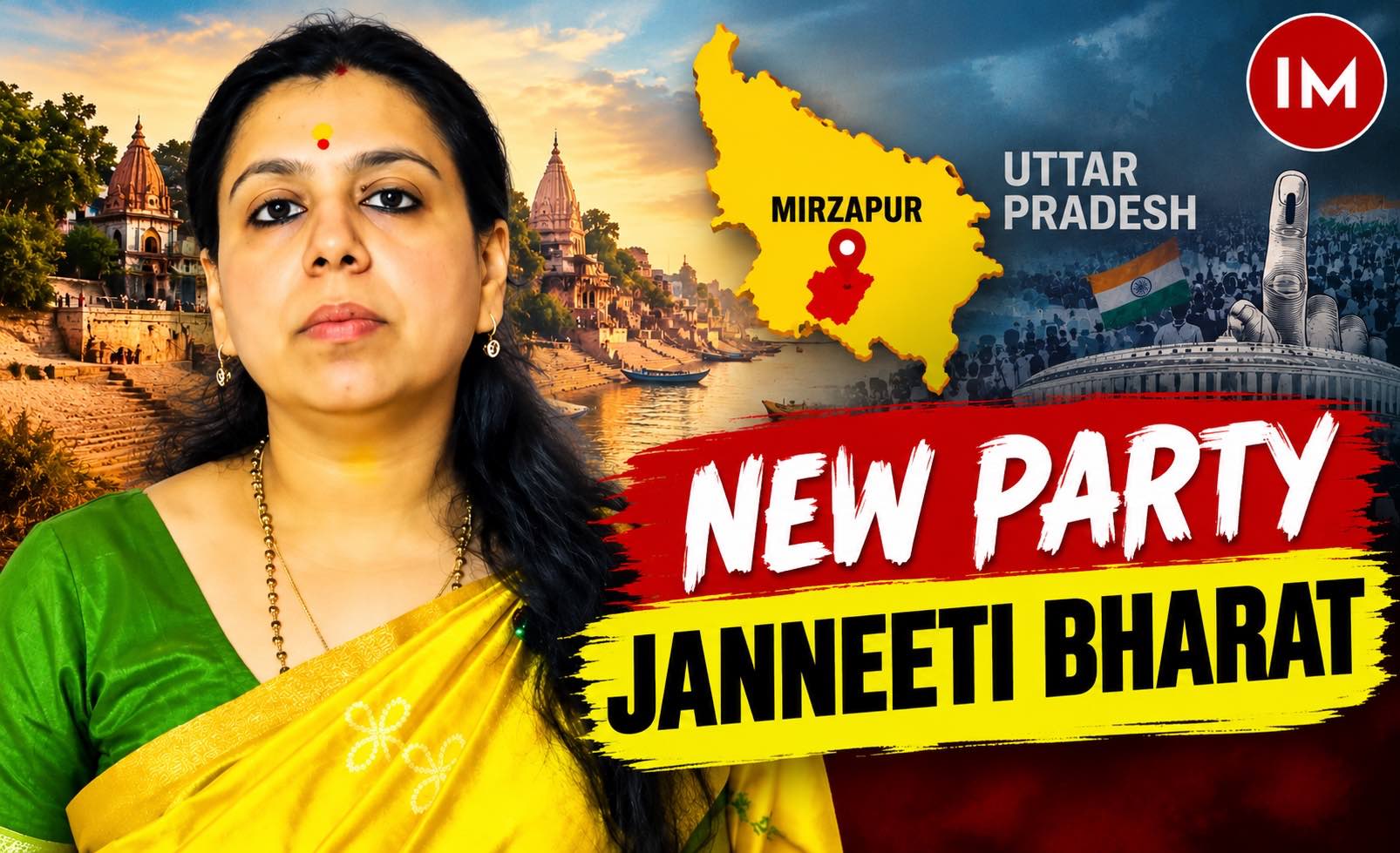
Lucknow/Mirzapur: Former IAS officer Divya Mittal has announced her entry into electoral politics with the launch of the JanNeeti Bharat Party, which will contest the 2027 Uttar Pradesh Assembly elections. She said the party would participate in the elections with a full-fledged campaign and called on people to support its vision of people-centric governance and a more accountable political system.
In an approximately eight-and-a-half-minute video posted on X, Ms Mittal explained the idea behind the party, its proposed approach to governance and the three promises she intends to take to voters. Her central argument is that democracy should not be limited to voting once every five years, but should allow citizens to participate in policymaking, influence decisions and monitor the delivery of public services throughout the government’s tenure.
The announcement comes around a month and a half after her resignation from the Indian Administrative Service. A 2013-batch IAS officer of the Uttar Pradesh cadre, Mittal resigned on August 30, 2026, citing personal reasons, family priorities and new goals in life. Her resignation was accepted and became effective on September 15, 2026.
Before leaving the service, she was serving as Special Secretary in the Uttar Pradesh Revenue Department. She had previously served as District Magistrate in Mirzapur, Sant Kabir Nagar and Deoria, among other administrative assignments.
Her decision to launch a political party marks a shift from implementing government policies as a civil servant to seeking a public mandate to shape them.
‘I Just Had to Open the Window’: Divya Mittal Explains Why She Formed the Party
In her video message, Ms Mittal said the response to her earlier indication that she might enter politics had exceeded her expectations. She recalled sharing a phone number to hear from people, only to receive so many messages that WhatsApp stopped working on that number.
Apologising for not having anticipated the volume of responses, she described the experience through the image of a lamp of hope standing before the sun.
“I left with a lamp of hope, and when your message came, I felt like I was standing with a lamp in front of the sun,” she said, explaining that she only needed to open a window to let that light in.
She then announced that she was forming her own political party.
Explaining the name JanNeeti Bharat, Ex-IAS Mittal said the issue was not simply about the existence of political parties, but about whether they listened to ordinary people and allowed them to influence decisions.
Drawing on the symbolism of the Ganga, she said every drop in the river was equal, with none being greater or smaller than another. She wants the party to reflect the same principle: every citizen should have a voice, and every individual should be able to contribute to the direction of governance.
“Politics rules over you. In politics, you will rule,” she said, describing the principle she wants JanNeeti Bharat to represent.
She added that the party would contest the 2027 Uttar Pradesh Assembly elections with the aim of making government accountable to citizens not just on election day, but at every stage of its work.
JanNeeti Bharat’s Three Promises: People-Centric Policies, Need-Based Decisions and Accountability
Ms Mittal outlined three central promises for the new party. Together, they focus on involving citizens in policymaking, ensuring that public decisions are guided by actual needs rather than influence or identity, and creating systems through which people can monitor government work.
1. Policies Should Be Made Around People’s Needs
The first promise is that people should be at the centre of public policy and should have a say in determining what those policies address.
She argued that citizens understand the challenges they face in their daily lives, whether they concern agriculture, small businesses, education, infrastructure or access to public services. Policymaking, she said, should begin by listening to these experiences, while experts should help determine how the identified needs can be addressed.
She illustrated the point by describing the sacrifices made by ordinary families. A mother may eat less so that her child can have enough food, while a father may work in the fields and sacrifice personal comfort to send a child to school. Such everyday decisions, she argued, reflect the concerns and aspirations that public policy should recognise.
For farmers, this would mean developing agricultural policies in consultation with those who understand the challenges between cultivation and the marketplace, including falling prices and difficulties in selling produce.
For small traders, it would mean listening to the obstacles they encounter across the business chain, from production to transportation and access to markets.
Ms Mittal also emphasised the importance of considering the aspirations of younger generations. The ambitions of a girl looking at the moon and imagining her future, a young person preparing for a career, and even the interests of generations not yet born should inform decisions made today.
Her proposed principle is that policies should emerge from the people and that the country’s development should be guided by those policies.
The Mirzapur school example
To explain why she believes public participation is essential, Mittal referred to the case of Devkali Devi, who had asked for a school even when her household lacked adequate water facilities.
According to Ms Mittal, work on the school began after she posted a video about the matter. The foundation was laid, but it was subsequently discovered that the land belonged to the Forest Department, and the work was stopped. The children who were supposed to benefit from the school continued to wait.
She used this example to question why approvals for large industrial projects can sometimes be secured within a short period, while basic facilities requested by ordinary citizens can remain stalled for years.
She argued that a system designed around people’s needs must ensure that administrative procedures do not become an obstacle to essential services such as schools, roads and local infrastructure.
2. Decisions Must Be Based on Need, Not Identity or Influence
The second promise is that public decisions should be guided by necessity rather than caste, religion, social status or political influence.
Ex-IAS Mittal described a road project in which, according to her account, the proposed route was changed after someone intervened. The original alignment would have benefited thousands of people, while the altered route served a smaller group. She also described the consequences for residents whose homes and courtyards were affected by the revised alignment.
Using this example, she argued that the people who stand to benefit from a project—and those who may suffer because of it—should have a voice in decisions about its design and implementation.
Under the principle she outlined, citizens would be able to participate in determining where public infrastructure is most urgently needed. The purpose would be to prevent decisions from being changed because of the influence of a particular individual or group.
A proposed mobile-based system to improve women’s safety
One of the most specific ideas in her announcement concerns women’s safety in public spaces.
She proposed a mobile-based system through which women could mark locations where they feel unsafe, including dark stretches, isolated roads or places where they fear harassment.
According to the system she described, once a particular location receives a sufficiently large number of reports – she cited 100 markings – measures such as lighting, public-address or noise systems, and cameras could be installed there.
The idea is to identify vulnerable locations through the experiences of people who regularly use those spaces rather than relying exclusively on decisions made by officials or politicians.
She said the safety of girls and women should not become a priority only after an incident makes news. Preventive arrangements should already be in place.
She suggested extending the same needs-based approach to other public facilities, including hand pumps, roads and roadside stations. Citizens would identify the locations where intervention is most urgent, and work would begin accordingly.
Her broader argument is that public decisions should reflect the collective needs of communities rather than the preferences of those with greater influence.
She summarised this second promise as decision-making based on necessity, with equality in the decision-making process.
3. Citizens Must Be Able to Track and Evaluate Every Public Work
The third promise focuses on public accountability and monitoring government projects.
Ms Mittal argued that citizens often lack timely information about the status of government schemes and public works. This information gap, she said, can create opportunities for middlemen to demand money from people who are unaware that their applications have already been approved.
She illustrated the problem with the example of a woman applying for a permanent house under a government scheme. If she does not know whether her application has been approved, a middleman may approach her and demand ₹5,000 by claiming that he can get the work done.
Ms Mittal proposed making the status of such applications available directly on people’s mobile phones, reducing dependence on intermediaries.
She also suggested that details of public works in a village—including drains, roads, hand pumps and roadside facilities—should be visible on a digital map. Citizens should be able to see what work is being undertaken, how much progress has been made, when it is expected to be completed and who is responsible for it.
The objective is to make government activity more transparent and allow citizens to monitor projects without having to depend entirely on official assurances.
A red-yellow-green rating system for public services
Ex-IAS Mittal also proposed a simple colour-coded system through which citizens could assess the quality of public works and essential services.
Under the system she described, green would indicate satisfactory work, yellow would signify incomplete work, and red would flag poor performance or deficiencies.
The ratings could be applied to roads, schools, hospitals and other public facilities. In a hospital, for instance, citizens could report whether they received the prescribed medicines and whether a doctor was available. At a school, they could assess whether textbooks were provided and how the teaching was being delivered.
The same approach could be extended from individual facilities to the block and district levels, allowing citizens, officials and ministers to identify where services are falling short.
Mittal argued that such a system would make it easier to identify deficiencies and track whether corrective action had improved the situation. As conditions improved, the ratings would change accordingly.
Her third promise is therefore centred on measuring public service delivery through citizens’ experiences and using that information to improve performance.
What Role Will JanNeeti Bharat Ministers Play?
Ms Mittal said that, under her proposed model, ministers would have a different relationship with citizens and the administration.
Rather than functioning primarily as intermediaries between the public and the government, ministers would be expected to visit people, listen to their concerns and help communicate problems that citizens could not report through a mobile application or other digital systems.
She contrasted this approach with what she described as a system in which ministers sit between citizens and the government but face the government. Under JanNeeti Bharat’s proposed approach, ministers would continue to occupy that position but would face the people.
The idea is to combine digital tools with direct public engagement. While applications and online maps could make information accessible, ministers would still be expected to visit communities and listen to residents whose concerns could not easily be expressed through technology.
This would make citizen participation a continuing process rather than an exercise confined to elections.
‘The Question Is Not of Convenience but of Power’
Towards the end of her video, Mittal addressed a question she anticipated from viewers: if these ideas are feasible, why have they not already been implemented?
She argued that technology is no longer the main obstacle, pointing out that people already use mobile phones for financial transactions and ticket bookings.
In her view, the challenge is not simply one of convenience but of power. Greater transparency could reduce the scope for middlemen to extract money, prevent incomplete work from escaping scrutiny, and make it more difficult for influential individuals to alter public decisions for their own benefit.
She described these practices as interconnected parts of a system that resists allowing citizens to exercise meaningful control.
Ms Mittal also criticised the tendency to dismiss ordinary people as uninformed about governance. She argued that citizens who manage household budgets, make difficult financial choices and navigate public services possess practical knowledge that should be taken seriously in policymaking.
She reiterated her belief that people should have a greater role in deciding how they are governed.
JanNeeti Bharat Plans a Door-to-Door Political Campaign
Ms Mittal acknowledged that the new party does not have the financial resources or organisational strength associated with established political parties.
She said JanNeeti Bharat would therefore focus on reaching people directly rather than relying primarily on posters and conventional campaign methods.
Under the approach she outlined, every household could become a local point of contact, and every supporter could help communicate the party’s ideas. She invited people to call her to their villages and towns and participate in the proposed political movement.
Her closing appeal asked viewers to share the video with three people and write three words: “Not politics, but democracy.”
The message reflects the central theme of her announcement: the party’s stated ambition is to shift the focus of political activity from competition among parties to greater citizen participation in governance.
Whether the proposed systems can be implemented at scale, and how the party will build its organisation ahead of the 2027 Assembly elections, remain open questions.
From London to the IAS: Divya Mittal’s Journey
Before entering politics, Mittal built a career in administration after an educational and professional journey that included some of India’s leading institutions and work abroad.
She studied engineering at IIT Delhi and completed an MBA from IIM Bangalore before working in London. She later returned to India, prepared for the UPSC Civil Services Examination and joined the IAS in 2013.
As a Uttar Pradesh-cadre officer, she held several administrative assignments, including serving as District Magistrate in Mirzapur, Sant Kabir Nagar and Deoria. Before resigning, she was posted as Special Secretary in the state’s Revenue Department.
Her tenure in Mirzapur brought her public attention for efforts to address local infrastructure and basic-service needs. One example was the initiative to provide piped water to Lahuria Dah, a remote village where residents had depended on tanker supplies.
Her experience as a district administrator now forms part of the background to her political message, particularly her emphasis on local problems, access to public services and the need for administrative systems to respond to citizens.
Why Did Divya Mittal Resign from the IAS?
Ms Mittal announced her resignation on August 30, 2026, after approximately 13 years in the service. At the time, she cited personal reasons, family priorities and new goals in life. Her resignation was accepted and took effect on September 15, 2026.
Her decision prompted political reactions even before she formally announced the launch of JanNeeti Bharat.
Congress leader Ajay Rai said his party could consider her if she decided to contest an election. Samajwadi Party president Akhilesh Yadav also commented on her resignation and raised allegations concerning pressure on officers.
Mittal’s latest announcement indicates that she intends to pursue an independent political path through a party of her own rather than enter electoral politics under an established party’s banner.
Mirzapur Sadar to Be Her Electoral Battleground
Ms Mittal’s choice of Mirzapur Sadar is significant because of her earlier association with the district as its District Magistrate.
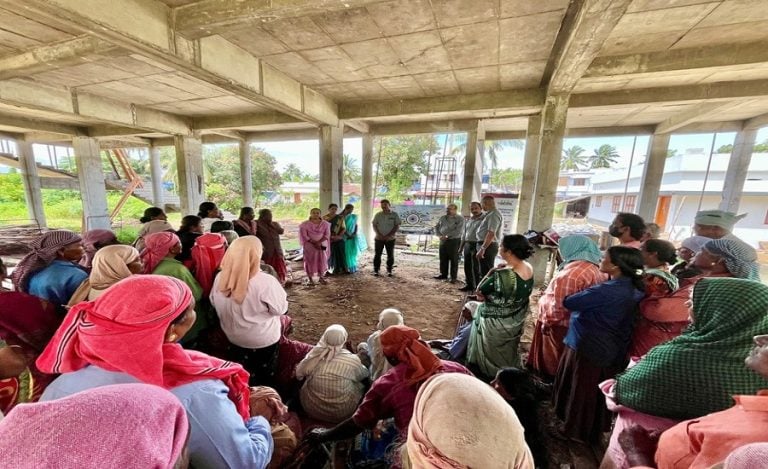
During her visit to Mirzapur around Navratri, she had been engaging with local residents and attending public events. Her appearances reportedly drew supporters who welcomed her with flowers and raised slogans such as “Divya Didi Zindabad.”
Her announcement has now given a clearer direction to those public engagements: she intends to contest the 2027 Uttar Pradesh Assembly elections from the constituency under the banner of JanNeeti Bharat.
The party’s three stated promises—people-centred policymaking, decisions based on need rather than identity, and public monitoring of government work—will form the foundation of the political programme she has outlined.
The next challenge will be translating these principles into a functioning party, developing a local organisation and persuading voters that the proposed model can deliver results in practice.
For now, Divya Mittal’s announcement marks her transition from a former IAS officer known for her administrative assignments to a prospective electoral candidate seeking to build a new political platform in Uttar Pradesh.