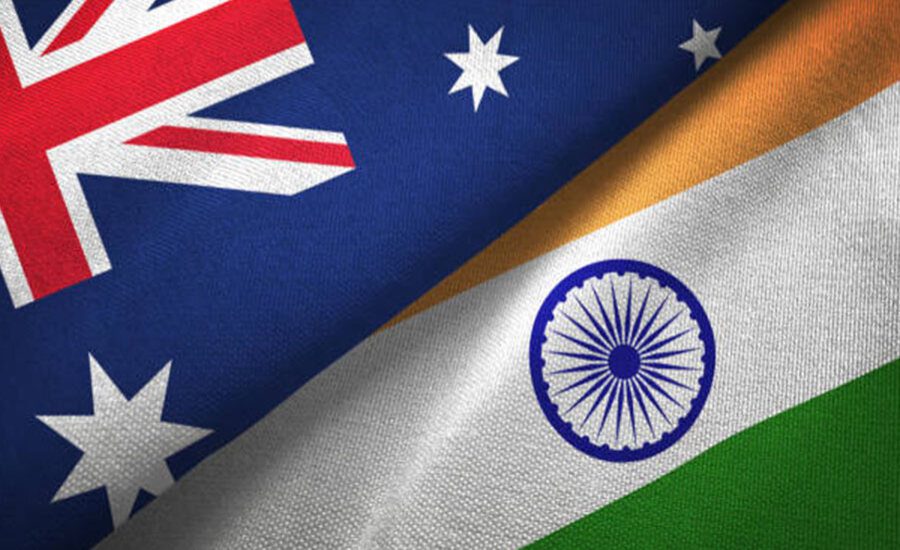
New Delhi: India Australia defence ties are growing stronger as both countries increase military cooperation, maritime security coordination, and strategic partnerships in the Indo-Pacific region.
The move comes amid rising concerns over China’s expanding military and economic influence across key sea routes. Recent discussions between New Delhi and Canberra have highlighted a shared commitment to maintaining a free, open, and rules-based Indo-Pacific.
Details of India Australia Defence Ties
India and Australia have steadily upgraded their strategic partnership over the last few years.
Read also: India and Australia Prepare for Bigger Military Cooperation With New Defence Initiatives
Key reasons include:
- Rising Chinese military activity in the Indo-Pacific.
- Security concerns in the Indian Ocean region.
- Protection of international trade routes.
- Greater military interoperability between both nations.
- Shared commitment to regional stability and international law.
According to recent discussions highlighted during Defence Minister Rajnath Singh’s engagement with Australian counterparts, both countries are focusing on practical cooperation rather than creating a formal military alliance.
India Australia Defence Ties: Major Defence Agreements
Several important agreements have strengthened bilateral defence cooperation:
Comprehensive Strategic Partnership (2020)
- Elevated relations to a higher strategic level.
- Expanded cooperation in defence, trade, and technology.
Mutual Logistics Support Agreement (MLSA)
- Allows reciprocal access to military bases.
- Supports refuelling, maintenance, and logistics operations.
2+2 Ministerial Dialogue
- Regular meetings between foreign and defence ministers.
- Helps coordinate security and diplomatic policies.
Air-to-Air Refuelling Cooperation
- Enhances operational reach of military aircraft.
- Improves joint mission capabilities.
India Australia Defence Ties: Joint Military Exercises Growing Every Year
India and Australia now participate in several major military exercises.
Important Exercises
- AUSINDEX – Naval exercise focused on maritime security.
- Pitch Black – Multinational air combat exercise hosted by Australia.
- Malabar Exercise – Conducted with India, Australia, Japan, and the United States.
- Talisman Sabre – Large-scale military exercise involving allied forces.
- AUSTRAHIND – Bilateral army exercise.
- Exercise Milan – Multinational naval exercise hosted by India.
These drills improve:
- Combat readiness.
- Intelligence sharing.
- Crisis response capabilities.
- Joint operational planning.
Key Focus Areas
The Indian Ocean has become a major strategic theatre.
Both countries are working together on:
- Maritime domain awareness.
- Tracking suspicious vessel activity.
- Information sharing.
- Anti-submarine warfare cooperation.
- Protection of critical sea lanes.
Experts believe stronger maritime cooperation is essential because a significant portion of global trade passes through Indo-Pacific waters.
Defence Technology and Industrial Cooperation
India and Australia are also exploring defence industry partnerships.
Areas of cooperation include:
- Defence manufacturing.
- Technology transfer.
- Cybersecurity.
- Defence startups.
- Supply-chain resilience.
Australia has shown interest in working with India’s growing defence manufacturing ecosystem under the “Make in India” initiative.
The China Factor
Although neither country officially describes the partnership as an anti-China alliance, China’s increasing presence in the Indo-Pacific remains a major strategic concern.
Security analysts point to:
- Chinese naval deployments.
- Expanding military infrastructure.
- Increased activity in the Indian Ocean.
- Growing strategic competition in Asia-Pacific waters.
As a result, India and Australia are enhancing coordination with other Quad members—the United States and Japan—to support regional stability.