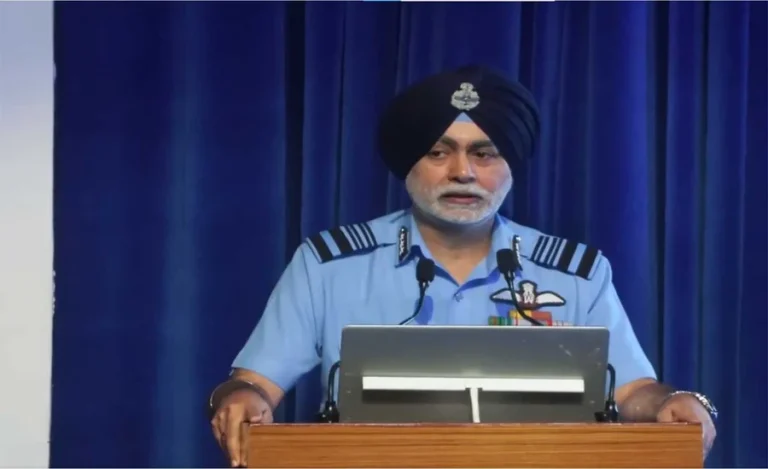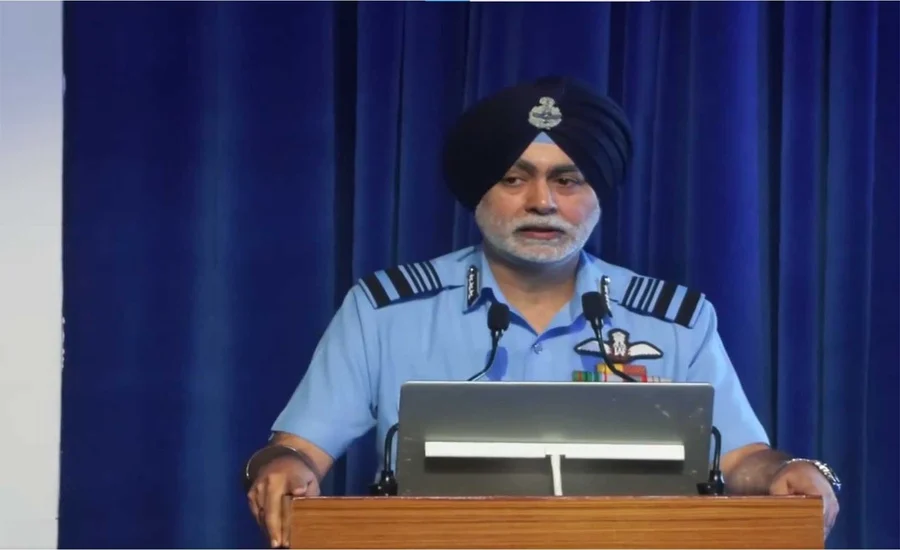
New Delhi: The Indian Air Force pushes for faster adoption of new weapons, software, and combat technologies. Speaking at the NDTV Defence Summit 2026, Deputy Chief of Air Staff Air Marshal Tejpal Singh called on India’s defence industry to move away from slow development cycles and adopt a more agile and iterative approach. The message reflects the IAF’s vision of building a future-ready combat ecosystem that can rapidly respond to changing battlefield requirements.
IAF Future Warfare Strategy: Air Marshal Seeks End To Traditional Development Delays
The Indian Air Force believes that lengthy weapon integration timelines are no longer suitable for modern warfare.
Read also: Indian Air Force Unveils Dronathon 2026 To Accelerate Indigenous Drone Warfare Innovation
Air Marshal Tejpal Singh said that integrating a new weapon system should not take five to seven years, as such delays can reduce operational relevance by the time a system enters service. He emphasized that future conflicts will demand faster technology adoption and quicker decision-making across the defence ecosystem.
Breaking The Five-Year Development Cycle
A major theme of the address was the need to abandon legacy timelines. According to the IAF, weapon integration programmes must move significantly faster than current processes allow. New capabilities should be tested, validated, and inducted rapidly to maintain a technological edge.
Software Updates Must Move Faster
The Deputy Chief also highlighted challenges in software lifecycle management. He noted that software upgrades and new algorithms should move quickly from laboratories to operational testing instead of waiting for lengthy upgrade schedules or mid-life modernization programs.
IAF Future Warfare Strategy: Future Combat Systems Require Networked Warfare
The IAF’s future vision extends beyond standalone fighter aircraft and sensors. Air Marshal Singh stressed the importance of creating an integrated combat ecosystem where aircraft, weapons, sensors, and unmanned systems work together seamlessly. This approach aligns with global trends toward network-centric and multi-domain warfare.
Connected Systems Will Define Future Battles
Modern military operations increasingly depend on data-sharing and interconnected systems. Recent defence discussions in India have also emphasized robust networks, rapid capability development, and real-time integration of military assets.
IAF Pushes For Iterative Development
The IAF is advocating an iterative development model similar to approaches used in advanced technology sectors. Under this model, systems are tested early, shortcomings are identified quickly, improvements are made, and the systems are tested again. This cycle continues until operational requirements are met.
Industry And Users Must Work Together
The Air Force called for closer collaboration between operators, designers, software engineers, manufacturers, and testing agencies. Such cooperation would help identify operational needs earlier and reduce delays in translating technology into combat capability.
IAF Future Warfare Strategy: Scaling Successful Technologies Faster
Air Marshal Tejpal Singh stressed that successful systems should not remain limited prototypes.
Once proven, technologies should be manufactured and scaled rapidly so they can be deployed across the force in meaningful numbers. This reflects a broader shift in India’s defence modernization efforts toward speed, scalability, and operational effectiveness.
Why The IAF Is Calling For Change
Technologies such as artificial intelligence, autonomous systems, drones, advanced sensors, and precision weapons are changing the nature of warfare. Military organizations around the world are shortening development cycles to keep pace with these changes.
Relevance Matters More Than Perfection
The IAF leadership has repeatedly stressed the importance of delivering capabilities on time. Earlier this year, Air Chief Marshal A.P. Singh argued that a system delivered at 90% capability on time can be more valuable than a fully perfected system delivered after it has lost operational relevance.
Read also: What Is The OODA Loop And Why Does The Indian Air Force Want To Shorten It?
FAQs
The IAF believes modern warfare evolves too quickly for traditional five-to-seven-year integration cycles. Faster integration helps ensure new technologies remain relevant when deployed.
Iterative development is a process where systems are tested early, improved based on feedback, and repeatedly refined before large-scale deployment.
Faster integration can help the IAF deploy new weapons, software updates, sensors, and operational capabilities more quickly, improving combat readiness and adaptability.