New Delhi: India is preparing to take a decisive step in its naval modernization roadmap with plans for a nuclear-powered indigenous aircraft carrier. The proposed vessel, envisioned as the successor to INS Vikrant, is expected to form the centrepiece of India’s maritime expansion in the next 15 years.
Nuclear Propulsion for Blue-Water Dominance
Unlike its conventionally powered predecessors, the upcoming carrier will adopt nuclear propulsion. This shift will provide longer operational endurance, sustained high-speed deployment, and uninterrupted blue-water operations across the Indian Ocean and beyond.
With nuclear power, the Navy will gain the ability to project force over extended ranges, deter adversaries during prolonged crises, and sustain global presence. The roadmap also projects up to ten nuclear-powered ships, a landmark expansion of India’s sea control and strike capabilities.
Carrier Air Wing: From Imports to Indigenous Fighters
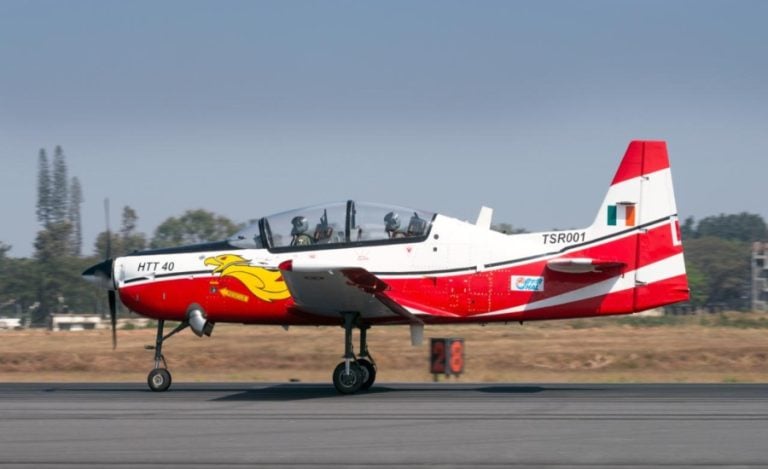
The modernisation plan prioritises indigenous fighter aircraft as the backbone of future carrier strike groups. Under development at Hindustan Aeronautics Limited, platforms like the Twin Engine Deck Based Fighter (TEDBF), Tejas Mk-2, and the Advanced Medium Combat Aircraft (AMCA) will progressively replace ageing Russian MiG-29Ks.
For immediate needs, India signed a ₹63,000 crore deal with France in April 2025 to procure 26 Rafale-Marine jets. These aircraft will enhance the operational readiness of INS Vikrant and integrate seamlessly with the Indian Air Force’s fleet of 36 Rafales.
INS Vikramaditya will continue operating MiG-29Ks until the indigenous and Rafale platforms are fully inducted.
EMALS and Drone Integration: A Technological Leap
The roadmap includes acquiring Electromagnetic Aircraft Launch Systems (EMALS), similar to those deployed on U.S. Navy Ford-class carriers. EMALS will allow the launch of heavier fighter jets, drones, and surveillance aircraft with higher sortie generation rates.
Integration of EMALS with nuclear propulsion will give India its first CATOBAR-capable carrier, enabling a flexible and potent air wing. This upgrade aligns with the Navy’s increasing focus on unmanned aerial vehicles and carrier-capable drones.
Their utility was proven during Operation Sindoor, a four-day conflict with Pakistan after the Pahalgam terror attack, where drones played decisive roles in surveillance, strike missions, and suppression of enemy defences.
Atmanirbhar Push in Defence Manufacturing
Defence Minister Rajnath Singh has stressed the need for strategic independence, reflected in growing private-public partnerships. Indigenous shipbuilding, propulsion systems, and aircraft manufacturing remain central to the plan.
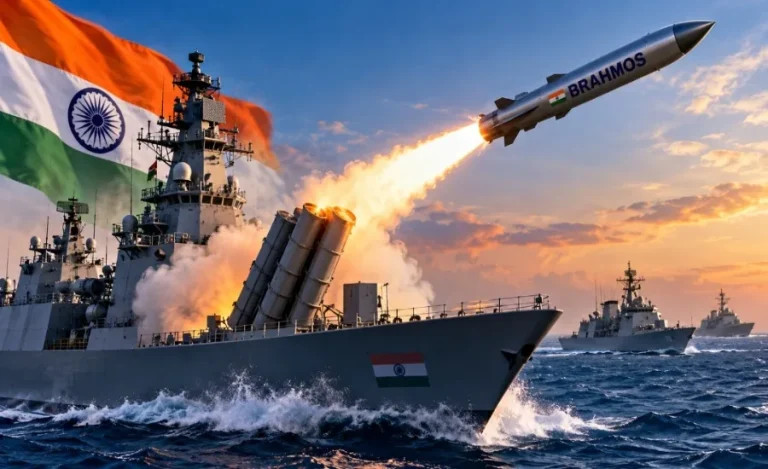
A milestone is the industrial partnership with France’s Safran for co-developing advanced jet engines, which will power next-generation naval and land-based fighters. Indigenous systems in electronic warfare, missile strikes, and drones, tested effectively in combat during Operation Sindoor are now shaping acquisition strategies.
From INS Vikrant to Nuclear Carriers
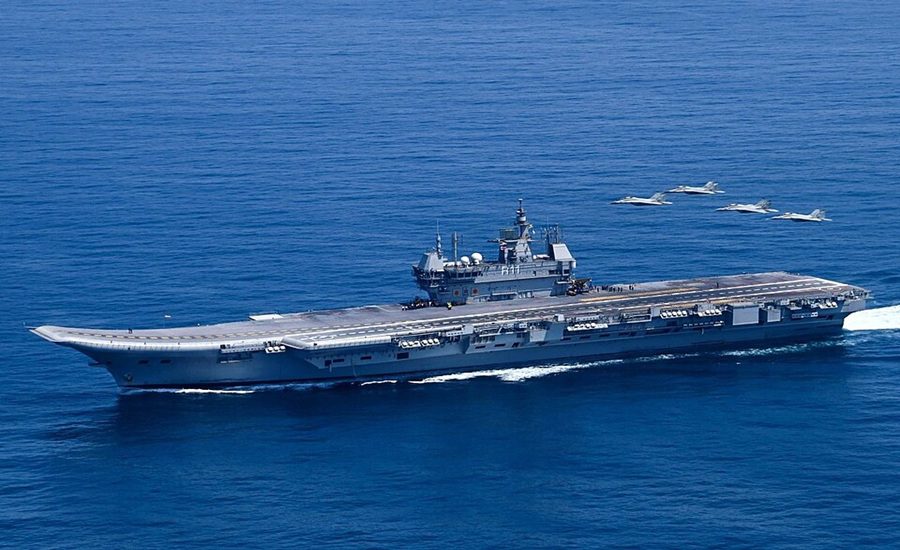
India currently operates the refurbished INS Vikramaditya and the indigenous INS Vikrant, commissioned in 2022. While these represent milestones in self-reliance, the nuclear-powered successor will mark a fundamental leap in maritime reach.
Once realized, India will join an exclusive club, alongside the United States, France, Russia, and China operating nuclear-powered carriers.
The Technology Perspective and Capability Roadmap 2025 also projects deploying nuclear propulsion to a broader range of warships, decentralizing strike capability across multiple classes.
Global Balance and Strategic Future
The Defence Ministry’s 15-year roadmap signals a comprehensive restructuring of naval power. Nuclear propulsion, indigenous fighters, drones, and EMALS will define India’s future carriers.
Together, these capabilities will transform the Navy’s twin-carrier force into a nuclear-powered, drone-capable, CATOBAR-equipped fleet, positioning India as a major maritime power with global reach.
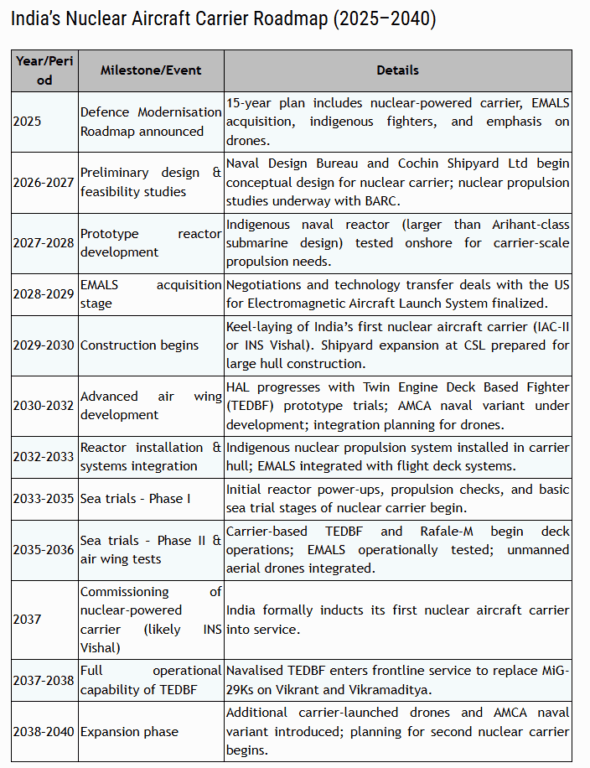
India’s Nuclear Aircraft Carrier Roadmap (2025–2040):