New Delhi: India is set to significantly enhance its air surveillance and defence capabilities with plans to procure 30 upgraded Low-Level Lightweight Radars (LLLR-I) and two Classroom Variant Radars (CVRs) under a fast-track process.
This move, spearheaded by the Ministry of Defence (MoD), aims to integrate these advanced radar systems with India’s indigenous AkashTeer Command & Reporting system, reinforcing situational awareness across diverse terrain and modernising army air defence readiness.
Details of 725 Crore Procurement Including 30 LLLR-I Radar Acquisition
The Ministry of Defence, Government of India, has issued a Request for Proposal (RFP) to procure the improved radars valued at around ₹725 crore (approximately USD 88 million). The acquisition has been put on a fast-track procurement route, signifying the urgency to bolster air surveillance gaps identified in recent operational reviews.
These systems are expected to become core sensors within the Indian Army’s air defence architecture, forming a network that can monitor low-level aerial threats, from UAVs and rotary aircraft to incoming tactical missiles across challenging environments.
What Are LLLR-I Radars
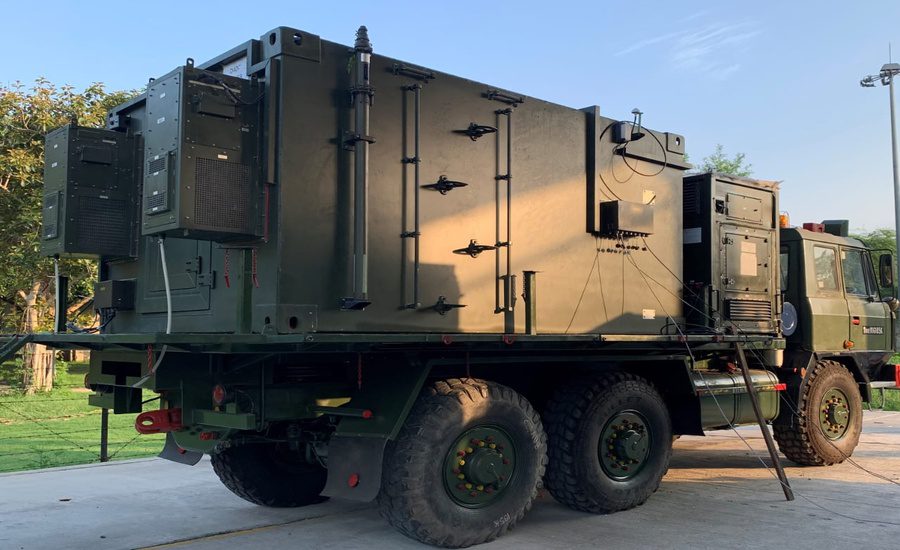
The Low-Level Lightweight Radar (LLLR-I) is an advanced surveillance radar platform designed to detect, track, and prioritise aerial targets with simultaneous multi-target tracking capability. It incorporates modern signal processing and high-performance hardware to operate reliably in tough terrains including:
- Mountains and high altitudes
- Plains and deserts
- Semi-deserts and coastal regions
This flexibility ensures continuous airspace scanning regardless of geographic or climatic conditions — a vital capability for India’s varied terrain.
What are Classroom Variant Radars (CVRs)
The CVRs are intended to be training and command support units to help operators familiarise themselves with radar operations, data interpretation, and system integration. These help build and sustain human resource capability alongside hardware deployment.
Integration of 30 LLLR-I Radar Acquisition With Akash Missiles
The LLLR-I systems are required to be seamlessly compatible with AkashTeer’s Command & Reporting (C&R) system — India’s indigenous air defence control network.
AkashTeer is an automated Air Defence Control & Reporting System developed in India to integrate surveillance sensors, radars, command posts, and weapon systems into a unified operational network. This system enhances real-time situational awareness and response decision-making across the Army’s air defence deployments.
Integration ensures that data from multiple sensors like the LLLR-I flows smoothly into the wider Indian air defence grid, improving coordinated detection and tracking of aerial threats and supporting weapon system engagement decisions.
Key Technical and Operational Requirements
According to the RFP published by the MoD, the LLLR-I radar systems must:
- Track hundreds of airborne targets simultaneously.
- Assign at least 20 tracks to a minimum of 10 command posts or weapon systems equipped with Target Data Receivers (TDRs), located up to 20 km away.
- Support connectivity via line, radio links, or radio relays and be expandable to accommodate up to 20 TDRs.
- Achieve minimum 60% indigenous content to promote local defence industry participation.
- Be delivered rapidly, with the first batch of 15 LLLR-I units and one CVR within 12 months of advance payment, and the remaining units over the next six months.
These specifications reflect a shift toward network-centric air defence operations that can better handle emerging aerial threats and rapidly evolving battlefield dynamics.
Promoting Indigenous Defence Manufacturing
The RFP mandates a 60% minimum indigenous content requirement for the radar systems — aligning with India’s Atmanirbhar Bharat policy to strengthen domestic defence manufacturing and reduce reliance on foreign supplies.
This requirement is expected to give Indian manufacturers and technology partners a crucial role in production, testing, and sustainment of the radar systems, boosting local capability and expertise.
Impact of 30 LLLR-I Radar Acquisition
With these procurements, the Indian Army aims to:
- Reduce air surveillance gaps across multiple domains.
- Enhance early warning and target tracking capabilities.
- Create a scalable, interconnected radar network.
- Support integration with existing and future air defence systems.
This effort forms part of India’s broader strategic push to modernise its defence forces with rapid, resilient, and homegrown technology.