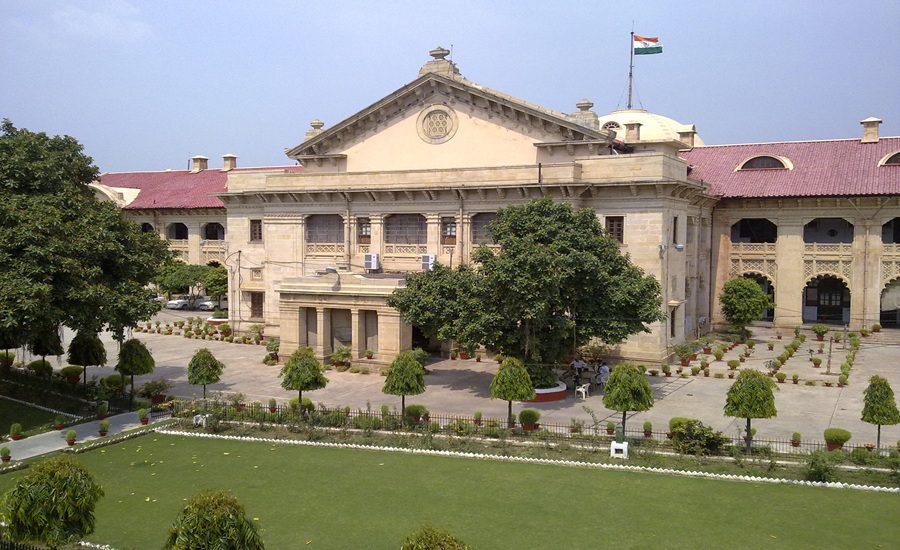
Prayagraj: The Allahabad High Court custodial death compensation case has taken a serious turn, with the Lucknow Bench directing senior Uttar Pradesh Home Department official Sanjay Prasad to appear before it on July 31, 2026. The matter concerns alleged non-compliance with an earlier court direction to pay ₹10 lakh compensation to the family of a minor who died in prison and to frame guidelines for compensation in custodial death cases.
Why Did The Allahabad High Court Summon The UP Home Secretary
Justice Saurabh Lavania was hearing a contempt petition alleging that the Uttar Pradesh government had not fully complied with an earlier High Court order.
Read also: Only Parliament Can Amend Scheduled Castes List: Allahabad High Court’s Landmark Ruling Explained
The earlier order required the State to frame guidelines for paying compensation in cases involving custodial deaths. The petitioner also alleged that the ₹10 lakh compensation ordered for her son’s death had not been paid.
In its July 24 order, the Court directed Sanjay Prasad, the senior Home Department official named in the proceedings, to personally appear before it on July 31, 2026.
The matter is expected to come up for further contempt proceedings, including consideration of framing charges.
UP Custodial Death Case: What Was The Earlier High Court Order
The dispute comes from an earlier judgment delivered by a Division Bench of the Allahabad High Court on February 20, 2026.
The Bench had directed the Uttar Pradesh government to pay ₹10 lakh compensation to the legal heirs of a minor who died by suicide inside a district jail in 2024. The High Court also directed the State government to prepare guidelines dealing with compensation in custodial death cases. The present contempt proceedings arose after allegations that these directions had still not been properly implemented.
UP Custodial Death Case: What Happened To The Minor
According to the court proceedings, the minor was facing rape charges in a 2016 case under the Indian Penal Code and the Protection of Children from Sexual Offences (POCSO) Act. He had spent around three years and ten months in imprisonment before being granted bail in February 2022. He was arrested again on February 7, 2024, after failing to appear before the trial court. On February 20, 2024, he died by suicide by hanging inside the prison.
What Did The Family Allege
The petitioner’s side alleged that the minor was tortured in jail over non-payment of illegal demands, including an alleged monthly payment of ₹4,500. However, the Uttar Pradesh government denied these allegations. It argued that authorities were not involved in the minor’s death.
These are allegations made in the proceedings and should not be treated as established findings against individual officials.
UP Custodial Death Case: What Are The High Court Directives
In the earlier proceedings, the High Court held that the State was liable for unnatural deaths occurring inside prisons. The Division Bench rejected the argument that the State could avoid liability simply because the death was a suicide. It said the State has responsibilities towards people held in its custody. The Court also highlighted the absence of an express legal framework specifically mandating compensation for unlawful detention or custodial deaths, which was one reason behind its direction to frame guidelines.
Why Is The Current Contempt Case Important
The latest case is important because it is not only about compensation to one family. It also concerns whether the State complied with a judicial direction to establish a broader system for handling compensation claims arising from custodial deaths.
Justice Saurabh Lavania observed that the concerned official could face action under Section 12 of the Contempt of Courts Act, 1971, and ordered his appearance for further proceedings.
Importantly, the July 24 order should not be read as a final finding that the official has already been convicted of contempt. Further proceedings are scheduled before the Court.
What Does Section 12 Of The Contempt Of Courts Act Say
Section 12 of the Contempt of Courts Act, 1971 deals with punishment for contempt of court. Under the official text published on India Code, contempt can generally be punished with simple imprisonment of up to six months, a fine of up to ₹2,000, or both, subject to the provisions and safeguards contained in the Act.
India Code also defines civil contempt as wilful disobedience of a court’s judgment, decree, direction, order, writ or other process, or wilful breach of an undertaking given to a court.
What Happens Next
Sanjay Prasad has been directed to appear before the Allahabad High Court on July 31, 2026. The Court is expected to continue the contempt proceedings and consider the next steps, including the issue of framing charges.
The upcoming hearing could therefore be important for determining how the State responds to the earlier directions on compensation and custodial death guidelines.
Read also: Allahabad High Court Rules Govt Servant Cannot Challenge Salary Denial After Voluntary Retirement