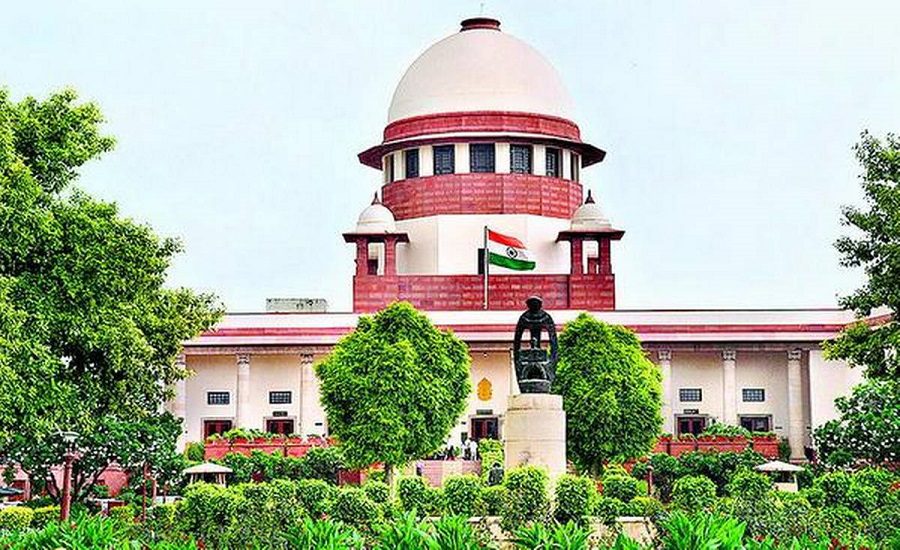
New Delhi: The Supreme Court on student protests has made an important observation over allegations of excessive police force against demonstrators. On Monday, July 27, 2026, Chief Justice of India Surya Kant said that simply holding an agitation cannot become a reason for police excess or lathi-charge. The court also stressed that peaceful and lawful protest is protected under the Constitution.
The remarks came as several petitions concerning alleged police action against students were mentioned before the Supreme Court. The protests were linked to the alleged NEET-UG paper leak and other examination-related irregularities.
What Did the Supreme Court Say About NEET Protest
A bench comprising CJI Surya Kant, Justice Joymalya Bagchi and Justice V Mohana considered pleas alleging excessive use of force against student protesters in different parts of the country.
Read also: Supreme Court Bans Uploading Court Proceedings Online Without Prior Permission
The CJI said that the right to peaceful and lawful protest is constitutionally protected. He observed that the existence of an agitation by itself cannot justify excessive police action or a lathi-charge.
At the same time, the court stressed that discipline is an important part of the democratic process. Authorities should have a proper system to deal with demonstrations while being able to act against anti-social elements where necessary.
Why Has the Matter Reached the Supreme Court
The petitions followed allegations of excessive police force during recent student demonstrations, including the July 20 protest at Delhi’s Jantar Mantar.
Petitioners have alleged that students protesting over examination-related issues faced excessive police action. Some pleas have sought action against Delhi Police and Central Armed Police Forces personnel over the alleged use of force. These remain allegations before the court and should not be treated as established findings.
Supreme Court Calls for Independent Examination of Police Excess Allegations
The CJI said allegations of police excess should be independently examined. The court also indicated that the issue is wider than Delhi and stressed the need for uniformity in how police handle protests across India. This could become important because protests are handled by different police forces and authorities across states.
NEET Protest: Court Wants a Uniform Protocol for Protests
The Supreme Court indicated the need for a uniform protocol for handling peaceful demonstrations across the country. According to the court’s oral observations, peaceful protesters should have appropriate space to demonstrate, while authorities should also have a mechanism to deal with anti-social elements.
Such a framework could help balance two important concerns: citizens’ constitutional right to peaceful protest and the responsibility of authorities to maintain public order.
Allegation of AK-47 Use in Bihar’s Siwan Raised Before Court
During the proceedings, counsel also referred to an allegation involving the use of an AK-47 in Siwan, Bihar, during protests. The allegation was raised while a petition containing information about the Bihar incident was mentioned before the court. The Supreme Court did not establish the allegation as fact during these oral proceedings. The court’s broader position was that allegations of excessive force should receive an independent examination.
NEET Protest: Petition Seeks Protection of CCTV and Digital Evidence
One of the petitions has also sought preservation of electronic and digital evidence connected with the alleged incidents.
According to the petition details reported from the proceedings, the requested material includes CCTV footage, body-camera recordings, drone footage, mobile recordings, social-media videos, police communication records, call logs, control-room records, deployment orders and GPS records.
The petitioners want such evidence protected against destruction, alteration, suppression or loss while the matter is examined.
Police Injuries Also Matter, Supreme Court Says
The proceedings did not focus only on injuries allegedly suffered by protesters. A lawyer representing families of injured police personnel sought permission to participate in the proceedings. Justice Joymalya Bagchi observed that injury to any individual — whether a police officer or a student — is a matter of equal concern. The observation highlights that the court is considering concerns relating to both protesters and law-enforcement personnel.
Why Is NEET Protest Case Important
The case raises an important constitutional question: How should India protect peaceful protests while maintaining law and order?
Article 32 gives the Supreme Court jurisdiction to enforce fundamental rights and empowers it to issue directions, orders and constitutional writs, including writs of mandamus.
For students and other citizens, the current proceedings may therefore have significance beyond one protest. Any eventual directions on a uniform police protocol could influence how demonstrations are handled across India.
Read also: CJI Surya Kant Explains How the Collegium Selects Supreme Court and High Court Judges