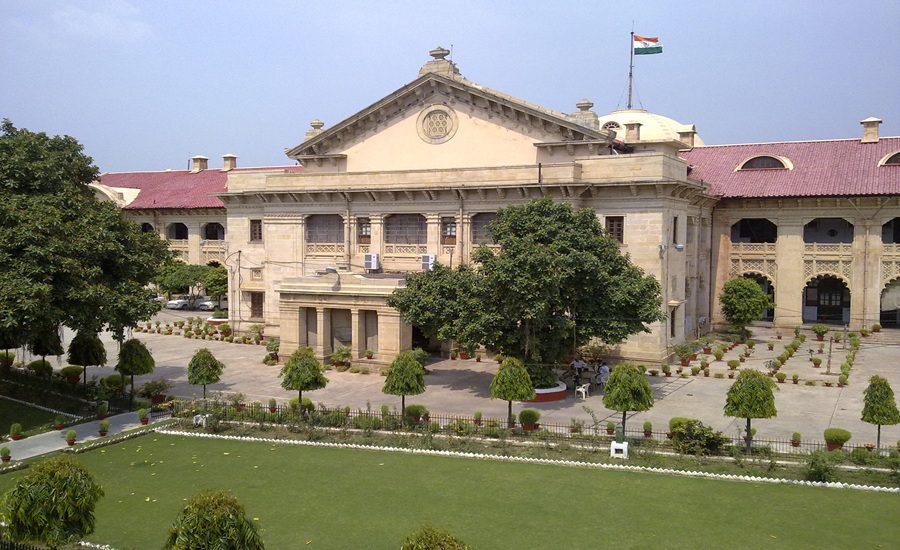
Prayagraj: The Allahabad High Court has ruled in an important judgment that clarifies how communities can be included in the Scheduled Castes (SC) category. The court said that castes not specifically mentioned in the Constitution (Scheduled Castes) Order, 1950 cannot be treated as synonyms, sub-castes, or alternate names of an already listed Scheduled Caste unless Parliament changes the law.
The ruling came while hearing a petition seeking Scheduled Caste benefits for several communities in Uttar Pradesh by treating them as synonyms of the Majhwar caste, which is already listed as a Scheduled Caste in the state.
Detail of Scheduled Castes List Case
A Division Bench of the Allahabad High Court comprising Justice Alok Mathur and Justice Amitabh Kumar Rai held that:
- Only Parliament has the constitutional authority to amend the Scheduled Castes list.
- Courts cannot add, remove, substitute, or recognize new communities as Scheduled Castes.
- Communities not expressly listed in the Constitution (Scheduled Castes) Order, 1950 cannot be granted SC status by treating them as synonyms of existing castes.
Read also: UP Lawyers May Soon Get Medical Insurance As Allahabad High Court Registers Suo Motu PIL
The court emphasized that any modification to the SC list requires legislation passed by Parliament under the Constitution.
Background of the Scheduled Castes List Case
The petition was filed by Chandra Shekhar Nishad in 2012. The petitioner argued that the following communities:
- Nishad
- Kashyap
- Kewat
- Mallah
- Bind
These should be treated as synonymous with the Majhwar caste, which is listed as a Scheduled Caste in Uttar Pradesh under Entry No. 52 of the Constitution (Scheduled Castes) Order, 1950.
The petition sought directions for extending Scheduled Caste benefits to these communities. However, the High Court rejected the plea.
Constitutional Position Explained
The judgment is based on Article 341 of the Constitution of India.
Key Constitutional Provisions
| Provision | Meaning |
| Article 341(1) | President notifies Scheduled Castes for each state and Union Territory |
| Article 341(2) | Only Parliament can include or exclude communities from the SC list |
| Constitution (Scheduled Castes) Order, 1950 | Official legal list of Scheduled Castes in India |
According to Article 341(2), once the President notifies the list, any change can only be made through a law passed by Parliament.
Why the Court Rejected the Petition
The court observed that recognizing communities as caste synonyms without legal amendment would effectively change the Scheduled Castes list indirectly. The judges held that:
- Administrative authorities cannot alter the SC list.
- State governments cannot expand the list through executive orders.
- Courts cannot interpret unlisted castes as automatically included within a listed caste.
Therefore, the demand to treat Nishad, Kashyap, Kewat, Mallah, and Bind communities as Majhwar was not legally sustainable.
Scheduled Castes List Case: Earlier Judicial View
This position is consistent with earlier court rulings. In previous cases, courts have repeatedly stated that:
- The Scheduled Castes list is a constitutional list.
- Neither state governments nor courts can modify it.
- Parliament alone has the power to make additions or deletions.
The Allahabad High Court itself had earlier struck down attempts to classify certain OBC communities as Scheduled Castes through state government notifications, citing Article 341.
What is the Importance of Scheduled Castes List Case Ruling
This ruling is significant because it reinforces the constitutional process for granting Scheduled Caste status.
Key Implications
- Prevents unauthorized expansion of reservation benefits.
- Ensures uniform application of Article 341.
- Protects Parliament’s exclusive legislative power.
- Provides clarity on disputes involving caste synonyms and sub-castes.
- May influence similar cases pending in other courts and states.
Expert Analysis and Insights
The Allahabad High Court’s decision strengthens a long-standing constitutional principle that the Scheduled Castes list cannot be modified through interpretation or administrative action.
From a legal perspective, the judgment reinforces the separation of powers by ensuring that only Parliament exercises authority over inclusion or exclusion of communities in the SC list. This prevents state-level variations and maintains uniformity across India.
The ruling is also likely to have wider implications for communities seeking reservation benefits based on historical, occupational, or social similarities with already listed castes. The judgment makes it clear that social similarity alone is not sufficient; constitutional recognition through parliamentary legislation remains essential.
For policymakers, the case highlights the continuing debate around caste classification and reservation eligibility. Any future inclusion of communities in the Scheduled Castes list will require a formal legislative process backed by constitutional provisions rather than judicial interpretation.
Read also: Over 1 Lakh Missing Persons in UP: Allahabad High Court Seeks Answers from UP DGP