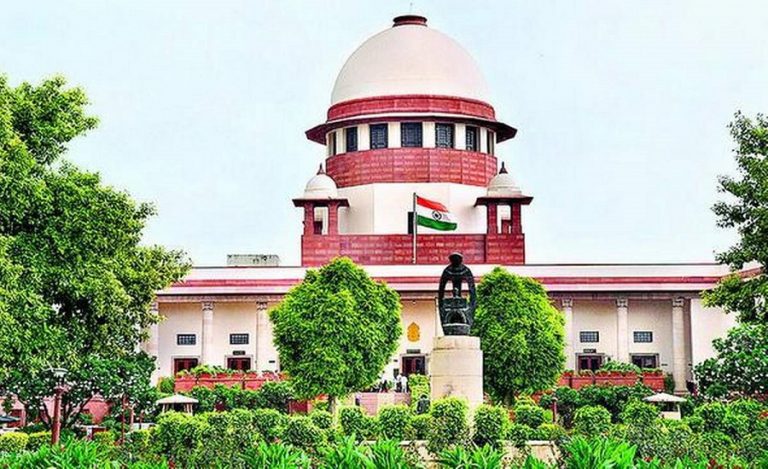
New Delhi: Supreme court has approved the Delhi environment compensation charge hike to curb rising air pollution caused by commercial vehicles.
In a major environmental decision, the court has allowed higher charges for vehicles entering the capital and also directed a 5% annual increase in these charges.
This move is aimed at discouraging diesel-powered transit traffic and improving Delhi air quality, which remains one of the biggest environmental concerns in India.
What Is the Environment Compensation Charge
The Environment Compensation Charge (ECC) is a fee imposed on commercial vehicles entering Delhi.
It is collected at border toll points to compensate for the environmental damage caused by vehicle emissions.
- The funds are deposited in a dedicated government account
- The purpose is to reduce pollution levels
- It mainly targets non-destined or transit vehicles
Delhi Environment Compensation Charge Hike: Supreme Court’s Key Decision
A bench led by Chief Justice Surya Kant approved the revised ECC rates based on recommendations from the Commission for Air Quality Management (CAQM).
Major Highlights:
- ECC rates have been significantly increased for commercial vehicles
- A 5% annual hike will be applied from April 1 every year
- Rates will be rounded off and notified by the Delhi government
- The proposal was considered “reasonable, just, and fair” by the court
Details of Delhi Environment Compensation Charge Hike
The revised charges have increased sharply across categories:
- Light commercial vehicles: around ₹2,000 (earlier ₹1,400)
- Heavy trucks: around ₹4,000 (earlier ₹2,600)
Overall, the hike is estimated at 40–50%, depending on the vehicle category.
What is the Need of Delhi Environment Compensation Charge Hike
The main goal behind the ECC hike is to reduce Delhi’s severe air pollution problem.
Key Reasons:
- To discourage diesel commercial vehicles from entering Delhi
- To push vehicles toward peripheral expressways instead of city routes
- To adjust for inflation and rising toll costs
- To maintain ECC’s deterrent effect over time
Delhi faces frequent air quality crises, with vehicular emissions being a major contributor.
Impact on Transport and Businesses
The decision is expected to have a direct impact on logistics and transport sectors.
- Increased transportation costs for businesses
- Higher expenses for truck operators, packers, and movers
- Possible increase in product prices due to higher logistics costs
Around 70,000 commercial vehicles enter Delhi daily, making the impact significant.
Implementation and Monitoring
The revised ECC rates are already being implemented at Delhi’s entry points. Authorities have also been directed to:
- Improve toll compliance systems
- Conduct traffic assessments
- Coordinate with agencies like NHAI
- Possibly relocate toll plazas for better efficiency
Read also: Supreme Court Road Safety Guidelines 2026 Explained: Key Rules, Impact, and What Changes for You