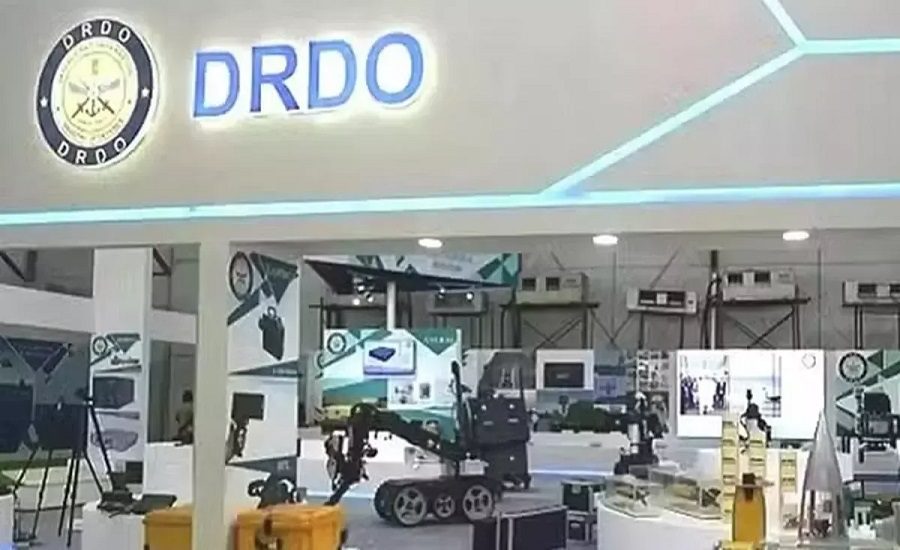
New Delhi: The Parliamentary Standing Committee on Defence has commended the Defence Research and Development Organisation (DRDO) for its steady progress in deep-technology research, while urging the Ministry of Defence (MoD) to ensure full utilisation of allocated budgetary funds.
The committee, chaired by BJP MP Radha Mohan Singh, lauded DRDO’s initiatives in cutting-edge areas crucial for future warfare and long-term national security.
Focus on Hypersonics, AI, Drones and Directed Energy Weapons
In its observations, the committee expressed satisfaction over DRDO’s work in advanced domains such as –
- Advanced materials
- Hypersonic technologies
- Unmanned aerial vehicles (UAVs) and drones
- Directed energy weapons and laser systems
- Artificial intelligence (AI)
The panel noted that these technologies are central to modern military preparedness amid evolving global security challenges.
Strategic Push in Emerging Deep Technologies
The committee highlighted DRDO’s strategic emphasis on next-generation deep technologies, including –
- Artificial intelligence and cognitive technologies
- Quantum technologies
- Neuromorphic computing
- Military cyber technologies
- Compound semiconductors
According to the panel, focused investments in these areas will significantly enhance India’s long-term defence capabilities and strategic deterrence.
Budgetary Support and Fund Utilisation
The Ministry of Defence assured the committee of adequate and sustained budgetary support for both DRDO and the armed forces, in line with earlier parliamentary recommendations.
For the current financial year, DRDO has received an allocation of ₹26,816 crore, reflecting the government’s commitment to strengthening indigenous defence research and development.
Technology Development Fund Gets Major Boost
To accelerate innovation, an additional ₹500 crore has been sanctioned under the Technology Development Fund (TDF) to support deep-tech and pioneering projects as dedicated verticals.
In a significant move, the funding ceiling per TDF project has been increased from ₹10 crore to ₹50 crore, enabling larger-scale and transformative research initiatives.
Over the past three years, the TDF scheme has approved 12 projects worth ₹23.61 crore, focusing on emerging fields such as quantum computing, artificial intelligence, and robotics, while fostering collaboration with private industry.
Academia–Industry Collaboration Through DIA-CoEs
To bridge the gap between academic research and defence requirements, DRDO has established 15 DRDO Industry Academia Centres of Excellence (DIA-CoEs) at premier institutions, including IITs, the Indian Institute of Science (IISc), and several central and state universities.
These centres are engaged in directed research across 82 specialised verticals, aligned with anticipated future defence needs. While DIA-CoE projects may not deliver immediate battlefield solutions, their outcomes are expected to feed into future DRDO programmes.
So far, 285 projects worth ₹1,037.48 crore have been approved as grants-in-aid through the DIA-CoE framework, strengthening the national defence research ecosystem.
Push for Atmanirbhar Bharat in Defence
In the ongoing financial year, the TDF Directorate expects to disburse around ₹60 crore towards deep-technology initiatives, including intelligence, surveillance, and reconnaissance projects led by Indian industry.
The committee noted that this focused spending aligns with the Atmanirbhar Bharat vision, aiming to reduce import dependence and empower domestic defence manufacturers.
Panel Stresses Timely Spending Amid Geopolitical Tensions
The committee’s endorsement comes amid heightened geopolitical tensions, where rapid advancements in hypersonics, AI-driven systems, and quantum technologies are becoming decisive factors in military superiority.
By stressing complete utilisation of funds, the panel addressed long-standing concerns over under-spending in defence R&D, which has often delayed projects and diluted innovation outcomes.
Read also: RELOS Agreement Clears Final Hurdle With Putin’s Signature, Enhancing Defence Interoperability