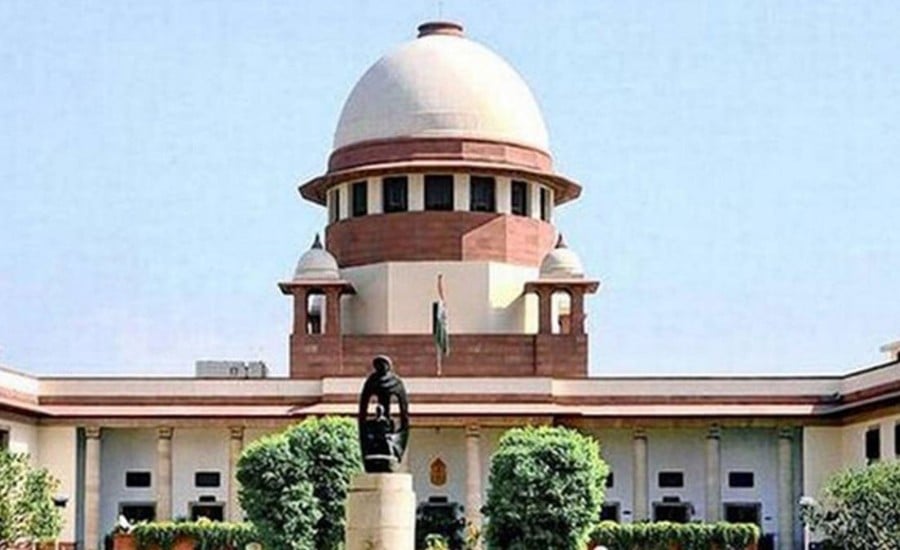
New Delhi: The Supreme Court is scheduled to hear on Monday, September 7, a Public Interest Litigation challenging the process being followed for the appointment of Odisha’s next Director General of Police (DGP).
A bench comprising Chief Justice of India Surya Kant and Justices Joymalya Bagchi and V Mohana is expected to take up the matter. The PIL alleges that the Odisha government attempted to include comparatively junior officers among those being considered for the state’s top police post, contrary to the Supreme Court’s directions in the 2006 Prakash Singh police reforms case.
Amicus Curiae Report Before Supreme Court
The matter was deferred during the September 2 hearing after senior advocate P Chidambaram, appearing for the petitioner, informed the court that a rejoinder had been filed.
Amicus curiae Raju Ramachandran also sought additional time to submit his report. The report has since been filed, and the court is expected to hear the parties’ views and arguments on it during Monday’s proceedings.
What the PIL Alleges
The petitioners have challenged the inclusion of relatively junior officers in the pool of probable candidates for Odisha DGP, arguing that this does not comply with the procedure laid down by the Supreme Court.
Key points:
- The petition concerns the selection of Odisha’s next DGP.
- The petitioners allege that comparatively junior officers were sought to be considered.
- They contend that this violates the Supreme Court’s 2006 directions in the Prakash Singh case.
- The directions provide for selection from among three senior-most eligible officers empanelled by the UPSC.
- Length of service, service record and experience are among the factors considered in the selection process.
Odisha Government’s Stand
The Odisha government has opposed the allegations. Solicitor General Tushar Mehta, appearing for the state, had informed the Supreme Court that the government had filed its response.
The state has maintained that promotions of senior IPS officers are part of the normal administrative process and that it can send a fresh proposal to the Union Public Service Commission comprising officers who meet the prescribed eligibility requirements.
Prakash Singh Guidelines at the Centre of Dispute
The case stems from the Supreme Court’s landmark 2006 judgment in Prakash Singh vs Union of India, which laid down several police-reform measures. The court directed that a state DGP should be selected by the state government from among the three senior-most officers empanelled by the UPSC, based on factors including length of service, a good service record and experience.
The judgment also sought to insulate the office of DGP from political and other external pressures.
The Supreme Court’s September 7 hearing could therefore provide further clarity on whether the procedure followed by Odisha conforms to the safeguards laid down in the Prakash Singh judgment.
Read Also: Supreme Court Questions IPS Deputations to CAPFs, Asks MHA to Explain Procedure