New Delhi: The Union Cabinet has approved infrastructure projects worth a combined ₹13,041 crore, including four railway multitracking projects across West Bengal, Odisha, Andhra Pradesh and Tamil Nadu, along with the four-laning of an 82.578-km stretch of NH-22 in Bihar.
The decisions are aimed at expanding rail capacity, easing congestion, improving freight and passenger movement and strengthening road connectivity to the India-Nepal border. The railway projects will add around 410 km to the existing network and cover eight districts.
₹9,450-Crore Rail Expansion Across Four States
The four railway multitracking projects, with a combined estimated cost of ₹9,450 crore, include:
- Kharagpur–Bhadrak (Ranital) fourth line: 173 km across West Bengal and Odisha — around ₹3,352 crore.
- Bhadrak–Haridaspur fourth line: 75 km in Odisha — around ₹1,583 crore.
- Gummidipundi–Gudur third and fourth lines: 90 km across Andhra Pradesh and Tamil Nadu — around ₹2,229 crore.
- Cuttack–Paradeep (Badabandha) third and fourth lines: 72 km in Odisha — around ₹2,286 crore.
Read Also: Indian Railways Loads 141.3 MT Freight in July, Registers 9% Growth Over Last Year
The projects are scheduled for completion by 2030-31 and are expected to increase rail capacity for freight and passenger movement.
Key expected benefits:
- About 410 km of additional railway infrastructure
- Connectivity to nearly 6,448 villages
- Benefits for around 60 lakh people
- Additional freight-handling capacity
- Reduced congestion on important routes
- Better movement of coal, iron ore, cement, steel, containers, automobiles and foodgrains
The first three projects form part of the Howrah–Chennai railway route, while the Cuttack–Paradeep project will strengthen connectivity towards the Paradip region.
Howrah-Chennai Route to Get Four-Line Capacity
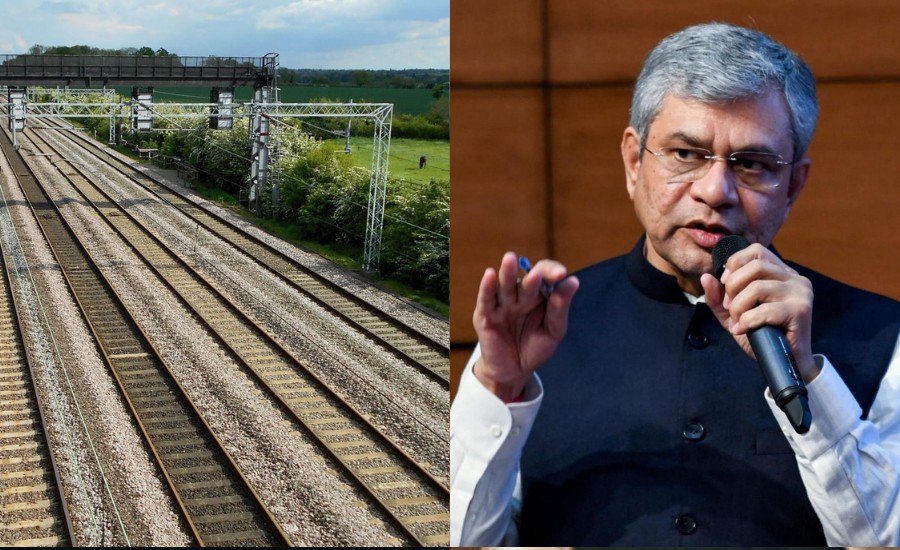
Union Railway Minister Ashwini Vaishnaw highlighted the strategic importance of the projects during the Cabinet briefing.
“From Howrah to Chennai, we will ultimately have a complete quadrupled, four-line route.”
According to Vaishnaw, expanding the route will allow more trains to operate while improving cargo movement and making maintenance easier.
The additional rail capacity is also expected to improve access to tourism destinations such as Bhitarkanika National Park, Kuldiha Wildlife Sanctuary, Chandipur Beach, Pulicat Lake, Nelapattu Bird Sanctuary and Lalitgiri.
The Railways estimates that the projects could help reduce oil imports by around 13 crore litres and lower CO₂ emissions by approximately 65 crore kg.
Bihar Gets ₹3,590.73-Crore NH-22 Four-Laning Project
Separately, the Cabinet Committee on Economic Affairs approved the four-laning of the Muzaffarpur–Sitamarhi–Sonbarsa section of NH-22 in Bihar.
The 82.578-km project will be developed under the Hybrid Annuity Mode (HAM) at a capital cost of ₹3,590.73 crore.
What the NH-22 project will improve
The upgraded highway will provide a stronger road link between the India-Nepal border at Sonbarsa, Muzaffarpur and NH-27, which forms part of the East-West Corridor.
It is expected to ease congestion around:
- Muzaffarpur
- Muksudpur
- Runni Saidpur
- Thumma
- Dumra
- Bhutahi
- Sonbarsa
The project has been planned for a maximum design speed of 100 kmph, with an average speed of 80 kmph. It will also have no at-grade median openings to facilitate safer traffic movement.
Bridges, Railway Overbridges and Flyovers Planned
The NH-22 upgrade will include significant structures to improve the movement of traffic along the corridor.
Major components include:
- 7 major bridges
- A 340-metre bridge over the Bagmati River
- 3 railway overbridges
- A 1,170-metre flyover
- A 270-metre flyover
The project is also expected to improve connectivity to five PM Gati Shakti economic nodes, including four industrial estates and a Mega Food Park, as well as railway stations at Muzaffarpur and Sitamarhi.
₹13,041-Crore Infrastructure Push
Together, the railway and highway decisions represent a major infrastructure expansion aimed at improving multimodal connectivity, logistics efficiency and regional economic linkages.
While the railway projects will increase capacity along major freight and passenger corridors in eastern and southern India, the Bihar highway project will strengthen road connectivity towards the Nepal border and integrate the region more closely with national transport networks.