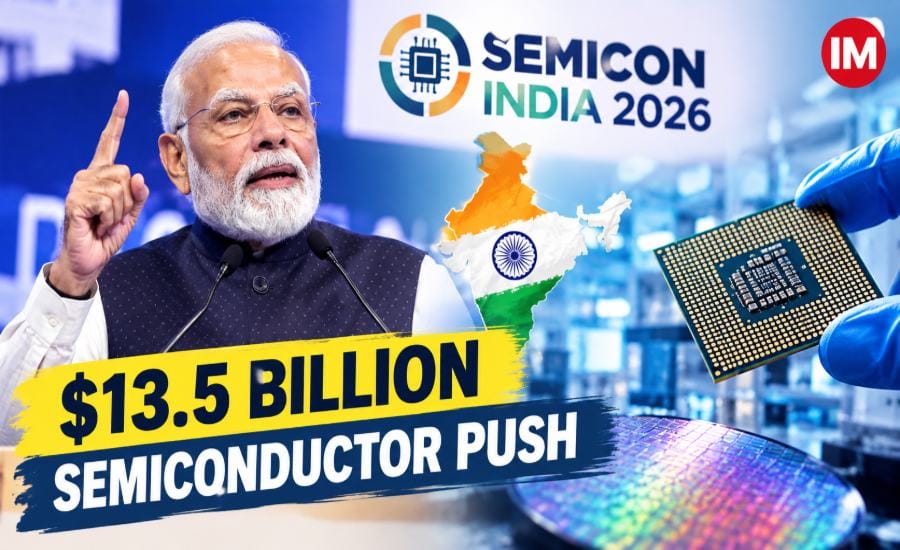
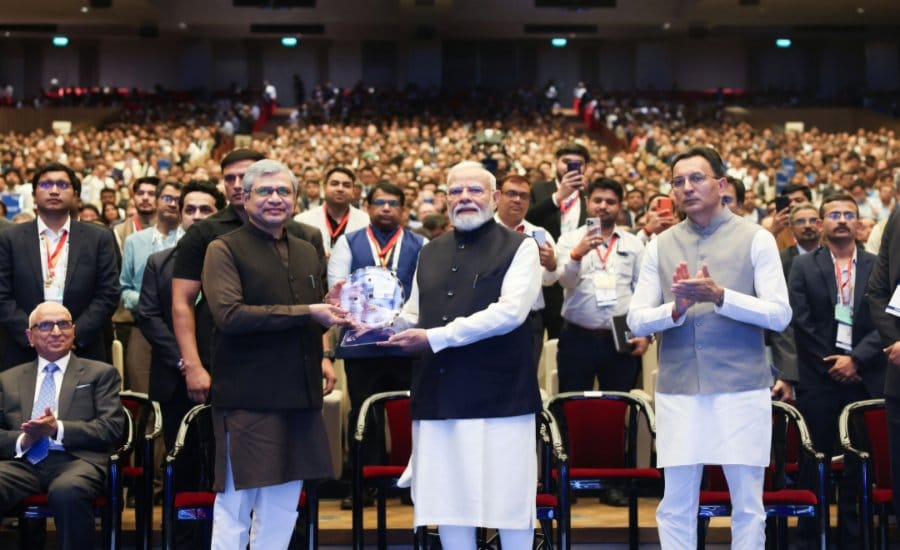
New Delhi: Prime Minister Narendra Modi on Thursday inaugurated the fifth edition of SEMICON India 2026 at Yashobhoomi in New Delhi, highlighting India’s expanding semiconductor ecosystem and outlining the next phase of the country’s chip manufacturing and technology ambitions.
Addressing industry leaders, researchers, investors, students and international participants, PM Modi said India’s semiconductor ecosystem is creating new opportunities for innovation, investment and economic growth. He also urged global companies and Indian industry to strengthen research and development in the country.
The three-day SEMICON India 2026, being held from September 17 to 19, carries the theme “Silicon to Systems: Building the Ecosystem.” The event brings together stakeholders from across the semiconductor and electronics value chain.
From Policy to Chip Production
PM Modi traced India’s semiconductor journey from policy discussions and project planning to pilot lines and commercial production.
He said chips manufactured in India have now started reaching customers in the country and overseas. He also highlighted the beginning of commercial production at new facilities in Mohali and Surat as evidence of the sector’s progress.
The government has approved 12 semiconductor projects under the first phase of the Semicon India Programme. According to a PIB backgrounder released on September 17, five units have now commenced commercial production, while the ecosystem is also expanding across chip design, manufacturing, packaging, materials and talent development.
The progress marks a shift from building policy support to developing capabilities across the semiconductor value chain.
Read Also: 3,512 Grievances Cleared: Culture Ministry Steps Up Pendency Disposal and Swachhata Drive
$13.5 Billion Push for the Next Phase
A major focus of the Prime Minister’s address was the next stage of India’s semiconductor programme.
PM Modi announced a $13.5-billion second phase of the Semiconductor Mission, while also highlighting regulatory changes aimed at making collaboration easier between international companies, startups and design firms.
The broader Semicon 2.0 programme was approved by the Union Cabinet in July 2026 with an outlay of ₹1,27,500 crore. It expands the focus beyond fabs and packaging to areas such as chip design, research and development, machines and materials, additional fabs, talent development and ATMP/OSAT capabilities.
This approach is designed to strengthen the complete semiconductor ecosystem rather than focus only on chip fabrication.
Focus on Design, R&D and Indian Talent
PM Modi also called for greater participation from Indian researchers and young technology professionals.
He urged young Indians researching within the country to come forward and encouraged those pursuing research abroad to contribute to the development of advanced technologies in India.
The Prime Minister further asked industry leaders to take the lead in research and development. He said stronger industry-led R&D could benefit companies while also creating opportunities for India’s young talent.
The government is already supporting chip-design capabilities through access to advanced design tools. PIB said more than one lakh engineers from 500 organisations, including academic institutions and startups, have received access to such tools, while organisations have developed more than 300 chip designs.
PM Modi described India’s large engineering talent pool as a major opportunity for the semiconductor industry and highlighted the government’s target of training one lakh engineering students in chip design.
Building the Supply Chain Around Chips
The Prime Minister said India’s semiconductor ambitions extend beyond chip manufacturing.
He called for the growth of fabless companies and the development of intellectual property in India. He also highlighted opportunities in equipment, chemicals, gases and other materials required for semiconductor production.
According to the government, Semicon 2.0 will provide incentives for companies involved in semiconductor manufacturing equipment, materials, chemicals and gases. The programme also aims to attract more manufacturers to establish different types of fabs in India.
PM Modi also referred to silicon photonics and its potential role in infrastructure supporting artificial intelligence, reflecting the growing connection between semiconductor technology and AI.
AI Is Changing Semiconductor Demand
The Prime Minister said the rapid growth of artificial intelligence is changing the requirements of the semiconductor industry.
He pointed out that the industry is increasingly looking beyond transistor size towards complete system integration, including memory placement and heat management.
This shift creates opportunities for countries that can build capabilities across multiple parts of the semiconductor value chain. PM Modi said India is preparing to respond to these changing requirements while positioning itself as a trusted manufacturing destination.
SEMICON India 2026 itself reflects this broader approach, bringing together companies and institutions working across manufacturing, technology, AI, supply chains, materials, product design, startups, skilling and innovation.
Energy Security for the Semiconductor Industry
PM Modi also linked India’s semiconductor ambitions with the country’s expanding power infrastructure.
High-performance computing and AI data centres require large quantities of electricity, while semiconductor manufacturing plants need a stable and uninterrupted power supply.
He highlighted India’s growing solar capacity, the government’s move to open nuclear energy to private participation and plans related to small modular reactors.
The Prime Minister said investments in the power sector would strengthen the conditions required for industrial expansion, including semiconductor manufacturing.
India’s Growing Global Semiconductor Role
PM Modi said global companies are looking for new and trusted manufacturing destinations as semiconductor supply chains evolve.
India is seeking to use its engineering talent, expanding manufacturing capabilities, policy support and growing energy infrastructure to participate more deeply in this global ecosystem.
The government has also been building international semiconductor partnerships. PIB said India has established cooperation with partners including the United States, Japan, the European Union, Singapore and the Netherlands. India also hosts around 7% of the world’s semiconductor-focused Global Capability Centres and employs nearly 20% of the global semiconductor chip-design workforce, according to the government’s September 17 backgrounder.
With SEMICON India 2026 bringing global companies, policymakers, investors, researchers and startups together in New Delhi, the event highlights the growing importance of semiconductors to India’s technology, manufacturing and economic strategy.
Read Also: Drug Sales Under Tighter Watch? Centre Proposes CCTV at Medical Stores