New Delhi: The Union Ministry of Health and Family Welfare has proposed amendments to the Drugs Rules, 1945, aimed at strengthening regulatory oversight of Schedule H, H1 and X drugs and preventing their unauthorised access and sale.
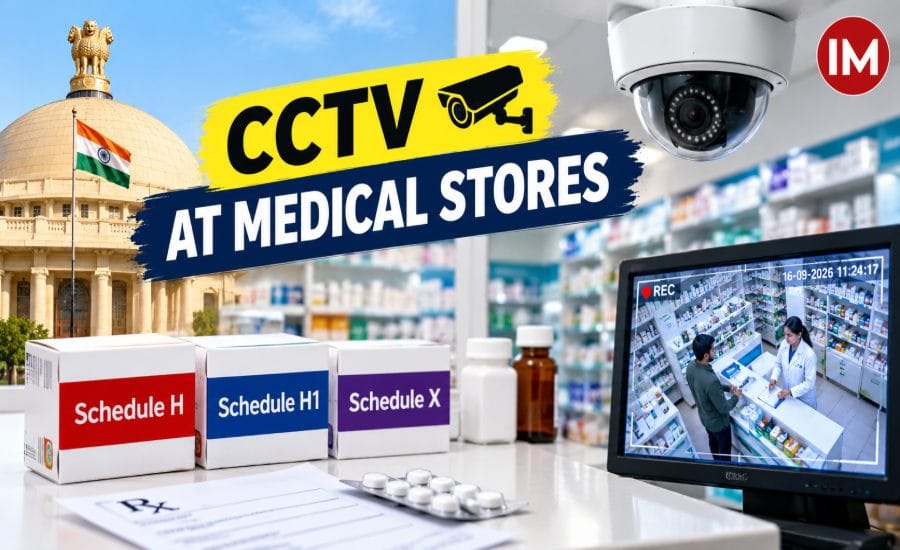
The proposed changes include mandatory CCTV surveillance at medical stores, which the Ministry says would provide an additional safeguard for transparency and accountability in the sale and distribution of these medicines.
The proposal has been issued through Draft Gazette Notification G.S.R. 791 (E), dated September 8, 2026. The Ministry has invited objections and suggestions from stakeholders and members of the public before the proposed amendment moves ahead.
Why the Government Wants Tighter Oversight
Schedule H, H1 and X medicines are subject to specific regulatory requirements under India’s drug-control framework. The proposed amendment seeks to address concerns over unauthorised access to and sale of these medicines.
The Health Ministry’s proposal focuses on strengthening monitoring at the point where medicines are sold and distributed.
Under the proposed mechanism, CCTV surveillance at medical stores would create an additional layer of oversight over pharmaceutical transactions. The measure is intended to improve transparency and accountability across the pharmaceutical supply chain.
The Ministry expects the proposed changes to help curb the unauthorised sale and access of Schedule H, H1 and X drugs, including sales made without valid prescriptions.
Read Also: India’s First Soil Carbon Payments: Over ₹2.9 Crore to Reach 2,550 Farmers in Punjab and Haryana
CCTV Surveillance Proposed at Medical Stores
The proposed CCTV requirement is one of the key elements of the draft amendment.
The surveillance mechanism is intended to strengthen monitoring at medical stores and provide greater accountability in the handling and sale of regulated medicines.
The Ministry has described CCTV surveillance as an additional regulatory safeguard. The proposal is aimed not only at monitoring individual medical stores but also at strengthening oversight across the wider pharmaceutical supply chain.
If implemented, the measure would add a technology-based component to existing regulatory requirements governing the sale of these categories of medicines.
Proposal Went Through Expert Review
The proposed amendment has already gone through deliberations within the government’s technical and advisory framework.
The matter was initially considered by the Drugs Consultative Committee (DCC). Following this, the proposal was circulated among members of the Drugs Technical Advisory Board (DTAB) for deliberation.
After considering the proposal, the DTAB recommended its approval.
The recommendation paved the way for the Ministry to issue the draft notification and seek feedback from stakeholders and members of the public.
What Are Schedule H, H1 and X Drugs?
The three categories are part of India’s regulatory framework for medicines that require greater control over their sale and distribution.
Schedule H drugs are prescription medicines and generally cannot be sold without a prescription from a registered medical practitioner, subject to the applicable rules.
Schedule H1 contains certain medicines that carry additional regulatory requirements because of concerns associated with their use and misuse. Schedule X drugs are subject to particularly stringent controls, including specific requirements relating to their sale and records.
The proposed amendment is therefore aimed at strengthening compliance around medicines that already operate under tighter regulatory provisions.
Focus on Preventing Unauthorised Sales
A major objective of the proposal is to prevent regulated medicines from reaching consumers without the required prescription.
The Ministry said the proposed amendment would help strengthen monitoring of the sale and distribution of Schedule H, H1 and X drugs and curb unauthorised access and sales without valid prescriptions.
This is particularly relevant at the retail level, where medical stores serve as the final point in the medicine distribution chain before products reach consumers.
Greater monitoring at this stage could provide regulators with an additional mechanism for improving compliance with existing drug-sale requirements.
Public and Stakeholder Feedback Invited
The proposal is currently at the draft stage, and the Ministry has invited objections and suggestions from stakeholders and members of the public.
Suggestions can be addressed to the Under Secretary (Drugs), Ministry of Health and Family Welfare, Government of India, at U-6, Work Hall-C Wing, First Floor, Kartavya Bhawan-1, New Delhi–110001.
Feedback can also be sent through email to drugsdiv-mohfw[at]gov[dot]in.
The consultation process allows stakeholders to submit their views before the proposed changes are finalised.
Strengthening Accountability in Drug Supply
The proposed CCTV requirement is part of a wider effort to strengthen regulatory oversight rather than replacing existing prescription and drug-sale requirements.
The Ministry expects the measure to enhance transparency and accountability across the pharmaceutical supply chain. It also links stronger monitoring with the broader objective of protecting public health.
For medical stores, any final requirement would mean incorporating surveillance into their regulatory compliance processes. For regulators, it could provide an additional tool to monitor compliance with rules governing controlled categories of medicines.
What Happens Next?
The proposed amendments are not yet final rules. The Ministry has first sought objections and suggestions on the draft notification.
The proposal will therefore proceed through the prescribed regulatory process, with stakeholder feedback forming part of the consideration before any final amendment is notified.
The initiative reflects the government’s focus on strengthening oversight of medicines that require prescription-based or tighter controls.
By combining existing regulatory requirements with proposed technology-based surveillance, the Ministry aims to create stronger safeguards against unauthorised access and sale while improving accountability in the pharmaceutical supply chain.