https://indianmasterminds.com

ADVERTISEMENT
ADVERTISEMENT

Supreme Court Reviews Eligibility of Judicial Officers Under Advocates’ Quota for District Judge Appointments

CJI BR Gavai-led Constitution Bench weighs eligibility criteria under Article 233; debate centers on judicial independence, dual recruitment streams, and long-standing constitutional interpretation.
Supreme Court Ruling on Banks Advocates Blacklist
Indian Masterminds Stories

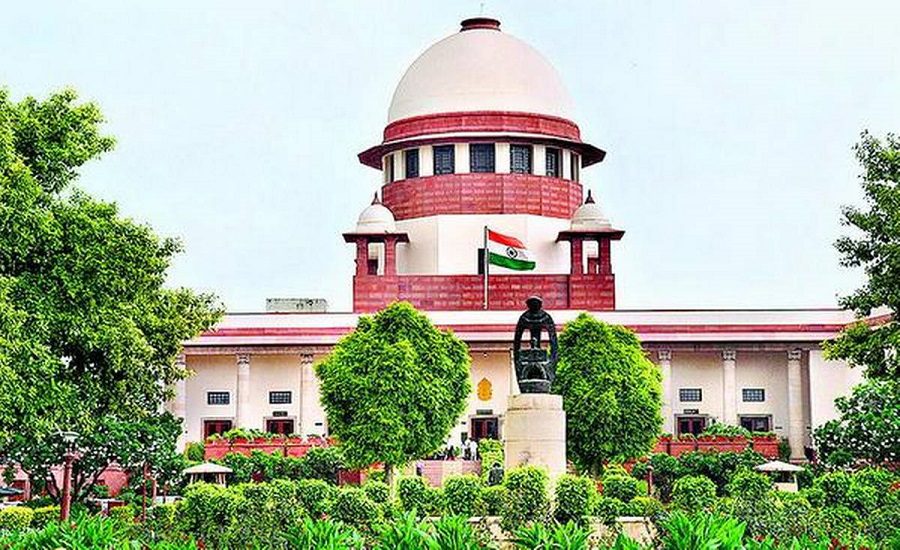
New Delhi: A Constitution Bench of the Supreme Court, presided over by Chief Justice of India B.R. Gavai, today heard a pivotal case examining whether judicial officers who previously practiced as advocates can claim eligibility under the advocates’ quota for direct recruitment to District Judge posts.

Constitutional Debate Over Article 233

At the heart of the matter is Article 233 of the Indian Constitution, which governs appointments of District Judges. The petitions before the bench challenge whether officers in the subordinate judiciary, with prior advocacy experience, can apply under the advocates’ stream rather than being restricted to the service/promotion route.

Senior counsel argued that Article 233(2) — which allows for direct recruitment from the Bar — safeguards a separate recruitment stream, and must be read in harmony with judicial independence. One senior lawyer asserted:

“Article 233 is not a source of appointment; it only safeguards the independence of the judiciary. The judiciary is meant to remain entirely free from the control of the State government.”

Emphasis was placed on the constitutional role of the Governor, who must consult the High Court without state interference, as established in past precedents like Chandra Mohan.

CJI Gavai intervened, observing:

“Once the judgment on selection of judges is excluded, it means the Governor has to act on the aid and advice of the Council of Ministers.”

Read also: A Decade of Suspicion & Investigation: Supreme Court’s Ruling in NAN Scam Case Forces IAS Officers Alok Shukla & Anil Tuteja into Custody!

Contentions on Eligibility, Combined Service, and Precedents

Several practical and doctrinal arguments were advanced:

  • Mixed experience eligibility: Counsel for petitioners, Civil Judge Madhukar Singh and others, contended that a combination of years at the Bar and years in judicial service should count toward eligibility. Their position: even if a judge served as a Civil Judge and had earlier advocacy practice, such cumulative experience should qualify them under the advocates’ stream.
  • Historical continuity: It was pointed out that under pre‑Constitution statutes, District Judges could be recruited both from service and from advocates; the Constitution raised the period for advocacy from 5 to 7 years but preserved dual routes.
  • Stagnation concern: The Shetty Commission’s report was cited, noting that excluding judicial officers from the advocates’ quota leads to stagnation and discourages talent from entering or staying in the service.
  • Judicial precedent and stare decisis: Counsel pointed to long‑standing Supreme Court rulings affirming two recruitment streams under Article 233. Some submissions argued that later smaller benches misinterpreted positions, and a Constitution Bench can correct such deviations.

Numbers and Wider Stakes

Counsel appearing for petitioner Manglesh Chaubey remarked that:

  • India’s subordinate judiciary has 25,870 sanctioned posts, including ~10,000 Civil Judge posts, ~6,000 Senior Division Judges, and ~8,000 District Judges.
  • Currently, about 4,789 District Judge seats are vacant — making recruitment eligibility a matter with significant real‑world impact on workforce and judicial backlog.

Way Forward and Next Steps

The hearing paused for the day, with further arguments to follow. The key questions before the Court include:

  • Whether judicial officers with prior Bar experience can invoke the advocates’ stream under Article 233(2)
  • Whether eligibility must be assessed only at the time of application, or also at the time of appointment
  • Whether rules that exclude judicial officers from the advocates’ quota are constitutionally valid
  • How to interpret Article 233 in harmony with the overarching architecture of Articles 124, 217, and 235

A judgment from a Constitution Bench would resolve long-standing disputes among High Courts and subordinate judicial services across states.
Read also: Supreme Court Acts on Custodial Deaths in Rajasthan, Seeks Accountability for CCTV Lapses in Police Stations


Indian Masterminds Stories
ADVERTISEMENT
ADVERTISEMENT
Related Stories
ADVERTISEMENT
ADVERTISEMENT
NEWS
Backdoor Privatisation
SBI Gets ‘CareEdge BBB+/Stable’ Rating, Reflecting Strong Financial Strength and Global Investor Confidence
Kerala High Court Gold Award for E-Governance
Kerala HC Pulls Up IAS Officer K. Biju Over Government Order in Cashew Corporation Corruption Case
Manoj Sethi Tenure Extension
Key Appointments: IFS Anjani Kumar Named Ambassador to Ukraine; Dr V. Narayanan, IPS Darade Sharad Bhaskar Get Additional Charges
IndianOil HDPE
IndianOil Sets New Global Benchmark with HDPE Excellence and Green Manufacturing Milestones
IPS Manish Agrawal
Who Is IPS Manish Agrawal? Former J&K Cadre Officer at Centre of Rajasthan Child Custody Case
DFCCIL Organises Stakeholder Conference
DFCCIL Organises Stakeholder Conference on East–West Dedicated Freight Corridor to Accelerate Project Financing
ongc
ONGC Wins Platinum Award at EEF Global Decarbonization Awards 2026 for Net Zero and ESG Excellence
Fish Production
Bihar Govt Launches Pearl Farming with 60% Subsidy, Farmers to Produce 1.2 Lakh Pearls Alongside Fish Farming
ADVERTISEMENT
ADVERTISEMENT
Videos
Haryana Leads India's First AI-Powered Bird Census
Divyanshu patel
How A Single-Minded Devotion of Divyanshu Patel Transformed Moradabad
IAS Divyanshu Patel Moradabad
The 5 am IAS Officer Who Transformed An Entire City
ADVERTISEMENT
UPSC Stories
ChatGPTImageJul62026at03_08_06P-2
Balancing Job & Dreams: How Jasmeet Kaur Turned Her Father's Dream into Reality with Rank 1 in UK PCS-2024
Jasmeet Kaur secured Rank 1 in the UKPSC-2024 examination after balancing her duties as a District Social...
Rakesh R UPSC IFS 2025
How Tuticorin's Floods Inspired Rakesh R to Join Indian Forest Service 
Discover how UPSC IFS 2025 AIR 85 Rakesh R transformed childhood experiences of Tuticorin floods into...
Abhijeet Patil
At 22, One of India’s Youngest IPS Officers Is Taking on Gangsters and Human Traffickers in Rajasthan
One of India’s youngest IPS officers, 2023-batch Rajasthan cadre officer Abhijeet Tulshiram Patil has...
CSR NEWS
NMDC
NMDC Develops Modern Community Infrastructure in Panna Under CSR Programme for Rural Growth
New Facilities Promote Fitness, Sanitation and Inclusive Public Spaces, Strengthening Sustainable Development...
REC (CSR Initiative)
REC Limited Empowers Women in West Bengal with 600 Sewing Machines Under CSR Initiative
New programme in Bangaon aims to promote self-employment, financial independence, and sustainable livelihoods...
REC
REC Ltd Signs ₹4.22 Crore CSR MoA with IGIAT to Build 100 Smart Classrooms in Assam Government Schools
REC Limited partners with IGIAT to modernise rural education in Lakhimpur and Kaziranga by introducing...
ADVERTISEMENT
ADVERTISEMENT
ADVERTISEMENT
Latest
Backdoor Privatisation
SBI Gets ‘CareEdge BBB+/Stable’ Rating, Reflecting Strong Financial Strength and Global Investor Confidence
Kerala High Court Gold Award for E-Governance
Kerala HC Pulls Up IAS Officer K. Biju Over Government Order in Cashew Corporation Corruption Case
ADVERTISEMENT
ADVERTISEMENT
ADVERTISEMENT
ADVERTISEMENT
ADVERTISEMENT
ADVERTISEMENT
ADVERTISEMENT
Videos
Haryana Leads India's First AI-Powered Bird Census
Divyanshu patel
IAS Divyanshu Patel Moradabad
ADVERTISEMENT
ADVERTISEMENT