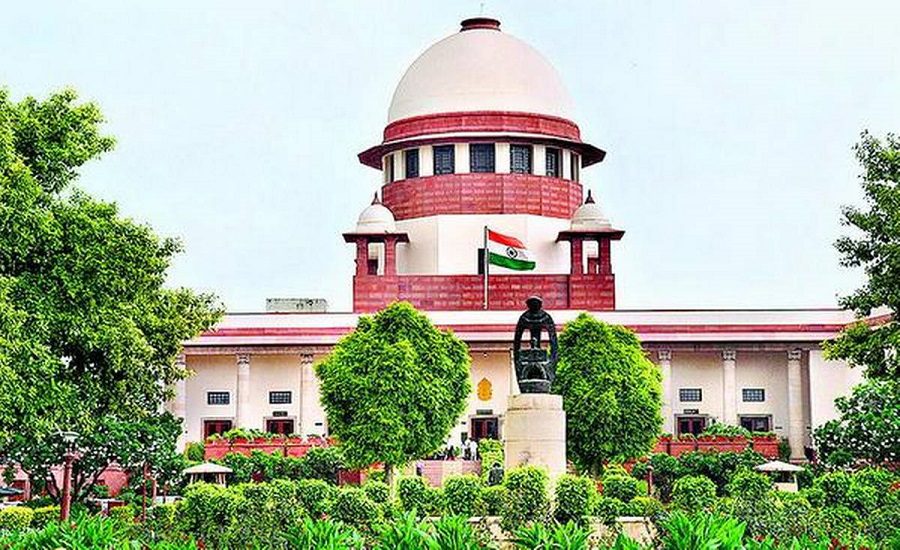
New Delhi: The Supreme Court of India has strongly criticised the insufficient budgetary allocation to Indian Railways, stressing that common man’s safety must be prioritised in every financial decision.
The bench highlighted alarming gaps in funds allocated towards critical safety infrastructure, ticket insurance coverage, and protective systems like Kavach. The court’s observations raise urgent questions about passenger protection, infrastructure planning, and equitable insurance coverage for all rail travellers.
Railway Budget Allocation: SC Emphasises Safety Over Other Financial Priorities
During recent hearings in the case titled Union of India v. Radha Yadav, a Bench comprising Justices Ahsanuddin Amanullah and R Mahadevan drew attention to the Indian Railways’ budget allocation pattern, arguing that too much funding is directed towards investment vehicles like PSU/JV/SPV instead of railway safety infrastructure.
The Court said in clear terms that “nothing is more important than the safety and security of the common man who travels and reposes trust in the Railways.”
The bench also called on authorities to be more pragmatic and ensure that significant portions of rail funding go directly into infrastructure and safety projects such as level crossings, bridges, underpasses, and automated systems.
Safety Issues at Unmanned Crossings and Kavach Deployment
Two key areas of concern flagged by the Court were:
- Unmanned railway crossings and delayed construction of safety bridges
- Full deployment of the ‘Kavach’ automatic safety system across the network
The Chief Commissioner of Railway Safety explained that interlocking railway gates, paired with Kavach deployment, could significantly reduce accidents and human error on the tracks. The bench agreed that these should be prioritized by budget allocation and implementation timelines.
Insurance Inequality: Online vs Offline Ticket Buyers
Another significant issue raised by the Court was the insurance coverage disparity between online and offline railway ticket purchasers.
Currently, accident insurance cover is available only to passengers who buy tickets online, typically through digital platforms like the Indian Railways Catering and Tourism Corporation (IRCTC). However, passengers who purchase physical tickets at station counters are not automatically covered by the same insurance schemes.
Supreme Court Response on Railway Budget Allocation
The bench has asked the Indian Railways to provide credible reasons why this distinction exists and why offline ticket buyers are excluded from automatic accident insurance cover, even when they purchase valid tickets in person. The matter has been listed for further hearing with instructions to present detailed clarifications.
This line of questioning reflects broader concerns about ensuring that all passengers receive equal protection, regardless of how they purchase their tickets.
Railway Budget Allocation: Demand for Clear Budget Break-downs and Safety Timelines
The Supreme Court has issued strict directions to the government to file detailed affidavits explaining:
- The exact budget allocated to the Ministry of Railways by Parliament for the last three financial years
- How funds were distributed internally across various sectors
- Actual expenditure figures for each category, including safety works for FY2025-26
The Court also questioned a mismatch between the projected completion period for key safety works — extending up to 2042-43 — and the current pace of budget allocation.
What the Order Signals for Indian Railways
Legal experts say this heightened judicial scrutiny indicates that railway safety and equitable passenger protection have become matters of constitutional importance. The Court is insisting that planning and financing should be realigned to prioritise human safety, not just commercial investments or long-term projects without clear timeframes.
The order also underscores the judiciary’s concern that rail infrastructure must serve passengers equitably, whether they book via digital platforms or traditional counters.
Way Forward: What to Expect
- Indian Railways is expected to present an updated and more detailed affidavit addressing safety priority funding, timelines, and insurance coverage discrepancies before the next court hearing.
- Policy discussions within the Railways may now include extending insurance to offline ticket buyers.
- Long-term safety infrastructure planning — especially for level crossings and Kavach system deployment — may be accelerated.
Read also: Explained: Why the Supreme Court Wants India to Digitize Land Records Using Blockchain