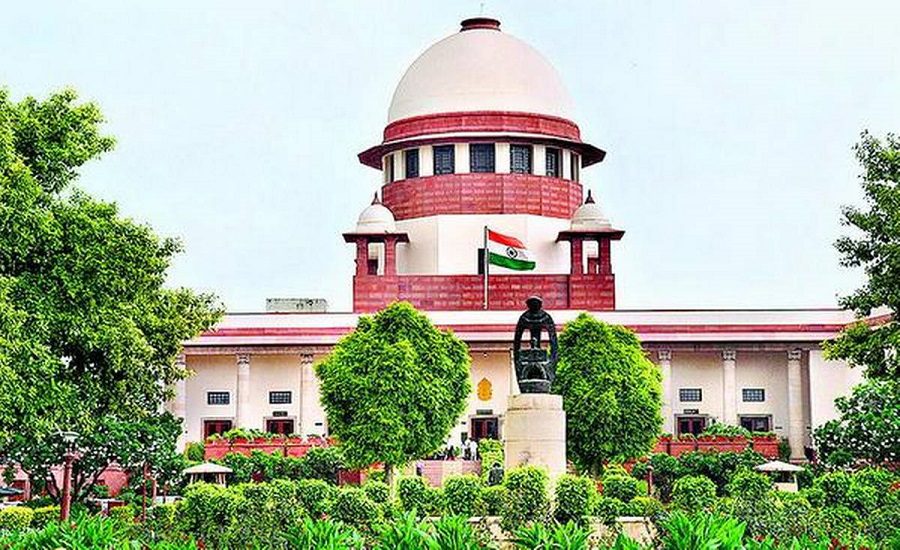
New Delhi: The Supreme Court of India has underscored that the act of returning mis-appropriated public funds is not sufficient to prevent dismissal of a government employee. The Court set aside a judgment of the Rajasthan High Court which had reinstated a postal employee accused of embezzlement — thereby sending a stern message about trust and accountability in public services.
Background of Supreme Court ruling on embezzled funds
The case involves a Branch Post Master/Gramin Dak Sevak appointed on 12 January 1998 under the rules governing the postal service. During an annual inspection on 16 June 2011, serious irregularities were discovered: although passbooks were stamped for deposits taken from account-holders, corresponding entries were omitted in the official ledger.
A chargesheet followed on 17 December 2013. The employee, for his part, admitted to the misconduct during the inquiry and later deposited the misappropriated money back into the account-holders’ accounts. The Department imposed the penalty of removal from service. However, the Rajasthan High Court intervened and set aside the removal, reinstating him. This triggered the appeal before the Supreme Court.
Importance of the Supreme Court ruling on embezzled funds
This judgment has wide-ranging implications for disciplinary law and public administration:
- Reinforces that financial integrity and trust in government service cannot be undone merely by restitution of funds.
- Clarifies that courts performing judicial review of departmental action cannot re-appreciate evidence or substitute their view for the disciplinary authority’s findings. The High Court had “exceeded its jurisdiction”.
- Sends a message to all public service employees; mis-appropriation of public funds, however small, and regardless of later refund, will meet with serious consequences.
- Restores faith in institutional checks in public sectors like postal services where fiduciary responsibilities are high.
Key Challenges Highlighted
- Many government disciplinary proceedings face appeals where courts reinterpret evidence rather than confine themselves to procedural fairness. This ruling warns against that trend.
- Monetary amounts are sometimes argued as “small” and damage undetected; the Court emphasizes that even minor breach of trust undermines the whole institutional system.
- Employees with long service may allege ignorance of rules; the Court firmly rejected that as a defence: “He had been in service for about 12 years. Ignorance of rules … cannot be accepted.”
Key Implications
- Administrative departments may now feel emboldened to pursue removal proceedings without fear that later restitution will absolve misconduct.
- Legal practitioners and disciplinary authorities must ensure that inquiries are robust, adherent to procedure, and that findings of misconduct are properly recorded.
- Public service employees must understand that institutional trust is non-replaceable: even if financial loss is reversed, the breach itself is decisive.
- For the judiciary; this clarifies boundaries of judicial review—courts should not delve into merits beyond assessing procedural fairness and presence of some evidence.
Way Forward
- Government agencies should revisit their code of conduct clauses, training modules, and periodic audits to emphasise fiduciary responsibility rather than only financial recovery.
- Departments must expedite disciplinary actions and record clear admissions of misconduct; this case shows how strong emphasis on admission aided the decision.
- High Courts should restrain from entering into merit-based re-evaluation in disciplinary matters and limit themselves to procedural oversight, to align with this precedent.
- For employees; regular refresher training on service rules, auditing behaviours and record-keeping is essential. Ignorance is no longer a shield.
- From a policy perspective; perhaps creation of a public-service integrity index or specific guidelines for breaches of trust, beyond financial quantification, could help institutionalise the principle.
Read Also: Serious Red Flags: Supreme Court Uncovers Lapses in Punjab Judiciary Infrastructure Funds Misuse