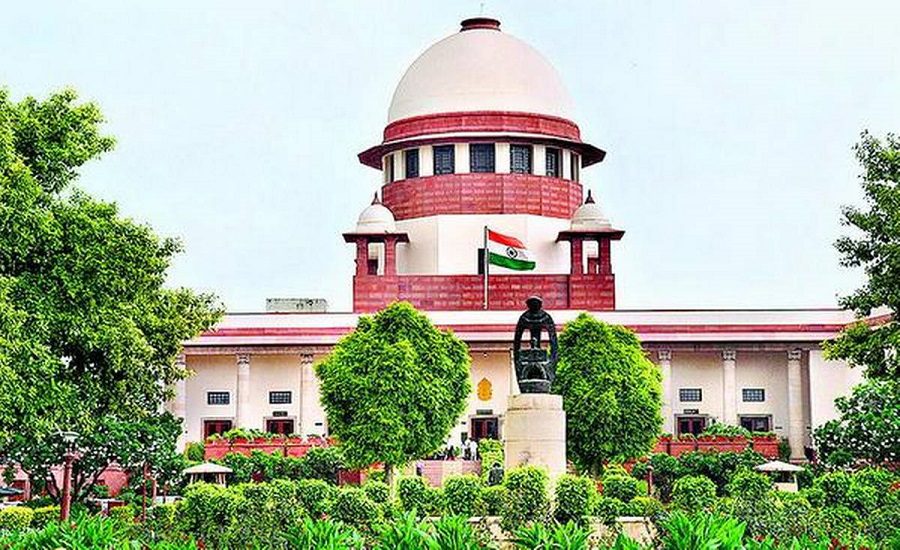
New Delhi: In a significant judgement the Supreme Court of India held the State of Punjab firmly to account for the alleged misallocation of central grants meant for strengthening judicial infrastructure.
A Bench of Justices Surya Kant and Joymalya Bagchi made clear that both the central and state governments must begin earmarking a minimum share of their budgets for the judiciary, emphasising that financial oversight is no longer optional.
Background of Punjab Judiciary Infrastructure Funds Misuse
The matter arose from a Public Interest Litigation tied to the newly created revenue district of Malerkotla in Punjab. Despite the district’s designation in June 2021 and the establishment of a sessions division in August 2023, the State had not provided permanent courtrooms or residences for the District and Sessions Judge and other judges.
Earlier, the Punjab & Haryana High Court had ordered on 22 August and again on 12 September that administrative and financial approvals be issued for additional courtrooms, and that government guest houses currently used by the Deputy Commissioner or Senior Superintendent of Police be vacated and allotted for judicial use.
The Supreme Court, while hearing the State’s appeal against these orders, turned its attention to deeper issues of budgetary allocations and fund utilisation.
Importance of the Judgment
This ruling is significant for several reasons:
1. Budgetary Precedent: The Court declared that the judiciary must receive a minimum budget share from both central and state governments. This can set a precedent for other states.
2. Accountability of Fund Utilisation: The Court’s remark — “If we order an inquiry, we will find out that they have already consumed the central grant for other purposes” — signals heightened scrutiny of how allocated funds are used.
3. Infrastructure Justice: With new districts and divisions being carved out, the ruling underlines that administrative and political decisions must go hand-in-hand with infrastructure readiness, especially for judicial functioning.
4. Systemic Challenge: The case brings to light the broader problem of judicial infrastructure deficit across states — inadequate courtrooms, residences for judges, or even transit accommodation. The Punjab example may well reflect wider national trends.
Challenges Identified in Punjab Judiciary Infrastructure Funds Misuse
The Supreme Court pinpointed several systemic challenges:
- Even after district creation and sessions division approval, no permanent courtrooms or judge residences were constructed in Malerkotla.
- The Bench observed that while the State swiftly provided accommodation for other officials (SP/Deputy Commissioner), judicial needs were ignored. “Building houses for themselves, not courts,” remarked Justice Kant.
- Lack of a clear earmarking of funds for judiciary infrastructure — both at the central scheme level and state budget level. Justice Bagchi noted the support for courts “is not even 1% of the GDP.”
- The suspicion that central grants meant for the judiciary were used elsewhere by state officials threatens both infrastructure and institutional integrity.
- Creation of a new district without ensuring foundational infrastructure shows administrative shortfall and possibly political expediency.
Key Implications
The verdict has wide-ranging implications:
For Punjab and Other States: States will have to audit their fund utilisation for judiciary infrastructure and ensure timely completion of court complexes, judge residences and transit accommodation.
For Centre-State Fiscal Relations: The ruling pushes the question of earmarked funds for judiciary higher on the agenda, possibly leading to policy changes or guidelines for budgetary minimums.
For Judicial Access & Delays: Without proper infrastructure, courts suffer from delays, case backlogs and logistical constraints. This step could improve justice delivery if followed in practice.
For Governance & Transparency: Greater transparency will be demanded in how central and state funds are used for judicial infrastructure — an area hitherto gaining less public attention.
For New District Formation: It sends a caution; administrative or political decisions like forming new districts must be matched with essential infrastructure support, including courts.
Way Forward
- States like Punjab should revise their budgets to earmark a fixed minimum share for judiciary infrastructure — court buildings, residences, transit accommodation.
- Independent audits — possibly ordered by courts or state Comptroller and Auditor General (CAG) — to check if central grants were misused or diverted.
- Set up state-level tracking dashboards for judicial infrastructure projects (courtrooms, judge housing) with timelines, site-allocation, completion certificates.
- The Centre may issue a guideline or mandate to states defining the minimum percentage of budget or GDP allocation to judiciary infrastructure, as the Supreme Court suggested.
- Involve bar associations (for example in Malerkotla), local judiciary, state governments and civil society to monitor progress and raise red flags early.
- States should regularly publish status reports of judicial infrastructure development and fund utilisation, building transparency and public trust.
- Before declaring a new district, the state must ensure court complexes, judge accommodation and staff transport are in place or funded with clear timelines.
Read Also: Massive Relief for Karnataka: Supreme Court Rules Tamil Nadu Cannot Block Mekedatu Dam Yet