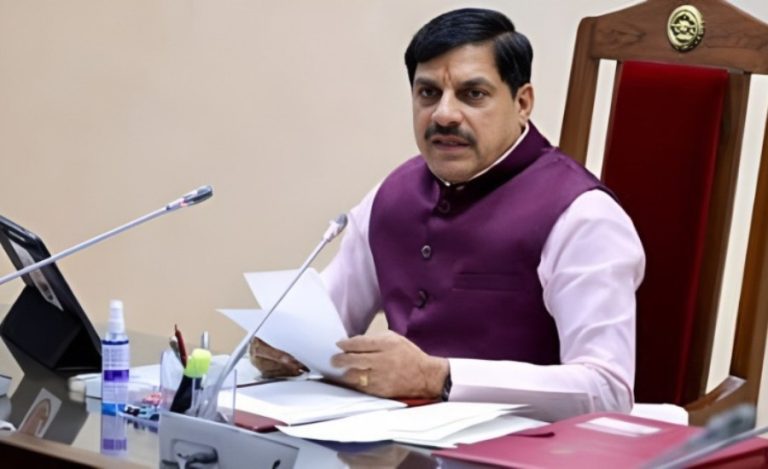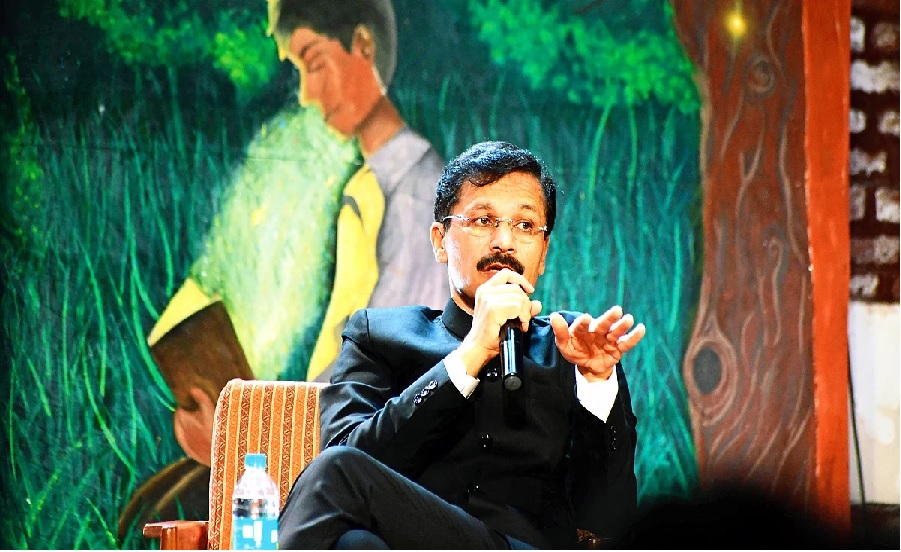
Mumbai: Maharashtra Food and Drugs Commissioner Tukaram Mundhe, a 2005-batch Indian Administrative Service (IAS) officer from the Maharashtra cadre, on Saturday, September 26, said food safety vigilance during festivals is about protecting consumers and has nothing to do with culture, religion or the festivals themselves.
Speaking in Gandhinagar during a seminar at Karnavati University, Mundhe also said the Government of India is working towards developing rules and regulations for the growing online food sector to address gaps that have emerged since the implementation of the Food Safety and Standards Act, 2006, and the Food Safety and Standards Rules and Regulations, 2011.
Mundhe, an IAS officer who has recently gained attention for strict action against food vendors failing to meet safety standards in Mumbai and other parts of Maharashtra, stressed the need to strengthen the food safety system so that it continues to function effectively regardless of changes in leadership.
Government Working on Regulations for Online Food Sector
Mundhe said the food sector has changed significantly since the existing legal framework was introduced. Several business models that are common today, including e-commerce food platforms, dark stores, warehouses and cloud kitchens, were either absent or not widely prevalent when the legislation was introduced.
He said the Government of India is working on regulations to address these emerging challenges.
Key areas highlighted by Mundhe include:
- Regulation of food e-commerce platforms
- Dark stores and food warehouses
- Cloud kitchens
- Emerging food business models
- Gaps in the existing regulatory framework
- Use of technology for better implementation
Mundhe said he and other state FDA commissioners, who are part of central advisory committees, continue to provide suggestions to address new challenges and develop regulations proactively.
Food Safety Laws Need to Keep Pace With New Challenges
Mundhe said India made a major change in the food safety sector with the introduction of the Food Safety and Standards Act in 2006, which brought together a sector that had previously been governed by multiple laws.
He said the focus subsequently shifted from merely preventing food adulteration to ensuring safe and standardised food.
However, new challenges have emerged with technological and business changes that could not have been anticipated when the law was introduced.
According to Mundhe, the gaps need to be addressed at several levels:
- Policy
- Legislation
- Implementation
- Infrastructure
- Public awareness and participation
Maharashtra Uses Technology to Track Food Safety Complaints
Mundhe also highlighted Maharashtra’s use of technology to improve the implementation of food safety regulations.
The state has a dedicated complaints portal through which consumers can register complaints and provide their geographical location. The system automatically assigns complaints to officers, allowing authorities to monitor their progress.
The system enables:
- Online registration of complaints
- Location-based complaint filing
- Automatic assignment to officers
- Complaint status tracking
- Greater transparency in enforcement
Mundhe said technology needs to be utilised to its fullest extent to make food safety enforcement more effective and transparent.
Mundhe Calls for Greater Food Safety Awareness at Home
Mundhe said a major challenge in ensuring food safety is the lack of awareness and sensitivity among consumers.
During the seminar, he pointed out that people may even find expired food products, including spices, in their own refrigerators.
He stressed that food safety practices should not be limited to restaurants and food outlets but should also become part of everyday household habits.
According to Mundhe, food safety requires the participation of three major groups:
- Food business operators and enterprises
- Food regulators, including FSSAI and State FDA
- The general public
He said food security cannot be achieved without maintaining food safety and standards, and that safe food practices should become an integral part of everyday life.
Maharashtra FDA Steps Up Vigilance During Festivals
Addressing food safety enforcement during festivals, Mundhe clarified that the measures are not related to any particular culture, religion or festival.
He said the state has issued a standing order categorising festivals into three levels:
- State-level festivals
- Regional-level festivals
- Local-level festivals
The enforcement process begins before the festival, with action being taken according to the category of the festival.
Mundhe said the action plan includes:
- First phase: 21 days before the festival
- Second phase: 15 to 20 days before the festival
- Third phase: During the festival
- Legal proceedings: To be completed within 30 days after the festival
The standing order was issued shortly before the Ganesh festival.
Around 30,000 Kg Food Products Seized and Destroyed
Mundhe said the impact of the festival-related enforcement drive was visible during the Ganesh festival.
During the period, authorities found that vendors operating without the required registration could not continue their operations.
The enforcement action included:
- Around 250–300 licences suspended
- Nearly 30,000 kg of food products seized and destroyed
- Food products worth around ₹10 crore seized
- FIRs registered in connection with violations
- Milk and milk products, including khoya (mava), among the seized products
Mundhe said the state is now working on a Standard Operating Procedure (SOP) to make food safety enforcement a continuous and automated process rather than limiting it to festival periods.
Mundhe Highlights High Trade Margins on Hospital Consumables
Mundhe also spoke about the pricing of commonly used hospital consumables and said he had submitted a report to the Government of India based on actual data collected from hospitals.
According to Mundhe, the data showed exceptionally high trade margins on certain hospital consumables, ranging from 150% to more than 2,800%.
He said some of these products may not technically fall under the category of essential items, but they are essential in practical terms because they are routinely used when patients are hospitalised.
The suggestions submitted to the Centre include:
- Capping trade margins
- Increasing regulation
- Exploring coverage under the Drug Price Control Order (DPCO)
Mundhe said the Government of India is considering and exploring the available options, although he added that he had not received any official feedback on the matter.
Focus on Stronger and Continuous Food Safety System
Mundhe said food safety enforcement needs to become a continuous process involving regulators, businesses and consumers. He stressed that regulations should not merely be followed in letter but also implemented in spirit.
With the rapid expansion of online food businesses and changing consumer habits, Mundhe emphasised the need for the regulatory framework to evolve alongside the sector.
He also called for greater public awareness, stronger enforcement mechanisms and increased use of technology to ensure that food safety standards are followed both by businesses and consumers.