New Delhi: The Union Public Service Commission (UPSC) marked its centenary on Thursday with Prime Minister Narendra Modi calling for a new approach to civil-services recruitment and administration that reflects the changing aspirations of India’s citizens.
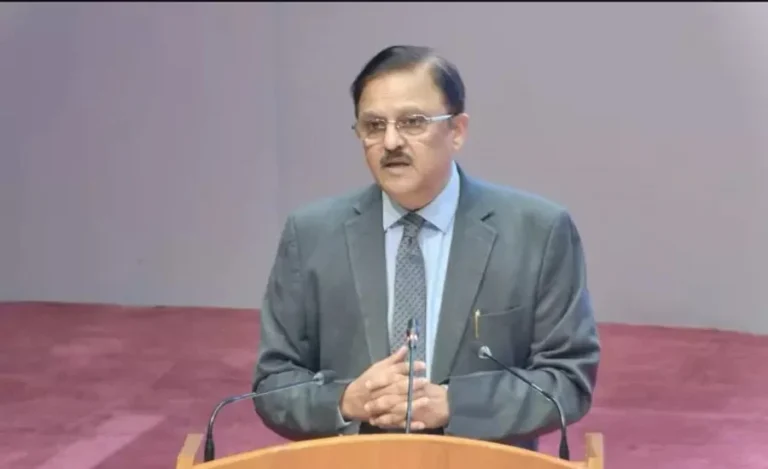
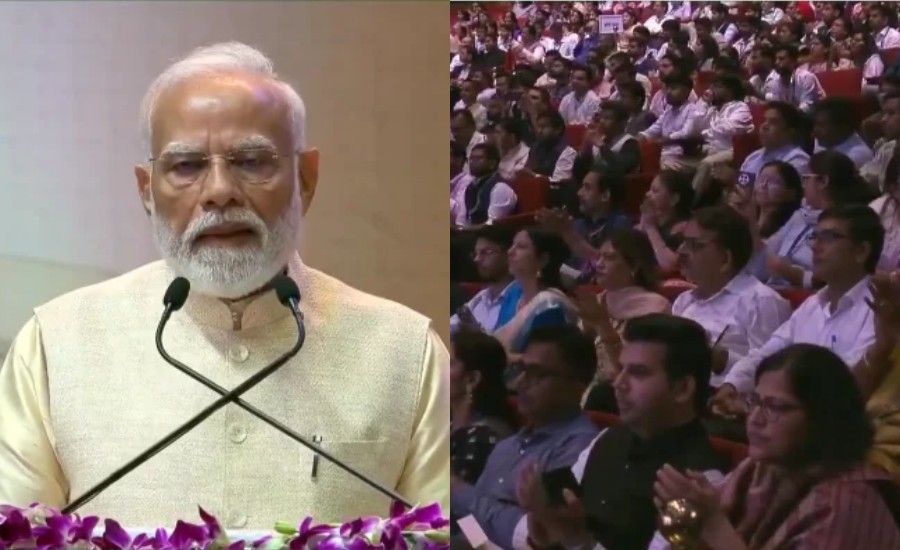
Addressing the centenary celebrations at Bharat Mandapam in New Delhi, the Prime Minister described 100 years of the UPSC as not only an institutional milestone but also a celebration of the aspirations of millions of young Indians and the trust placed in the commission.
He said the UPSC’s credibility has endured through changes in generations, governments, technology and examination syllabi. The centenary celebrations also featured the release of a commemorative postage stamp, a special coin and a compilation of 100 significant case laws.
From Colonial Origins to Independent India
Reflecting on the history of the institution, Modi contrasted the UPSC’s origins during the British Raj in 1926 with its transformation after Independence.
Read Also: UPSC Turns 100: PM Modi to Release Commemorative Coin, Stamp and Landmark Judgments Book
He recalled the contribution of Sardar Vallabhbhai Patel in building the administrative framework needed to govern the newly independent country. According to the Prime Minister, Patel transformed and empowered the institution into an important pillar of independent India.
The Prime Minister said that while the UPSC has discharged its historical responsibilities effectively, the institution must now focus on the challenges and opportunities of the next 25 years.
‘Nation First’ and ‘Citizen First’
A central theme of the Prime Minister’s address was the need to ensure that the recruitment process produces civil servants committed to public service.
He said the selection process should be assessed against two principles — “Nation First” and “Citizen First”.
According to Modi, young people entering public services should be driven by the desire to serve citizens rather than simply occupy public office. He argued that recruitment examinations must therefore go beyond testing what candidates know and examine why they aspire to join the civil services.
He also suggested that trainee officers could be encouraged to record their original motivation for entering public service so that they could return to those motivations when confronted with difficult responsibilities later in their careers. He said the UPSC and state public service commissions could consider institutionalising similar mechanisms.
100 years of UPSC is a proud milestone. For a century, it has played an important role in administration and serving people. https://t.co/8mLKPv4jXU
— Narendra Modi (@narendramodi) October 1, 2026
‘Nagrik Devo Bhava’ as the Governance Mantra
The Prime Minister called for a departure from the traditional “Mai-Baap” approach to governance and advocated a citizen-centric administrative culture.
He described “Nagrik Devo Bhava” — treating citizens as no less than divine — as a core principle of 21st-century governance.
He said the service of citizens must remain paramount and linked this approach to a broader transformation in the way government institutions function.
Three Pillars: Pro-People, Pro-Active, Good Governance
Modi identified three principles as the foundation of India’s emerging administrative work culture: Pro-People, Pro-Active and Good Governance.
He said recruitment bodies should identify professionals capable of anticipating problems, working without unnecessary pressure or influence, and finding innovative solutions to difficult administrative challenges.
The Prime Minister also emphasised empathy among civil servants and called for officials who can proactively make citizens’ lives easier while examining the real-world impact of laws and government decisions.
Civil Services Must Prepare for an AI-Driven Future
The changing technological landscape was another major focus of the address.
Modi said future civil servants would have to deal with challenges including information warfare, deepfakes, algorithmic bias and climate justice
He argued that recruitment systems must therefore evolve beyond conventional knowledge-based assessment and give greater importance to complex problem-solving and foresight.
The Prime Minister said India’s increasingly urbanised population and narrowing rural-urban divide would also lead to higher expectations from government. In an era of instant digital services and AI-powered solutions, citizens would expect faster and more responsive administration.
Recruitment Parameters Need to Change
The Prime Minister called for recruitment parameters to be adapted to future requirements.
He said the objective should not simply be to select candidates who possess academic knowledge, but those who have the motivation and ability to respond to rapidly changing public expectations.
The proposed shift, therefore, involves examining candidates’ motivations, problem-solving abilities, foresight and capacity to understand complex administrative challenges alongside their existing academic and examination performance.
Time Certainty in Competitive Examinations
Another major issue raised by Modi was the duration of examination cycles.
He called on examination agencies to adopt the principle of “Time Certainty” and reduce the time taken to complete examinations without compromising standards.
The Prime Minister highlighted the financial burden created by prolonged examination cycles, including coaching expenses, accommodation and transportation costs.
He described shortening examination cycles not merely as an administrative improvement but also as an equity reform, because reducing the duration could lessen the financial pressure on candidates and their families.
UPSC and State Commissions Should Learn From Each Other
Modi also called for greater institutional collaboration between the UPSC and state public service commissions.
While acknowledging existing national conferences where commissions share experiences, he suggested that these platforms should be strengthened through greater exposure to international standards, technological practices and efficient procedures.
He said systematic cross-learning could benefit both the UPSC and state-level recruitment commissions and provide greater clarity and relief to aspirants across the country.
Capacity Building Through Technology
The Prime Minister emphasised that recruitment commissions themselves must continuously build their institutional capacity.
He suggested that existing digital infrastructure created under Mission Karmayogi could be leveraged for this purpose, specifically pointing to the i-GOT platform as a potential resource.
The emphasis, therefore, was not limited to changing examinations but extended to strengthening the institutions responsible for selecting and developing India’s public servants.
More Opportunities for Rural Youth and Women
The Prime Minister also highlighted the expansion of opportunities in civil services.
He pointed to the increasing participation of youth from rural areas and noted the significant rise in the representation of women among civil-services candidates.
According to the figures cited in his address, the share of female candidates has risen from about 3 per cent in 1952 to more than 30 per cent today. He also noted that three of the four women who have served as UPSC Chairpersons since 2014 were appointed during this period.
Modi said these changes demonstrate the widening reach of opportunities in the country and the growing diversity of the pool from which public servants are selected.
45-Fold Rise in Exam Participation
The scale of responsibility facing recruitment commissions has also expanded dramatically with the growth in participation.
The Prime Minister noted that the number of candidates taking examinations has increased 45-fold since the UPSC’s 50th anniversary in 1976.
He said this expansion represents a vast national pool of talent but simultaneously places a major responsibility on selection authorities, which are not merely choosing candidates but selecting individuals who will eventually represent the government at the grassroots level.
Protect UPSC’s Core Values
While calling for extensive modernisation, Modi stressed that reform should not come at the cost of the UPSC’s foundational values.
As the commission enters its second century, he said its independence, impartiality, merit, confidentiality and fairness must remain uncompromised.
The Prime Minister’s message was therefore framed around both change and continuity: recruitment institutions must adapt to new technologies, social expectations and administrative challenges while preserving the credibility that has defined the UPSC over the past century.
A Vision for the UPSC’s Second Century
The centenary address placed the UPSC at the intersection of two priorities — preserving institutional trust and preparing the civil services for a rapidly changing India.
From “Nation First” and “Citizen First” to “Nagrik Devo Bhava” and “Pro-People, Pro-Active, Good Governance”, the Prime Minister’s message focused on making public administration more responsive, technologically capable and citizen-oriented.
As the UPSC begins its second century, the emphasis is on building a recruitment system that can identify not only knowledgeable candidates but also public servants equipped with motivation, foresight, empathy and the ability to solve complex problems in a changing India.
Read Also: UPSC@100: From 1926 to 2026, How India’s Premier Recruitment Body Evolved Over a Century