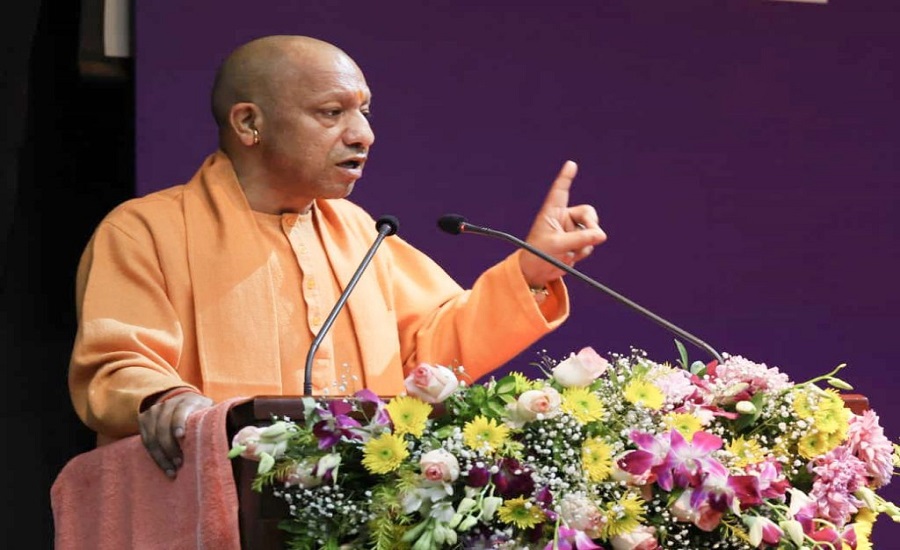
Lucknow: Uttar Pradesh Chief Minister Yogi Adityanath addressed the inaugural session of a lecture programme at the Shri Gorakhnath Temple in Gorakhpur on September 24, 2026, as part of a seven-day death anniversary commemoration programme.
During his address, Yogi referred to the Ramayana period and foreign invasions of India. He said the objective of demons and foreign invaders who attacked India was not merely to acquire wealth, but also to undermine the country’s knowledge tradition and destroy the Sanatan tradition.
He cited the example of the Somnath Temple and Mahmud Ghaznavi to explain his point. He also urged people to speak only after verifying facts and remain alert against misinformation.
Yogi Cites Somnath and Mahmud Ghaznavi
Referring to the Somnath Temple, Yogi Adityanath said foreign invaders did not come only with the intention of looting.
According to the account presented by the Chief Minister, priests at the Somnath Temple told Mahmud Ghaznavi that he could take whatever he wanted if his purpose was to loot. Yogi said Ghaznavi responded that he would take the wealth, but his main objective was to destroy India’s Sanatan tradition.
He then referred to the destruction of the temple and its idols.
Yogi said:
“The priests of the Somnath Temple told Mahmud Ghaznavi, ‘If you want to loot, then loot.’ But Ghaznavi said, ‘No, I will take it, but my objective is to destroy India’s Sanatan tradition.’ After this, he looted the Somnath Temple and destroyed the idols.”
The Chief Minister used the episode as an example while discussing the historical attacks on India’s cultural and knowledge traditions.
Read Also: UP Launches Bharat Taxi With Zero Commission, Cuts Farmer Loan Interest to 6%
Reference to the Ramayana Period
Yogi also referred to an episode from the Ramayana.
He said that when Lord Ram reached Dandakaranya and saw the ashrams of sages in a disturbed and devastated condition, the sages told him that they were being troubled by demons.
According to Yogi, Lord Ram subsequently acted against the demons.
The Chief Minister linked this episode to the broader theme of protecting knowledge, culture and traditions. He said India had historically been recognised as a Vishwaguru because of its knowledge tradition.
Focus on India’s Knowledge Tradition
During the lecture, Yogi emphasised the importance of preserving India’s intellectual and cultural heritage.
He said India’s identity was closely associated with its knowledge and traditions and argued that society needs to remain prepared against attempts to create doubt and confusion.
His remarks connected the examples from the Ramayana and the medieval period with the larger question of protecting India’s cultural and intellectual heritage.
Yogi Urges People to Verify Facts
Along with his historical references, the Chief Minister also gave a message about the need to verify information before speaking about any issue.
He urged people to establish the truth of a claim before presenting it and cautioned against those spreading misinformation.
The emphasis on fact verification came as part of his broader message about remaining alert to attempts to create confusion or doubt in society.
Seven-Day Programme at Gorakhnath Temple
The speech was delivered during a seven-day death anniversary programme being organised at the Shri Gorakhnath Temple in Gorakhpur.
The programme includes lectures and discussions on subjects connected with Indian traditions, culture, knowledge and social issues.
Yogi’s address focused on historical episodes, India’s knowledge tradition and the importance of preserving cultural heritage. His references to the Ramayana and Somnath were used to place these themes in a broader historical context.
The Chief Minister’s remarks have brought the Somnath-Ghaznavi episode and the question of India’s cultural and knowledge traditions into focus during the ongoing Gorakhpur programme.
Read Also: Yogi Adityanath Calls for Stronger Organisation, Highlights UP’s Economic and Development Push